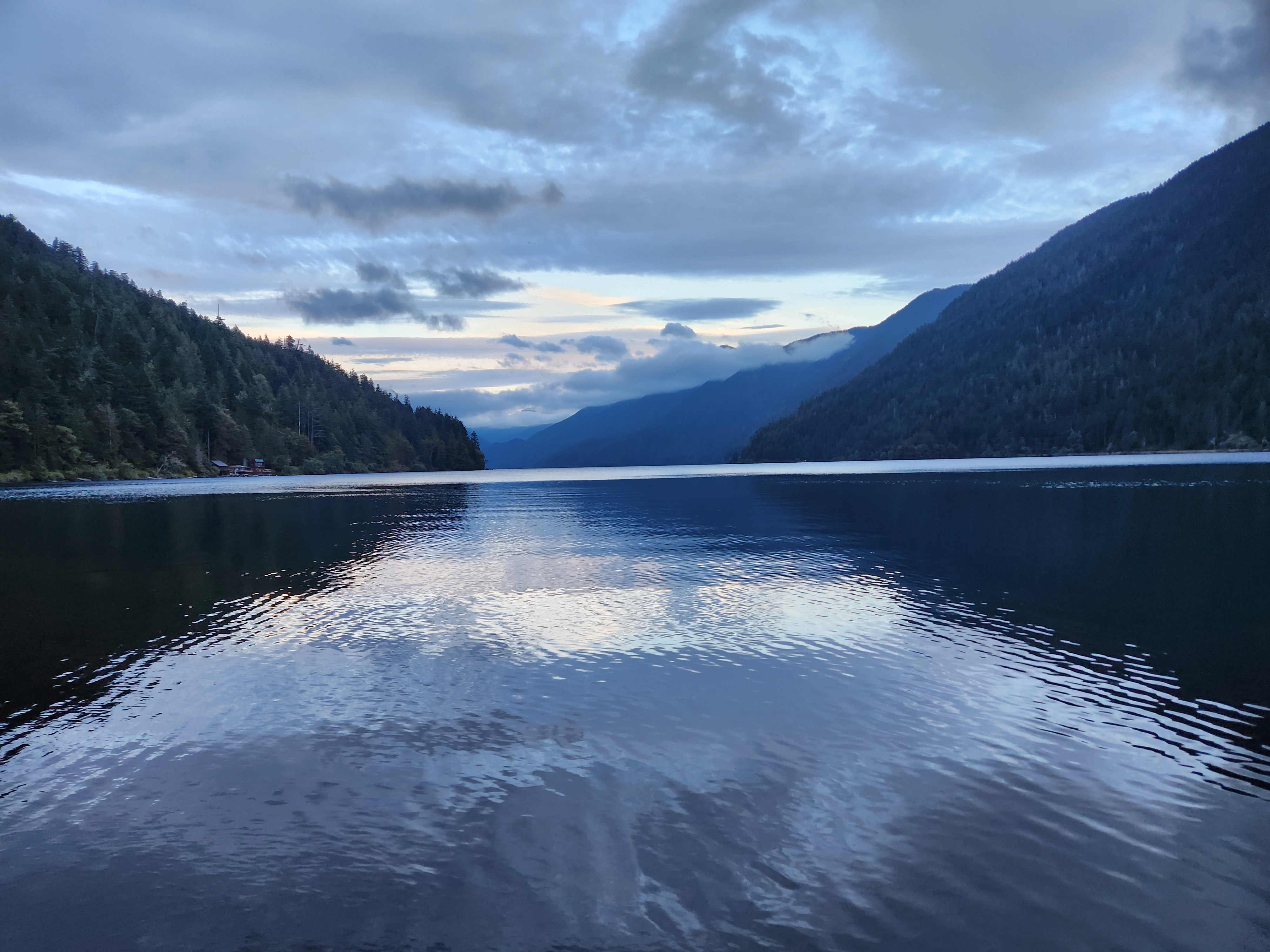
There’s one advantage to getting up at 3am to catch an early flight from the US east coast to the west coast. Time zones work to your advantage in this direction, so you can make this trip and still arrive before local lunch time, leaving plenty of time to get a half-day in to start a trip.
Of course, your body still experiences the real passage of time, so even though you might have an afternoon free – you’re too exhausted to do much with it.
So it was that we arrived in Seattle at 11am, having been awake and travelling for a full 11 hours, after only 3 hours of sleep, and still having 8 hours of daylight ahead of us.
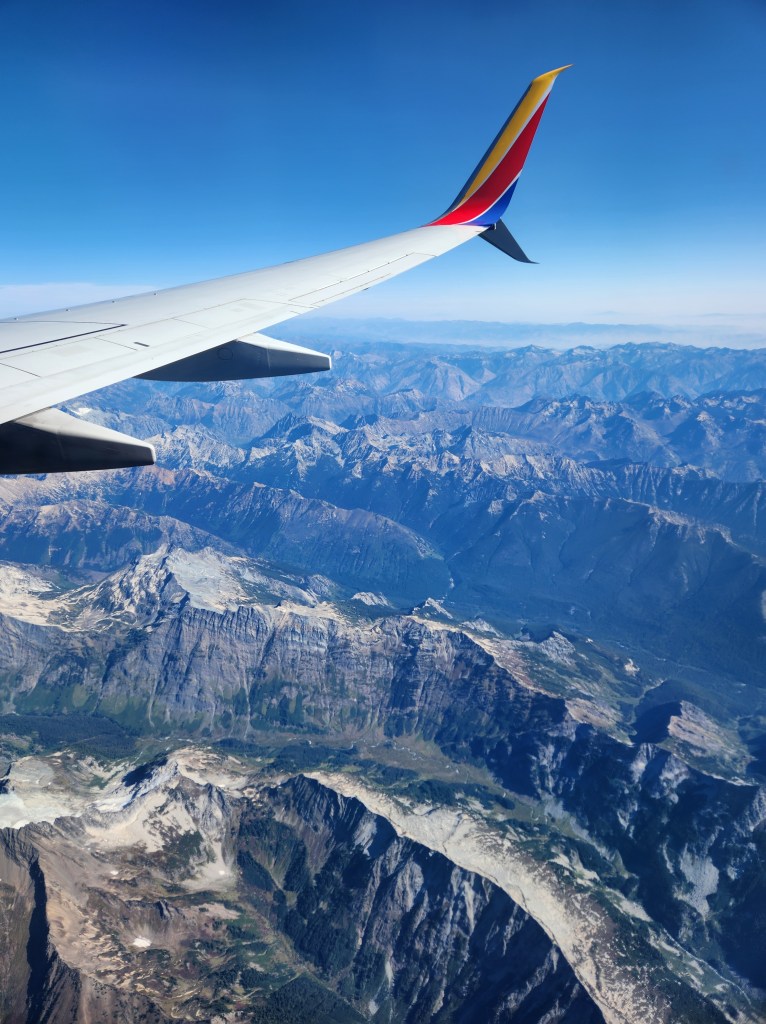
Still, we were excited to get going. Getting off the plane and retrieving our bags didn’t take long, and soon we were on the short (~4 miles) Uber trip to Escape Campervans, where we would meet “Bones” and get the quick walkaround. All of Escape’s vehicles have novel paint jobs, and we would see others throughout our travels in the weeks to come. We would come to feel a strange kinship with others who dared to drive such gaudy, conspicuous vehicles.
This first afternoon required one of our longest drives – getting out of town and out east to the Olympic peninsula. The weather was good as we headed south, then east across the Tacoma Narrows bridge. Thankfully, it was a lot more stable than its predecessor. Our only knowledge of the bridge comes from the spectacular videos of the original bridge (in 1940) demonstrating resonance and twisting itself to rapid destruction in the winds blowing through the gorge. The current bridge doesn’t do that – though it looks enough like it that we knew exactly where we were!
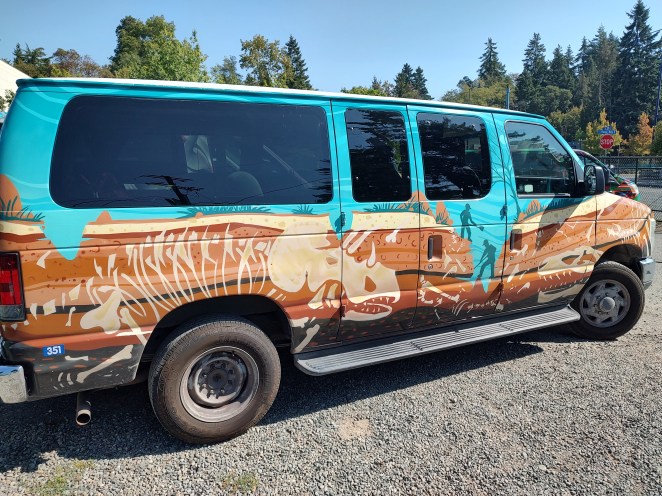
We drove north through Bremerton, watching the distinctive evergreens of the Pacific Northwest get bigger and darker as we rounded onto the Olympic Peninsula’s north coast.
Our first real stop, recommended by friends, was a produce center called Sunny Farms along US 101 in Carlsborg. Aside from being a good store with reasonable prices, this turned out to be a key stop in our supply logistics for the entire trip. We left Sunny Farms with apples, pears, peaches and pluots (plum/apricot hybrids), celery, carrots, cremini and white mushrooms, and a large onion. The resulting brown paper bag of goodness would serve as the fresh foundation of our meals for the rest of the trip – but it wasn’t enough. We moved on down the road and supplemented with a stop at Safeway in Port Angeles, picking up essentials like eggs and egg whites, chicken broth, ground turkey, penne pasta, and a few other odds and ends that started to fill up our solar fridge. Thus supplied, we were finally ready to get into the woods.
It was at this point, this early, that our itinerary fell apart. We had intended, if the weather was good (which it was), to immediately head south and up into the mountains of Olympic National Park, to Hurricane Ridge, but it was clear by this point that getting up and back would take more daylight than we had left – and besides we were also starting to run on empty.

So instead, we headed to a small park just west of Port Angeles – Salt Creek Recreation Area, where a quick walk through the campground on the Bluffs Trail would offer views of the Strait of Juan De Fuca, Vancouver Island, and some World War 2-era bunkers built here as part of an elaborate coastal defense system.

The trail at Tongue Point here is basically the campground loop, with several footpaths leading out to overlooks and access to the beaches and tide pools. The area is fairly rocky, and when we went, near low tide, a fair amount of kelp was visible just beyond the exposed rocks. Vancouver Island dominates the northern horizon. We also saw quite a bit of wildlife – mostly seabirds, some black-tailed deer (they’re white-tailed at home!), and we did see the head of a large sea lion (we believe it was a Steller, but maybe a California) as it swam along beyond the kelp, keeping its head out of the water and surveying the shore.
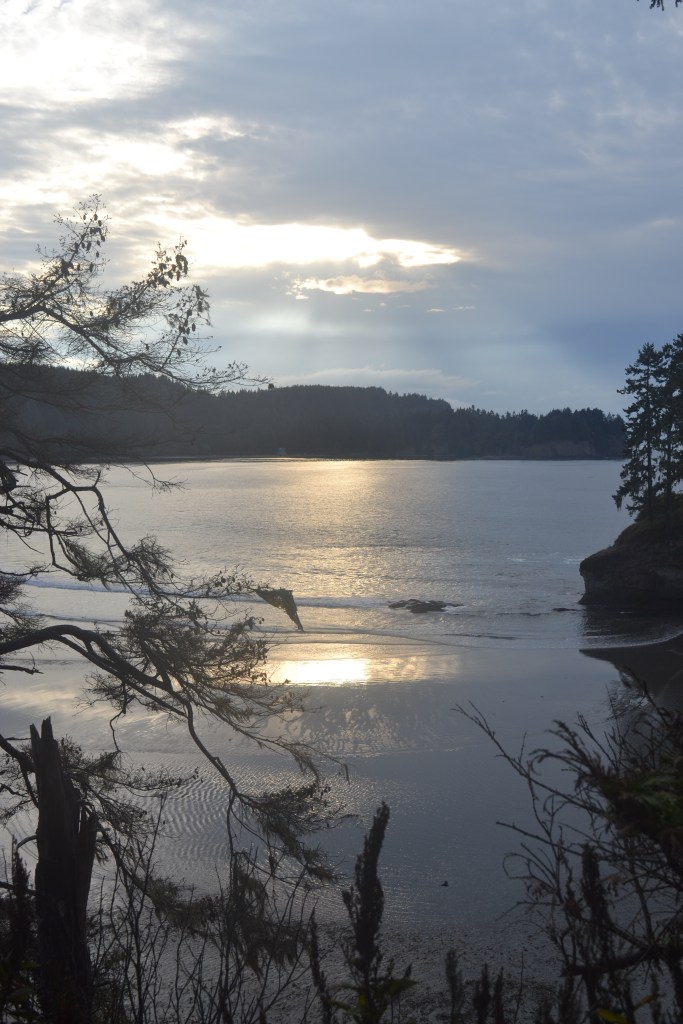
Along with beautiful views of the Strait, and nearby Crescent Beach, Tongue Point has several historical artifacts. There are several protective concrete bunkers, and as you move up the hill away from the beach you see an “artificial” hill – really a large concrete structure now covered with earth and trees – that also housed enormous artillery pieces designed to defend the Salish Sea against any incoming enemy vessels. This history was a surprise to me. It’s not unusual to find old shore defense relics like this, but I had no idea that we’d find them here.
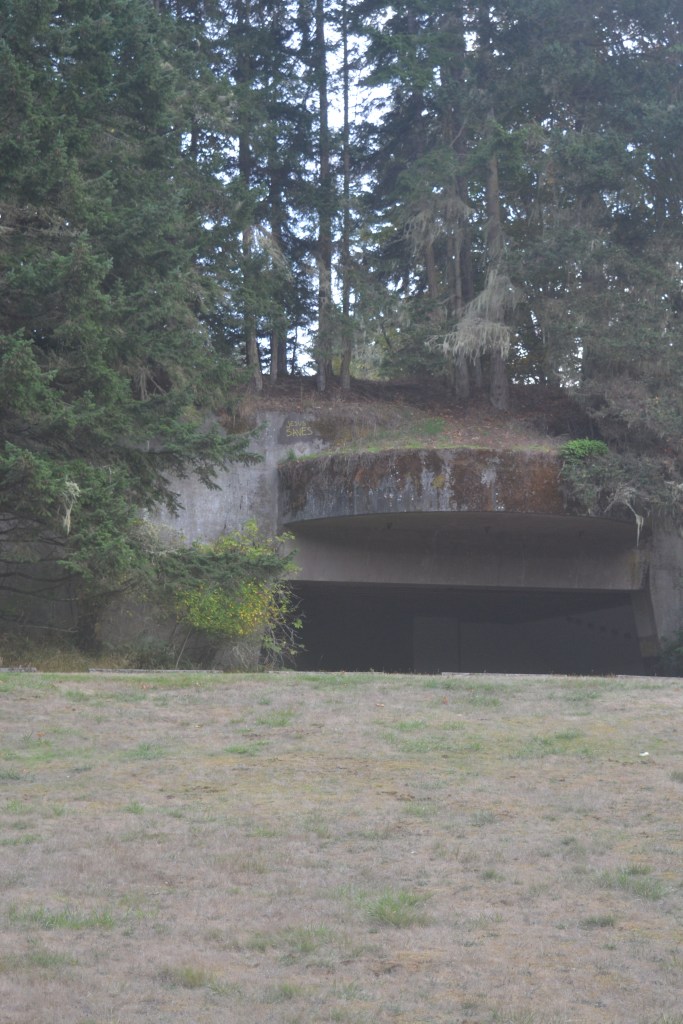
Our walk was only a little more than 3/4 of a mile, and we took our time taking in the scenery – to us this was our first introduction to the Pacific Northwest. Western Hemlocks, Red Cedars, and Sitka Spruces dominated the forest, and we felt tiny among these enormous trees (and honestly, these weren’t anywhere close to the largest we’d see). This was definitely not the east coast anymore. However, despite the short duration of the walk, the small amount of exertion made us realize just how tired we were. We’d been up for close to 17 hours (after only about 3 hours of sleep the night before). It was time to find camp.
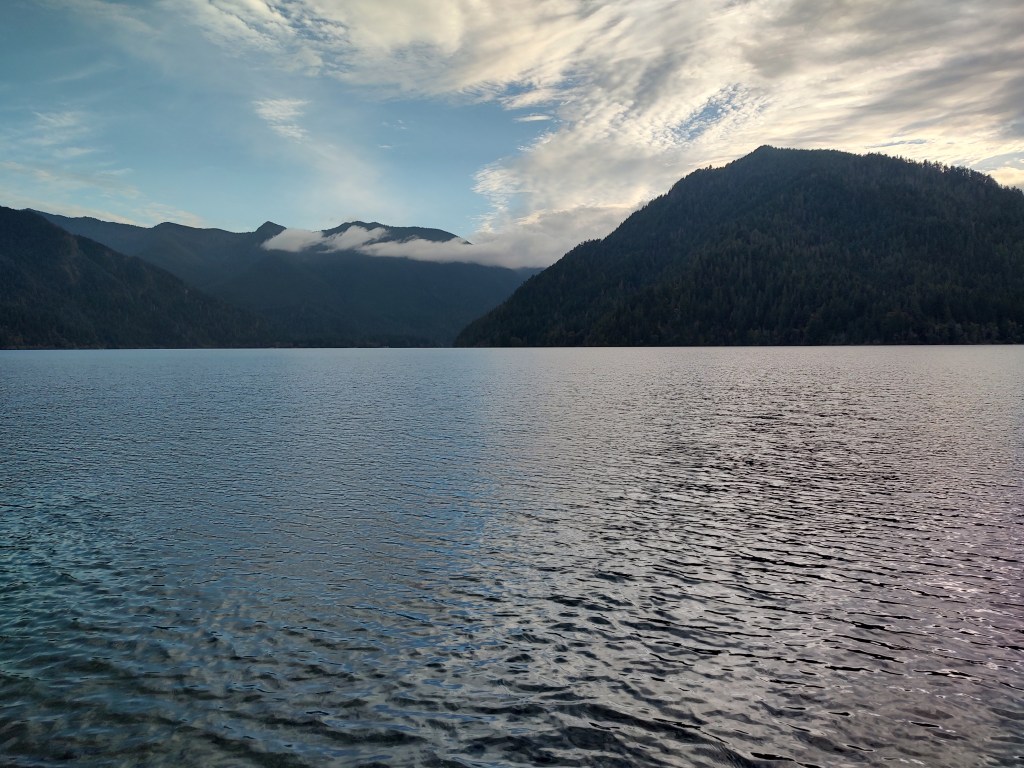
Leaving Salt Creek, we headed into Olympic National Park, proper, and drove toward Crescent Lake. After encountering the north shore of the lake – a beautiful east-west body of water surrounded my mountain peaks – our route required us to drive all the way around the east end of the lake, along the south shore, to the westernmost point at Fairholme Campground as the sun was sinking low.
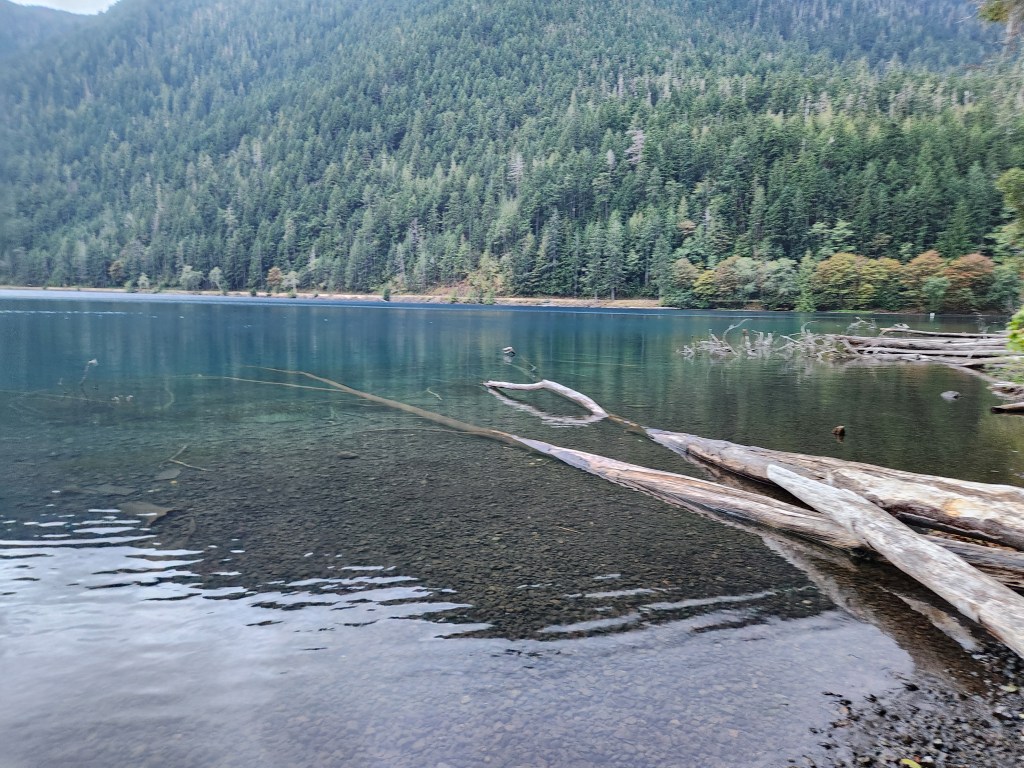
I had been lucky enough to get us a reservation on one of the lakefront sites surrounded by enormous moss-covered evergreens, so after parking Bones, we had to make our way to the shore to soak in our waterfront view before it got too dark to do it. Our trip had begun, we were inside Olympic National Park, and we were soaking in classic western forest. It doesn’t get much better.
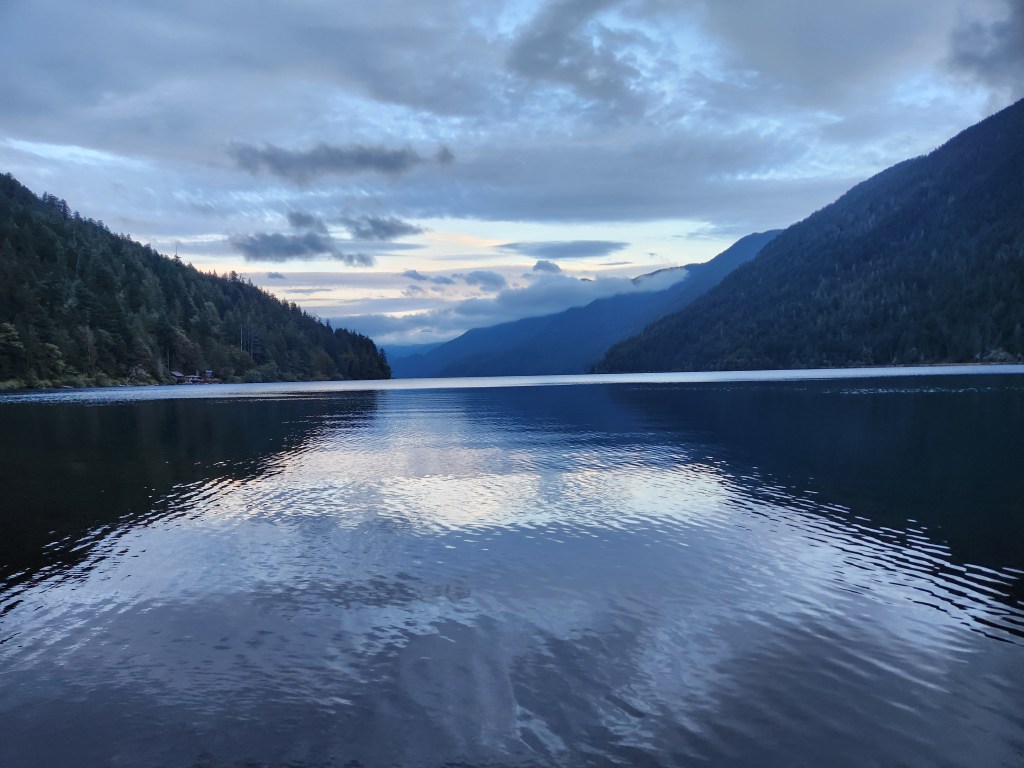
We opted for a simple dinner in the dying light. We sliced all our mushrooms and cooked them down with garlic and chicken broth and added that to penne pasta with parmesan. Straightforward, quick, easy and tasty.

We also converted Bones to sleep-mode by setting up the bed and getting sheets and blankets in place. It would be the last time we did any reconfiguring in the interior. As we got in and got comfortable, it started to rain. The noise of rain on the shell of the van was loud, but not unpleasant. Our bigger concern was our lack of organization in this unfamiliar space. We couldn’t figure out where to stow our phones, our headlamps, my wallet and keys, etc. I’ve written about this before. It’s a subtle thing, but not having a good structure to what you do with your STUFF, establishing a place for it and knowing you can find it in the dark, is a real deterrent to comfortable camping. We’d figure this out fairly quickly, but this first night, it was a challenge.
Ultimately, fatigue overcame us, and we drifted off, lulled to sleep by the steady pinging of rain on our metal shell. We guessed that this typical rainy weather would be a constant companion on this trip, and were mentally prepared for living in a persistent wet. But that would be tomorrow. Now, to sleep…

Get Out There
 Flying Squirrel Outdoors
It’s too bad you had to deviate from your itinerary, but it sounds like you found a great alternative where you still managed to stretch your legs and enjoy the scenery. Sounds like a very long day. Beautiful captures, especially of Crescent Lake.
LikeLike
I was worried when all our planning fell apart immediately, but it led us to an unexpected discovery! (Plus we were able to circle back to Hurricane Ridge the next day, so all positive!)
LikeLiked by 1 person