
Do you talk to the birds around your home? I would imagine probably not – the physical structure of the human larynx is not well suited to the trills and warbles that most songbirds can create with their dual syrinx setup. But even if we can’t talk directly to them, most of us certainly appreciate listening to birdsong when we can. Many studies have shown that the sounds of birdsong reduce stress and blood pressure in humans, and generally result in enhanced mood and well-being.
Aside from it being soothing and melodic, birdsong has complex meaning that can be learned and interpreted by humans, just as it is understood by the other animals in the forest.
The sounds birds make can generally be subdivided into songs and calls. Songs are generally more complex, longer vocalizations. These are the sounds that permeate forests and grasslands with repeating and (with practice) recognizable but complex patterns of tones and trills. They are what makes up the dawn chorus – that beautiful still time of morning just before sunrise when the neighborhood birds take advantage of the dense still air to broadcast their songs as far, and as clearly as possible.
Songs
Full songs typically have two primary purposes. The most common are territorial calls. Essentially, the message is “I am here, this is my home.” These are primarily aimed at birds of the same species but there is some evidence that there is some recognition between species here – for example a song sparrow may recognize and understand the presence of a bluebird.
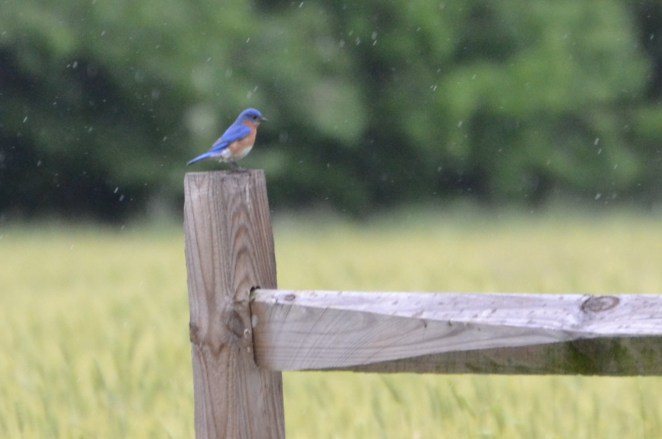
The other primary use of calls – and it’s a different call, typically – is for the purpose of attracting a mate. Generally speaking, this is a springtime activity carried out primarily by males to advertise their health and availability, in the hopes a potential mate will come visit. Some of the mating calls themselves directly demonstrate physical health, in that the complexities of the mating calls are physically difficult to create. Only a strong male can produce a strong song, and therefore (presumably) his call will attract more mating prospects. Mockingbirds use a different strategy, in that they will sing multiple songs back to back, without interruption. The variety and length of a male’s songs indicate experience, intelligence and health. (To put some of this in human terms, think of the draw of a human pop star, and the appeal of a strong singing voice isn’t hard to understand.)
There are some variations on these general song uses. For example, some bird species will engage in duet singing, where male and female will sing together. This is believed to strengthen bonds in mated pairs. There is also a (strong, I think) argument to be made that not all territorial and mating songs have to be VOCAL songs. For example, woodpeckers will drum on a hollow tree (or gutter downspout) to signal their presence and territory. Grouse and other birds will drum their wings to create a distinctive non-vocal sound that serves similar purposes.
Calls
Calls are a totally different set of vocalizations. They are typically simpler, but much more varied, serve many more purposes, and to me are much more interesting to know and understand.
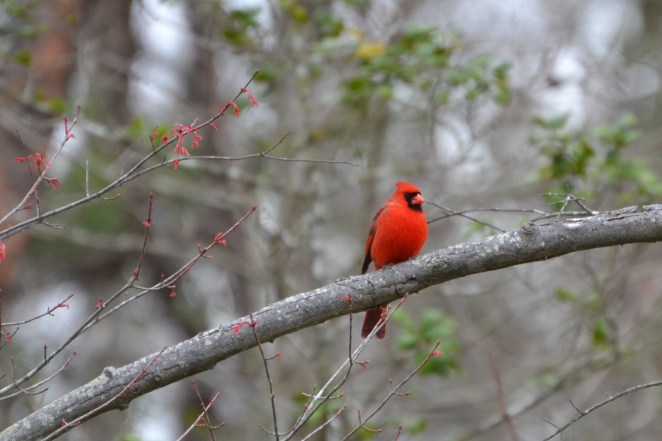
Alarm Calls: This is probably the most common call we will hear as humans, because often that call is about us. Typically, the alarm call is short, high pitched and repetitive. There’s a pair of cardinals living in the bushes in front of my house, and the male is extremely sensitive to my presence. I can’t get anywhere near him before he’s flown to a nearby tree and yells “Chip! Chip! Chip!” at two-second intervals, basically letting everything around know that I’m there and he doesn’t like it.
Other birds have more complex alarm calls. Chickadees will indicate the severity of the threat by the number of “dees” on the end of their distinctive “chick-a-dee-dee-dee” calls. The more “dees”, the more dire the threat. Chickadees also have a second call, a high-pitched, hard-to-hear “Seet” call that indicates the presence of a flying hawk or owl. By differentiating, chickadees can indicate the presence of a stationary or ground-based threat and how dangerous it is, possibly as a prelude to mobbing (see below), or they can use the subtle “seet” as a warning to hide, using a call more difficult for a flying predator to hear.
Japanese tits have been observed using different calls to warn chicks, who nest in tree hollows, of different types of threat. One call is used to warn of a crow, telling the chicks to crouch as far from the nest opening as possible, while the other warns of an approaching snake and literally compels the chicks to abandon the nest entirely.
Mobbing Calls: An escalation of the alarm call, this is a set of calls that gather reinforcements and encourage all nearby members of the flock to gang up on and attack a threat. Snakes are a common target, but I’m sure most of you have also seen a group of small birds chasing a larger crow, for example. These attacks were probably coordinated by a mobbing call.
Begging Calls: These are spring and summer calls used by young birds to indicate their hunger and motivate parents to bring them food, or to feed them what they’ve already got. While still in the nest, this call is marked by a group of wide open beaks. Many young birds will continue to pester their parents long after they leave the nest, making begging calls with open beaks as “teenagers” that look like they need to move out and start a life of their own!
Contact Calls: Depending on the species, these can be subtle or boisterous. Many forest songbirds use low volume, subtle chirps to keep in contact. The cardinal couple at my home will go out and forage together, making short flights independently, but together, through the underbrush typically between 3 and 6 feet off the ground. They are constantly chirping back and forth, and rarely get more than about thirty feet apart. It’s a simple audible cue that keeps them close and constantly indicates that all is well.
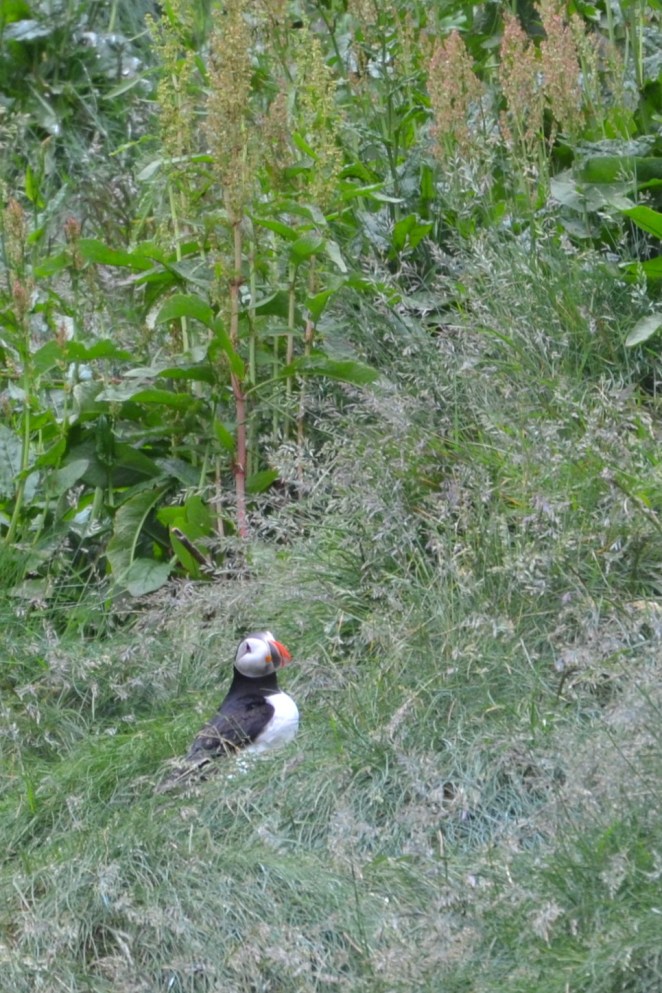
On the boisterous end of the spectrum, picture seabirds nesting in colonies. Contact calls here are loud, but distinct enough that mates, adults and chicks can all find each other in the crowd.
Is It Language?
Though birds don’t typically exhibit the vocabulary that we associate with language, there ARE some intriguing similarities between the structure of their communication strategies and our own. For example, we’ve learned that syntax matters. If you want to recruit friends to help you mob a snake, you have to both indicate the threat and make the mobbing request. We’ve learned that if we play those songs in the correct order, we can elicit this response, but if we reverse them, birds don’t seem to understand what we mean. It’s an indication that rules of grammar apply to some degree.
The way that young birds learn their songs also mimics our understanding of language. Baby birds do NOT innately know the song of their species. They learn by listening to their parents – particularly male birds listening to fathers, as they do most of the complex territorial and mate-attracting singing – and then they “babble” like human babies, experimenting with their own voices and practicing until they get it right.
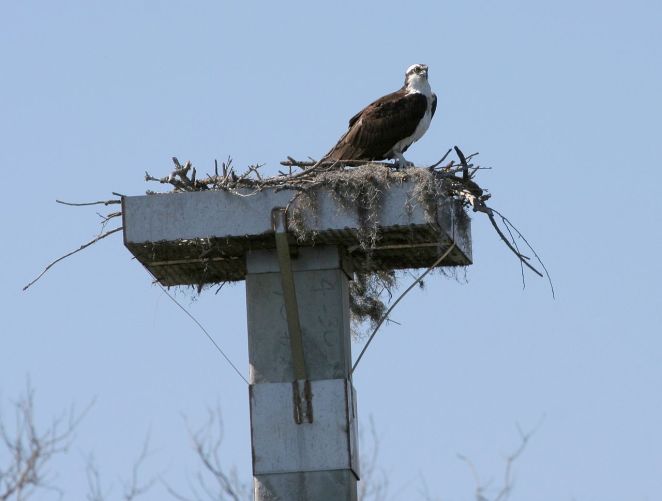
Bird songs evolve and demonstrate the characteristics of regional dialects. This shouldn’t be too surprising, given that each generation has to learn the songs, and there’s room for slight variation to creep into the songs of younger birds. Essentially, birds from different locations have accents!
Putting This To Use As A Human
I don’t claim to be an expert in this, but I do find it fascinating, and want to touch on some high points here that may encourage you to do some further research. If I might recommend a good source, “What The Robin Knows”, by Jon Young provides an excellent and approachable discussion of the subject. The website also includes links to several audio files providing examples of the different kinds of songs and calls I’ve described above.
You’re probably aware that I’m a big fan of hiking and backpacking. Jon Young describes that activity as the most intrusive, disruptive activity you can possibly engage in, so far as understanding birds is concerned. I was a little offended by the thought – but I can also picture a hiker moving through the woods and sending out ripples in all directions, like the waves around a boat, as birds spread alarm calls to alert their neighbors to the presence of a human walking through the forest.
Instead, those who study bird language encourage the creation of a “sit spot”. A place you can go consistently and sit quietly and listen. By returning to the same spot, you develop a habituation and familiarity such that the local birds stop seeing you as a threat. By sitting quietly for an extended period of time, you give any creatures in the area to settle down and behave calmly after the initial scare of your intrusion.

Now, the key here is to realize that once birds aren’t talking about YOU, they are talking about EVERYTHING ELSE. Picture a scenario in which alarm calls indicate the presence of a patrolling fox nearby, long before you can see it. Other animals are already doing this. For example, a study in 2019 discovered that while a squirrel might cower in fear after hearing the call of a red-tailed hawk, that squirrel would almost immediately relax upon picking up the chatter of unconcerned songbirds.
If you take the time to dive into bird language, you can’t help but start to better correlate songs and calls with specific species. If you establish a sit spot, you’ll probably get to know specific individuals and families of birds that live in your area. And some of this understanding goes beyond audible calls – the book goes into subtleties of behavior as well. For example, the movement of birds up or down from its normal forage range is generally an indication of unease and suspicion.
It really is fascinating, and though I haven’t had the time or focus to establish a consistent sit spot that will condition myself to the birds, I have spent time listening and observing, and feel like I have a much better appreciation of what everybody in the forest is up to. I can proudly recall hearing the movement of a threat (I suspect a cat) through the forest that I could trace solely by listening to birds (and ultimately a squirrel) in different areas of the wood as the intruder moved through.
It’s fun, and it’s eye opening. It’s definitely worth your time to learn what the neighborhood birds are saying to each other!
Get Out There!
 Flying Squirrel Outdoors