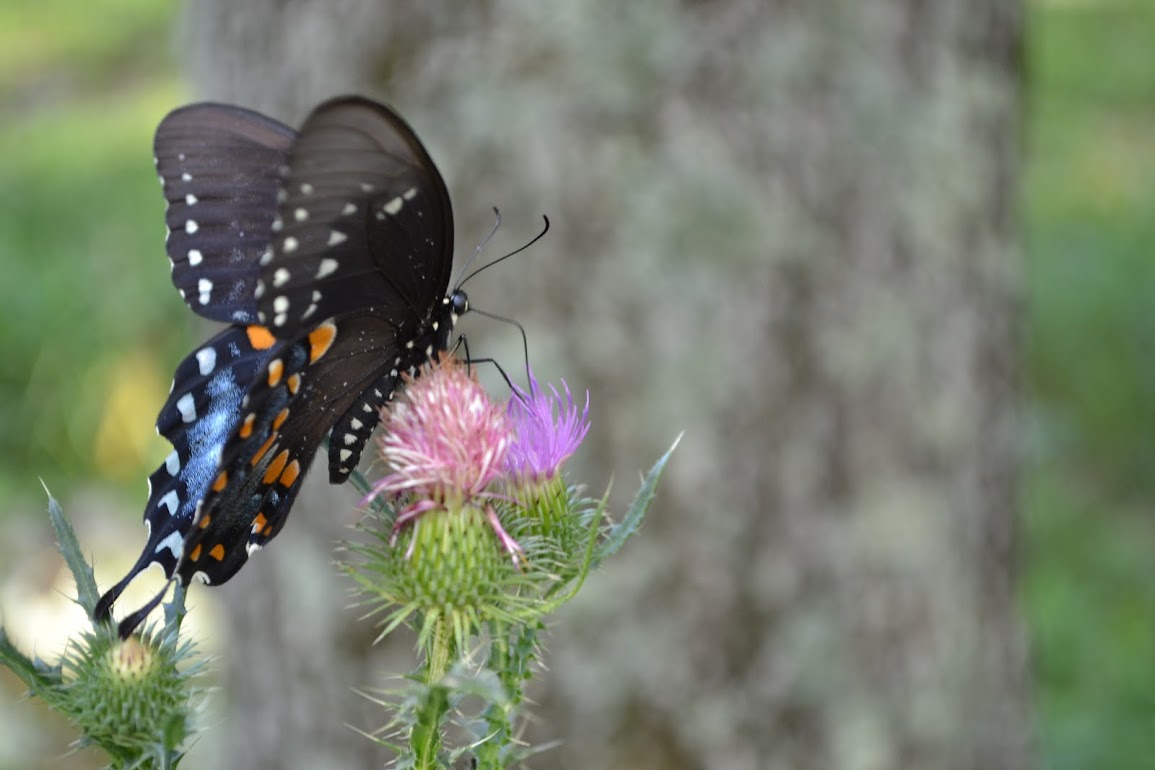
Imagine, if you will, an empty meadow. Not just empty in the way humans tend to define it – without crops, buildings, commerce or a parking lot – but empty in the sense of being an ecological ghost town. No buzzing of insects, no chirping of birds. Grasses and wildflowers swaying in the wind, but without a hope of ever being pollinated. No foundation for the food web upon which countless species depend. Each year, this meadow becomes more and more sterile, an early indicator of an ecological apocalypse.
More than 80% of the world’s flowering plants are thought to depend on insects for pollination. Three-quarters of the world’s food crops similarly need insects to pollinate and mature. Insects are an important part of the world’s nutrient cycle, playing an important role in accelerating decay in dead animal and plant matter, and serving as the primary source of nutrition for a wide variety of terrestrial vertebrates and other animals. Almost all life on land depends, directly or indirectly, on insects.

But they are disappearing.
Anecdotally, stories of insect decline are common. There aren’t as many moths around the porch lights at night, not as many bugs hitting the windshield on a Sunday drive, and not as many fireflies (lightning bugs) rising out of the leaf litter on June evenings. Scientific studies and meta-analyses of species-specific reports and citizen-science data collection agrees. We are witnessing a huge decline in the population of insects worldwide, and it may be a harbinger of worse things to come.
It is currently estimated that there are 300 Megatons of terrestrial arthropods on Earth (this includes insects, spiders, crustaceans, etc), or about the same biomass as all humans and all human livestock put together. However, this number is estimated to be decreasing by 2.5% per year, and is thought to represent a 70% decline in biomass in just the past three decades. Recent European studies focused on Coleoptera (Beetles), Lepidoptera (Moths and Butterflies), Hymenoptera (Bees, Wasps and Ants), and Odonata (Dragonflies and Damselflies) showed significant population loss trends in 60% of the species evaluated.
Among butterflies, the news is stark. Between 2000 and 2020, overall butterfly populations have dropped 22%, with 13 species showing decline for every one that is increasing in population. Two thirds of butterfly species show a decline of 10% or more.

It’s not just insects. Amphibians are experiencing global loss, as are birds. According to one study, North America has lost nearly 3 billion birds since the 1970s, a number representing about 30% of the total population. This study looked at 529 species that comprise 90% of the birds on the continent. While focus on conservation of raptors and waterfowl has helped stabilize those populations, shorebirds and birds that live in grasslands have been hardest hit, and even common birds like sparrows and blackbirds are on the decline.
The Culprits: Policies and Practices
It probably doesn’t come as a surprise that habitat loss plays a significant role in the decline. Native grasslands have been converted to farmland. We continue to turn coastal habitat into beachfront condos. Economies of scale have pushed us toward agricultural intensification and away from small farms that are more friendly to native populations. Broad applications of herbicides have had a detrimental effect on key plants that insects rely on (famously, milkweed destruction has had an adverse impact on monarch butterflies). Climate change also plays a role as temperature shifts force insects into areas where their preferred (often obligatory) plant species are not yet established. Similarly, invasive species have crowded out the native plants some species need.
At the same time, use of specific pesticides, particularly neonicotinoids (such as imidacloprid, clothianidin, thiamethoxam, acetamiprid, and dinotefuran) have adversely affected a wide range of insect species. While these are generally safer to vertebrates than previous generations of insecticides, these chemicals can be passed on through pollen and nectar, posing an additional hazard to pollinators such as bees and butterflies.

It should be noted that some of our efforts have had positive effects. The targeted conservation of wetland habitat has had a significant positive impact on waterfowl. The nationwide campaign to plant pollinator-friendly gardens, particularly milkweed, has proved to be a positive contributing factor to the health of migrating monarchs.
However, we’ve also learned that our best intentions often go astray. There have been multiple captive breeding programs established for monarchs, particularly, for the purposes of both research and population restoration. However, we’ve learned that hand-reared monarch butterflies don’t know how to migrate. This is more than just not knowing the way – monarchs in North America take multiple generations to complete a migration, and none of those who make the trip have done it before – but those raised in a lab don’t seem to want to migrate anywhere, at all. We don’t know if this has to do with them missing chemical, magnetic, or sunlight cues (intensity, polarization, orientation) during their larval and pupa stages, or if there’s some genetic sensing capability that fails to activate in a human environment, but for whatever reason, only a very small percentage of lab-grown butterflies can accomplish it. In 2018, 700 hand-raised monarchs were tagged and released in San Antonio, TX, and only FIVE were later observed at the overwintering site in Mexico. This isn’t to say that many didn’t lose their lives to predators, or suffer the fate of other capable navigators that don’t make it, but the percentage is much lower than that of wild butterflies. There ARE many populations of monarchs that DON’T migrate, and there’s concern that in addition to raising incapable butterflies, we might be introducing a population into the gene pool that just WON’T, perhaps accidentally altering the entire course of the species. It’s an indication that some of our attempts to artificially solve the problem are fatally limited.
What Can We Do?
Though the science of large-scale population science often plays a secondary role to evaluation of a specific species, the aggregation of scientific studies reflect that global biomass loss in insects (and amphibians, and birds) appears to be a global phenomenon. Therefore, we’re not really going to be able to address it without global action. This means we need to collectively acknowledge the impacts of climate change and establish policy accordingly. We need to make the decision to actively focus research on addressing the challenge of feeding the human population in a way that acts in concert with, and not in opposition to, native pollinators and other wildlife. We need to protect our wild places and maintain habitat for even the smallest of our wildlife. Targeted interventions have worked, but only when supported by a collective will to address the problem.
There are several things we can also accomplish as individuals:
- Plant Native Plants: Those plants native to your area are specifically adapted to the local ecosystem, inclusive of other plants and local fauna that utilize them.
- Reduce or Eliminate Pesticide Use: Not only do these chemicals directly harm insects and other animals, they make plant resources unavailable to those populations that might otherwise have utilized it.
- Support Habitat and Conservation Efforts: Get involved and volunteer with local organizations who work to support habitat preservation and restoration efforts. You can also donate to conservation organizations. Some focus SPECIFICALLY on insect conservation, such as Buglife in the UK, or the Xerces Society, that has recently launched a citizen-science effort to monitor firefly/lightning bug populations.
- Support Sustainable Agricultural Practices: Support small and local farms that grow produce in sustainable ways, in concert with nature.
- Advocate for Policy Change: Though it may seem frustrating in today’s political climate, make your voice heard, and vote with your pocketbook where possible. Our leaders need to hear that we care, and place a value on ecological conservation and sustainable agricultural practices.

The truth is, the entire ecological balance of the world is just that – a balance, sometimes a very delicate balance. It’s easy to pay attention to the charismatic megafauna of the world and get concerned about the preservation of things like tigers and elephants. But while we’re sitting comfortably in our insulated homes, we’re destroying life at a very basic level, and the world is flashing warning signs. These population loss trends are not sustainable, and our ability to “artificially” intervene is limited. It’s important that we make ecological health a consideration in all our human endeavors. Hopefully we can start to make real change before it’s too late to make a difference.
Get Out There.
Other Reading --
- "Rapid Butterfly Declines Across the United States in the 21st Century", Science, March 6, 2025
- "Three Billion North American Birds Have Vanished Since 1970, Surveys Show", Science, Elizabeth Pennisi, Sept 19, 2019
- "Insect Declines In The Anthropocene", Annual Review of Entomology, David L. Wagner, Oct 14, 2019
- "The Global Biomass And Number Of Terrestrial Arthropods", Science Advances, Feb 3, 2023
- "Monarch Butterflies Reared In Captivity Lack A Crucial Ability", The Atlantic, Ed Yong, June 24, 2019
 Flying Squirrel Outdoors
This is such an eye opening post. Thanks for sharing. Without insects the whole balance of Earth would be disturbed. As is with all the living creatures, minus I guess humans. Earth can go on without destructive, greedy humans.
LikeLiked by 1 person
It’s an interesting conundrum, because we’re animals too, driven like everything else to prioritize or own survival and our own reproductive success. However, we do have the intelligence and insight to realize what we’re doing, and that’s unique. We could certainly do a better job of embracing the responsibility that comes with that knowledge.
LikeLiked by 1 person
It’s unsettling to hear how many insects are disappearing, especially butterflies. We planted a few native bee and butterfly friendly flowers a few years ago and hope to add more to our garden this year.
LikeLiked by 1 person
Hopefully more plants generate more native habitat generated more happy bugs! Every little bit helps!
LikeLiked by 1 person
This hurts my heart. When we moved up here, in mid-New Hampshire, 50+ years ago, I went insane, finding the most amazing number of birds on this property. I kept a Peterson Life List, and looking back it’s a stunning example of ‘where did the damn birds go? Part of it is that our natural water supplies (underground streams, a hearty swamp, and small rivers in the valleys) were slowly drying up, as a kind of natural event. Those first few years I discovered two kinds of cuckoos, all manner of sparrows, hawks, owls, crossbills, swallows, even ducks and a few bazillion starlings, yearly. Over time the birds began to diminish. Our neighbors began using Chemlawn to destroy the nasty insects (eeeuwwww). And when the insects went, so did the birds.
There was a spell about 20 years ago when we were literally inundated with butterflies. The Monarch was the prize. I would spend huge amounts of time moving the caterpillars from milkweeds that were nearly gone to plants that had some room for them. And then would spend the rest of the time keeping track of the magical days when the caterpillar turned into the butterfly.
Now, for some reason, the milkweed (which was their plant of choice) has been invaded by a revolting worn of some sort, and butterflies have moved off to a more secretive spot. The nice thing is, they retain that memory of Where They Used to Live, generations ago, and when one hatches out, they do a fly-over past the porch…
It isn’t the climate, It’s warmer by a bit in the winter, and cooler by a bit in the summer, but not radical. I don’t know.
LikeLike