
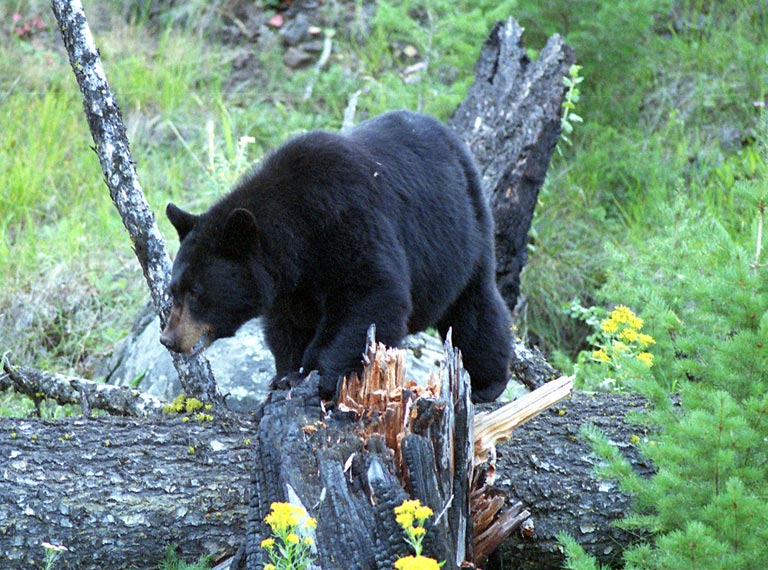
When Leon Smith stepped outside his St. Mary’s County home in mid-July and found his bird feeder knocked over, he probably wasn’t expecting to come face-to-face with a black bear. The rural Maryland county along the western shore of the Chesapeake Bay is not an established part of the black bear’s range, and the animals just aren’t typically found there, though the bear Mr. Smith photographed rummaging through his yard in the Piney Point area certainly defies that expectation. This event represents something much bigger than a single wildlife encounter—it’s a living symbol of one of the Mid-Atlantic’s greatest conservation successes and a preview of our wild future.
The Ripple Effect Reaches Southern Maryland
That bear in St. Mary’s County isn’t lost—it’s exploring. What we’re witnessing is the natural expansion of a population that has bounced back from near extinction in remarkable fashion. When European settlers first arrived in the area in the 1600s, bears occupied every county in modern-day Maryland, including the entire Eastern Shore. By the 1950s, habitat loss had reduced Maryland’s black bear population to a handful of animals clinging to existence in the state’s far western mountains. Today, over 2,000 adult and subadult bears roam the four westernmost counties of Garrett, Allegany, Washington, and Frederick.
But bears don’t respect county lines, and young males especially are driven by an ancient imperative to strike out on their own. Each spring and summer, these dispersing juveniles push eastward and southward, following river corridors and forest patches in search of new territories. Some make it all the way to Southern Maryland—and a few have even crossed into Delaware, where no bear had been seen since around 1900 until this recent wave of visitors began in 2016.
The timing of the St. Mary’s County sighting fits perfectly with what biologists expect. May through July marks peak dispersal season, when young bears are on the move and human encounters spike. It’s also when bear-vehicle collisions increase—a sobering reminder that occurred right in St. Mary’s County back in 2016, when a black bear was struck and killed in the Sandgates area.

Delaware’s “Delabear” Phenomenon
Speaking of the Eastern Shore – The Chesapeake Bay serves as a natural obstacle to eastern bear expansion. The urban areas around Washington, D.C. and Baltimore also tend to funnel wildlife into certain pathways. But just as bears are venturing into Southern Maryland, they’re also moving around the cities and the Bay to visit our neighbors in the First State.
Four (known) bears have wandered into Delaware since 2016, creating what DNREC officials wryly call “Delabear” encounters. Each sighting generates a media frenzy and social media buzz, understandable given that these are the first bears Delawareans have seen in over a century. But like we’ve seen with other species (Coyotes, Armadillos), wild animals are constantly searching for new territory, and if the habitat and resources look promising, these animals might settle in. Contrary to popular opinion in the east, black bears are not “mountain animals” (see Eastern North Carolina!), they are merely “keep away from humans” animals.
The most recent Delaware visitor met a tragic but telling end in June 2024, when it was struck and killed on Route 1 near New Castle. DNREC biologists collected genetic material to trace the bear’s origins—valuable data that helps wildlife managers understand these movement patterns and prepare for future encounters.
The reality is stark but simple: as bear populations continue to recover in Pennsylvania, New Jersey, and western Maryland, more young males will inevitably wander into new territories. Delaware just happens to be in the path of this expansion, despite its dense development and busy roadways.

A Success Story That Demands New Strategies
The Maryland Department of Natural Resources isn’t just watching this expansion—they’re actively managing it through their comprehensive Black Bear Management Plan. The strategy is broad, balancing objectives that recognize bears as both a conservation triumph and a management challenge.
Central to the plan is maintaining healthy populations through careful monitoring and a regulated hunting season that’s been in place since 2004. But equally important are the conflict prevention and public education components. The Maryland Wildlife & Heritage Service operates a Black Bear Nuisance Response Plan and even maintains a Black Bear Damage Reimbursement Fund to help property owners and farmers deal with bear-related losses.
The message to residents is clear and practical: secure your garbage, remove bird feeders during active periods, feed pets indoors, and clean your grills. These aren’t just suggestions—in Maryland, feeding bears is illegal precisely because it creates dangerous associations between humans and food.
Looking Ahead: Managing Our Wild Neighbors
What does the future hold for bears in places like Southern Maryland and Delaware? Wildlife biologists are cautiously optimistic about the species’ recovery while realistic about the challenges ahead.
Delaware’s landscape presents a perfect case study in the complexities of expansion. While the state could theoretically support bears from a food and habitat perspective, its developed terrain and network of busy roads create significant hazards. DNREC’s strategy focuses on discouraging permanent residence while preparing the public for occasional visitors.
In Southern Maryland, the situation is more promising. The region’s mix of forests, agricultural lands, and suburban areas could support transient bears, though permanent establishment would require careful management to minimize conflicts.
The Maryland DNR continues monitoring bear activity throughout the state, tracking not just the core western populations but also the increasing sightings and complaints in central and southern counties. Each encounter provides valuable data about movement patterns, seasonal timing, and habitat preferences that inform future management decisions.
Coexistence in a Changing Landscape
As we celebrate the return of black bears to areas where they haven’t been seen in generations, we’re also confronting new realities about sharing space with large wildlife. The key to successful coexistence lies in understanding that these encounters aren’t accidents—they’re the predictable result of a recovering population doing what healthy wildlife populations do: expand into available habitat. Our job as outdoor enthusiasts, residents, and stewards is to prepare our communities for this new reality.
Even if you live in areas not traditionally listed as “bear country”, it’s wise to take precautions that discourage wildlife from becoming dependent on humans. Responsible actions like securing your garbage cans and keeping food indoors help ensure these magnificent animals can continue their remarkable comeback story. After all, seeing a black bear in Maryland isn’t a problem to be solved—it’s a conservation success to be celebrated and managed wisely.
The ripples from western Maryland’s bear recovery are spreading, and Southern Maryland is just the beginning. As populations continue to grow and young bears continue to disperse, we’re all going to need to get a little better at being wild neighbors.
Get Out There
For more information about black bear safety and Maryland’s management efforts, visit the Maryland Department of Natural Resources website. Remember: if you encounter a bear, remain calm, make noise, and slowly back away—never run.
 Flying Squirrel Outdoors
Great article! Thank you!
LikeLike
Thank you!
LikeLike