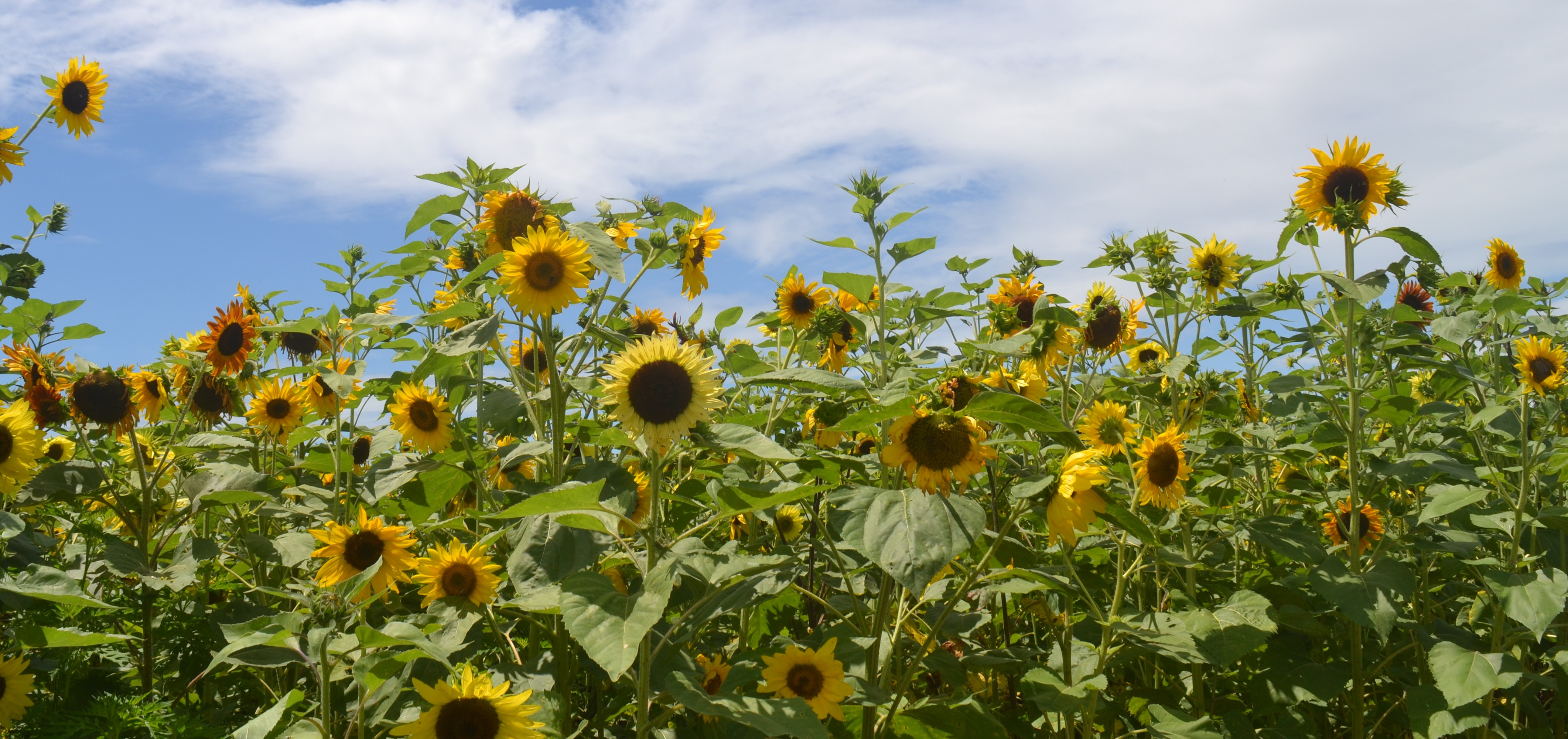
It’s high summer. Haze, high humidity, intense heat, and the threat of thunderstorms have become a daily routine. Last week, as the temperature briefly dipped into the mid-80s (F), and the forecast included thunderstorms for the next five days, we took a quick opportunity to get out to the local produce farm with a side trip to a farm specializing in cut flowers and a large field of showy sunflowers.

There were at least three different types of sunflower in the field, at least to my untrained eye: a classic, single-bloom-per-stalk with a slightly darker yellow hue…

A pale-yellow flower that tended to grow in groups…

And a variety that had petals tinged with red, ranging to an almost-solid burgundy color. This one, like most of the flowers, had a visiting bumblebee crawling on it.
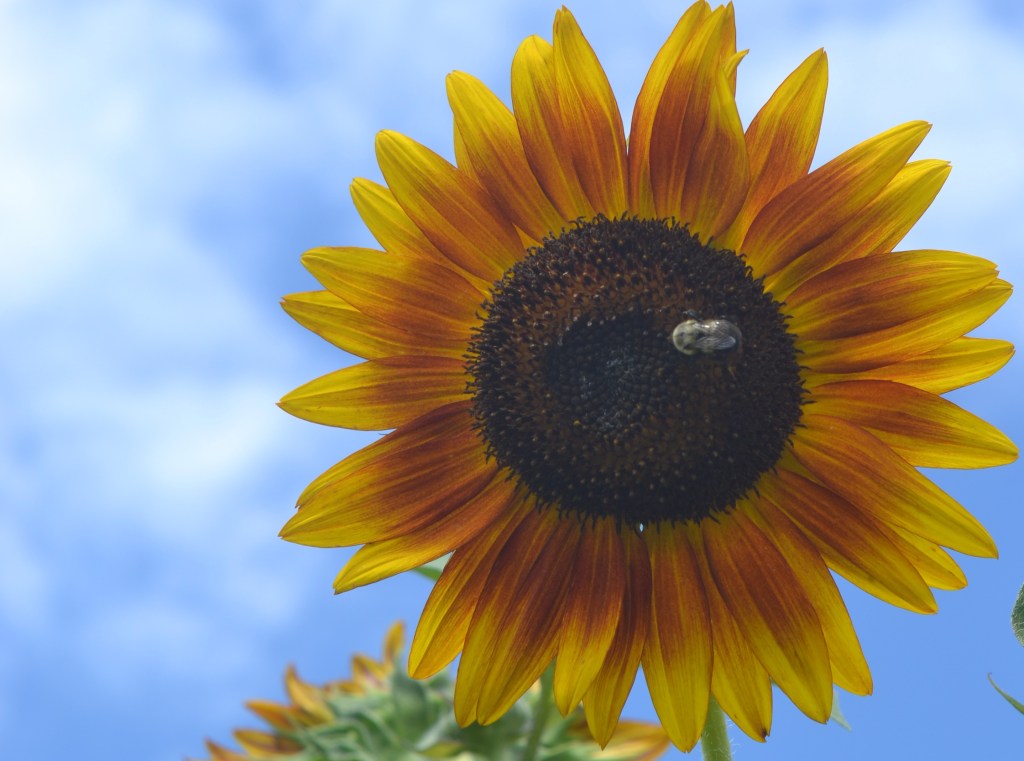

Bees were everywhere. Some flowers had three or more crawling, buzzing, legs full of yellow pollen. Those not preoccupied with flowers were flying between them, filling the air with an incessant buzz. They had no time or concern for us, thankfully.
Compared to bees, butterflies were rare, but we did see a few. Here, a Zebra Swallowtail (Eurytides marcellus) enjoys a pale flower.

Sunflowers are actually composite flowers. Each showy bloom contains multiple individual florets, arranged in a helical pattern, each with its own independent seed-making anatomy and nectar reserves. No wonder the bees are so happy. Each landing offers (potentially) hundreds of pollen and nectar sources.

The farm had paths cut through approximately three acres of sunflowers. They called it a “maze”, an alternative to autumn corn mazes, but it was really more of a labyrinth in that, with few exceptions, the path was a single long and winding road through the flowers.

Looking into the field, you could see flowers stacked on flowers, stretching off into the greenery. At the fringes, though, individual blooms contrasted nicely with blue sky, building storm clouds, and other objects. We tried to get a good photo of sunflower blooms with blooming pink mimosa trees in the distance, but couldn’t quite make it work. A barn stood in as a reasonable substitute.

Next to the sunflower field stood about an acre and a half of zinnias. Orange, white, pink, red and yellow blooms spread out across the landscape.

Bumblebees liked the zinnias too.

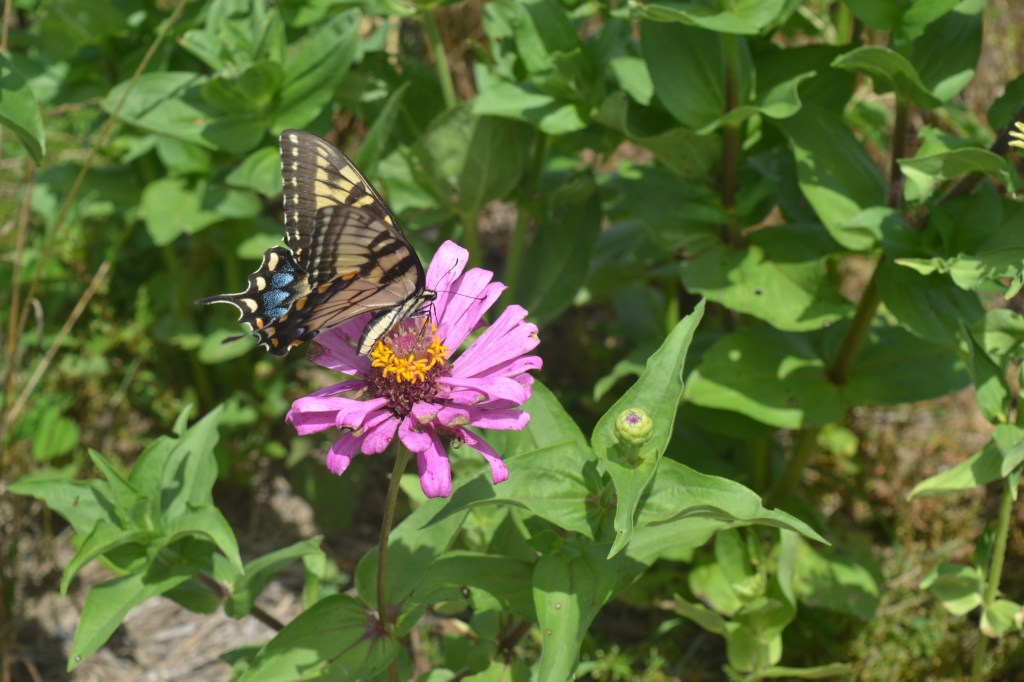
But the primary pollinators in the zinnia fields were butterflies. Here, a Tiger Swallowtail (Papilio glaucus) enjoys nectar from a…pink? purple? lavender? lilac?… zinnia….
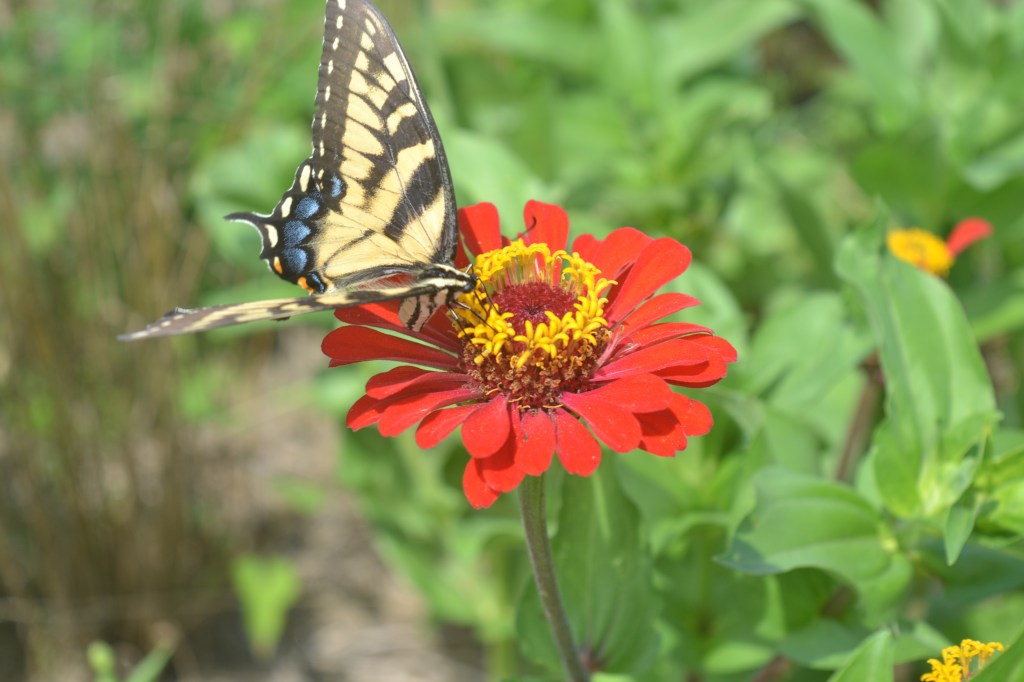
…while another tiger swallowtail enjoyed a red flower.
It was still a hot day, but wandering through the flower farm was a great way to spend an afteroon – particularly if you enjoy insect-watching! I’ll finish with a self-portrait of the intrepid explorers.

Get Out There!
 Flying Squirrel Outdoors