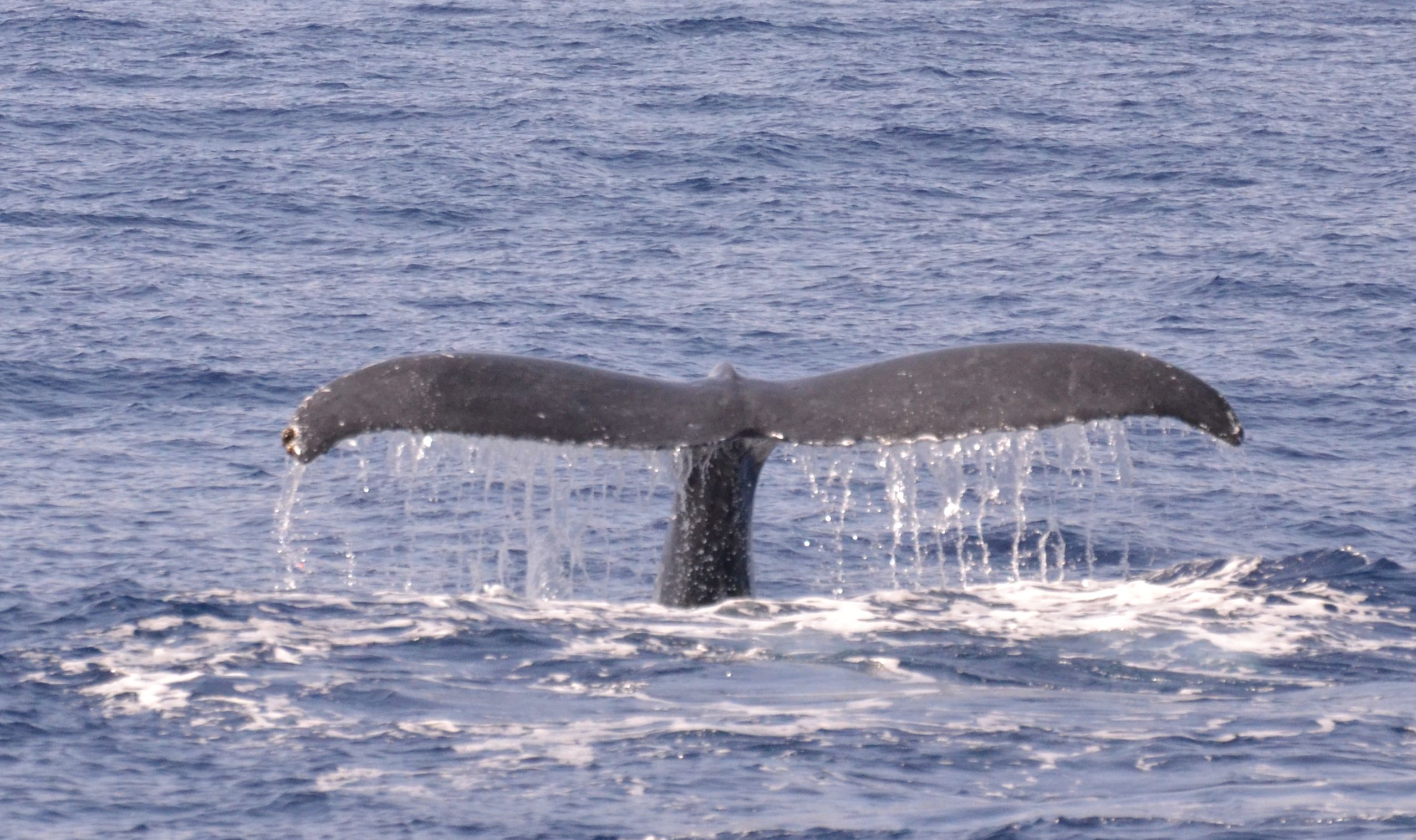
February is peak humpback whale season in Maui. There are about a thousand in the triangular area of water between the west shore of Maui, Lanai and Molokai, giving birth, mating, singing non-stop to each other, and getting up to all sorts of whale antics. You can see them almost constantly, from the beach, from the road – just look out to the water for a minute and you’re sure to see a few spouts, and you might see a tail, a fin-slap, or a full breach.
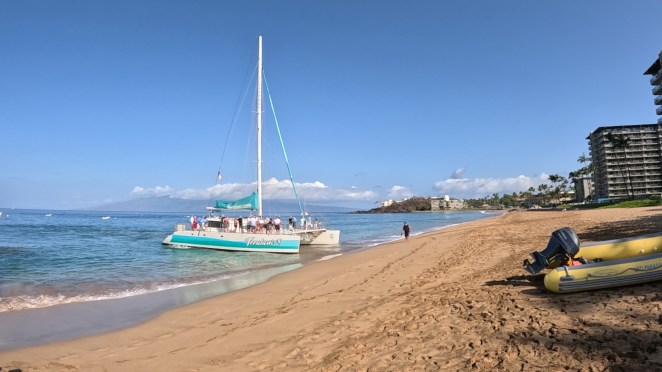
When I posted last week about being able to hear the whales while snorkeling off the beach at Ka’anapali, I alluded to trying to get closer. This post is a quick photo collection of sightings from a follow-up trip, a single morning whale-watch trip to go spot them. We actually went out twice – the first was dedicated to whale-spotting, on one of the several Trelani catamarans that load right off the beach at Ka’anapali. The second time, we were on a boat heading to and from the dive site in Molokini Crater and it became an impromptu whale tour when we had to coast and idle to give several of them the space they are due. These pictures are from Trelani, only.
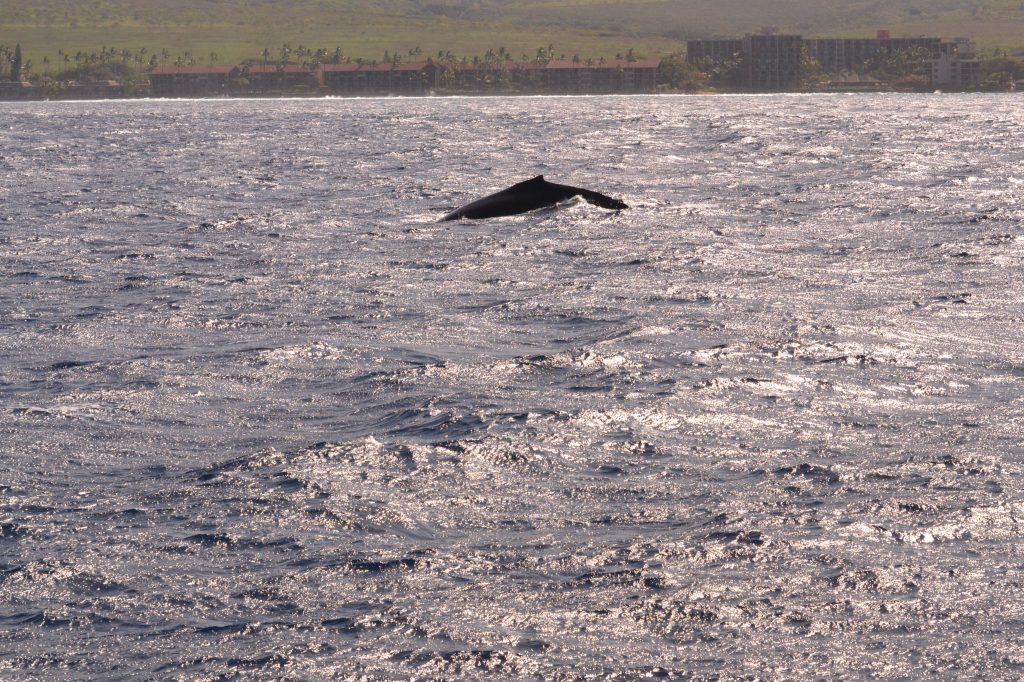
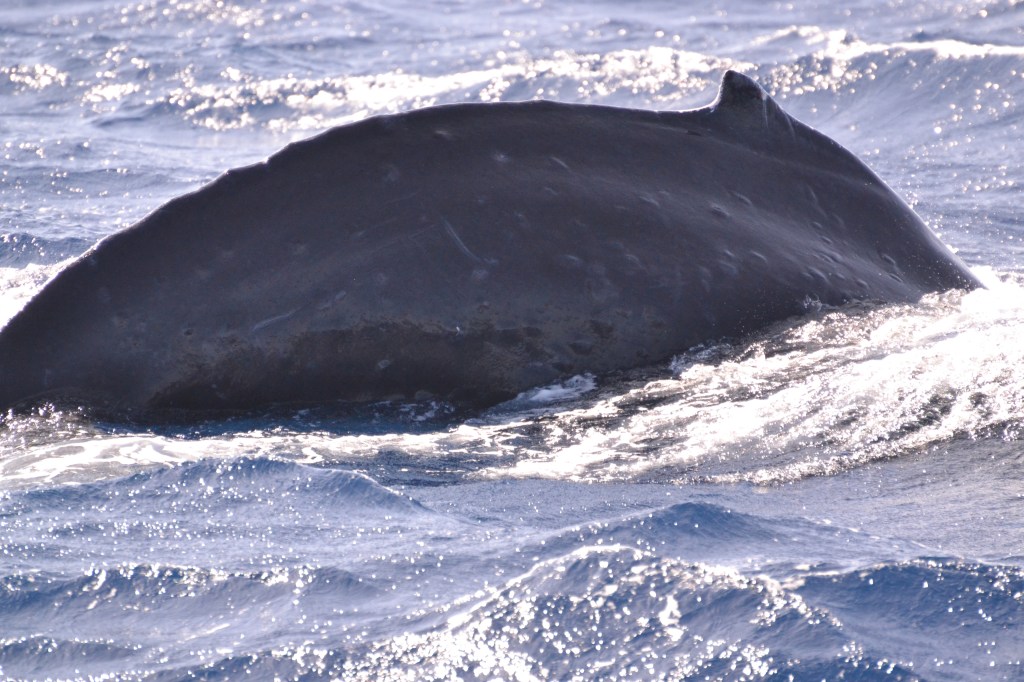
Typically, looking out at a broad expanse of blue sea, the first hint you’ll see of a humpback is its spout, followed by a rolling black back and tiny dorsal fin. Fun fact, a humpback’s exhalation can reach 300 mph, three times faster than a sneeze. The spray is caused by vapor in the whale’s breath condensing into droplets as it hits the cooler air.

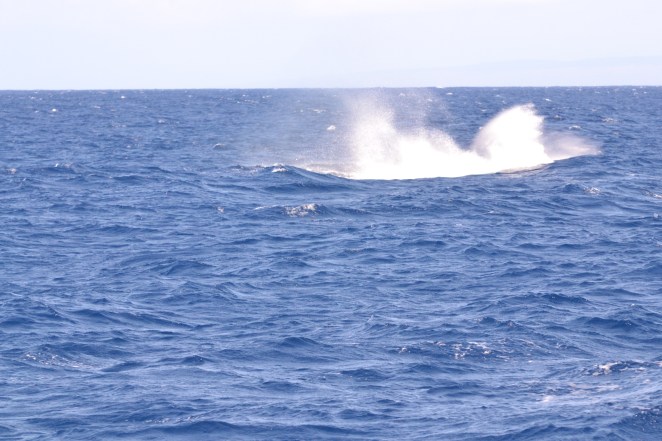
Maybe you’ll turn just in time to see a splash, letting you know you just missed something exciting, created by something big. (Like, school bus big.)
If you’re REALLY lucky, you’ll see a full breach – a humpback whale trying to fly. It’s not exactly clear why they do this, but theories include: a demonstration of strength to impress/compete with other whales, a communication device (the splash makes quite an impression), or just that it’s fun to do. I’m sure it’s a combination of these things. Surely context matters. Less athletic whales (or just those that have already had a long day) will also call attention to themselves by repeatedly slapping their tails or pectoral fins on the water.

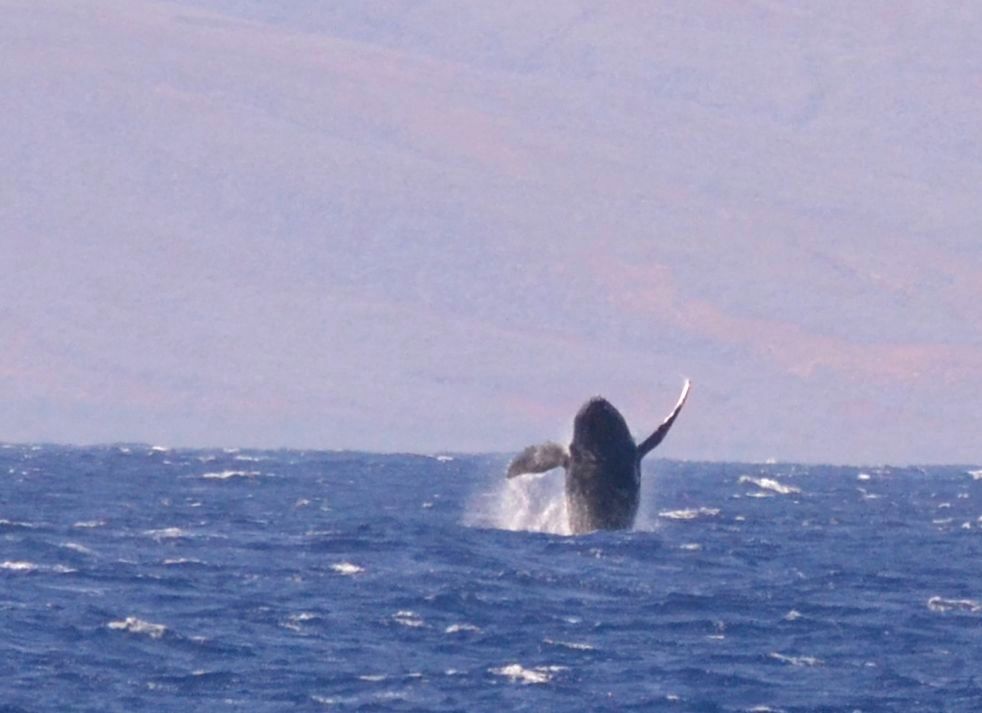
(Just a note – this breaching behavior was pretty far away, but we saw a surprising number. Breaches were hard to catch with the camera, seeing as you had to be facing the right direction at the right time with the right focus settings, etc, etc. Some whales would breach repeatedly, 3-5 times before getting tired, and that’s what happened with this one – very cooperative and somewhat predictable. Breaching in general does not seem to be nearly as rare as I thought it was!)
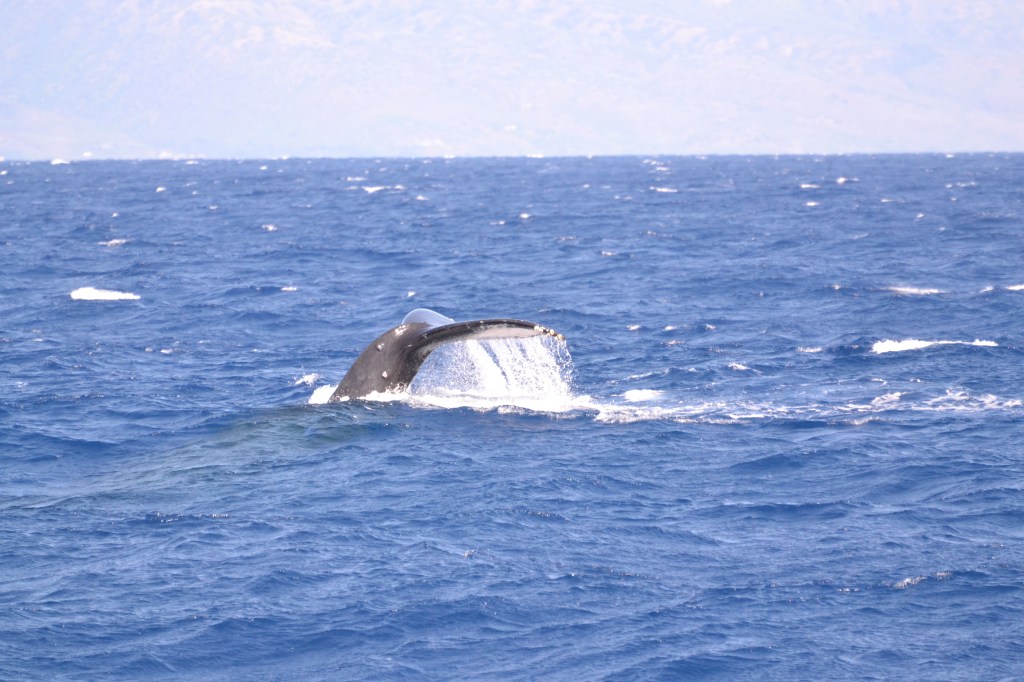
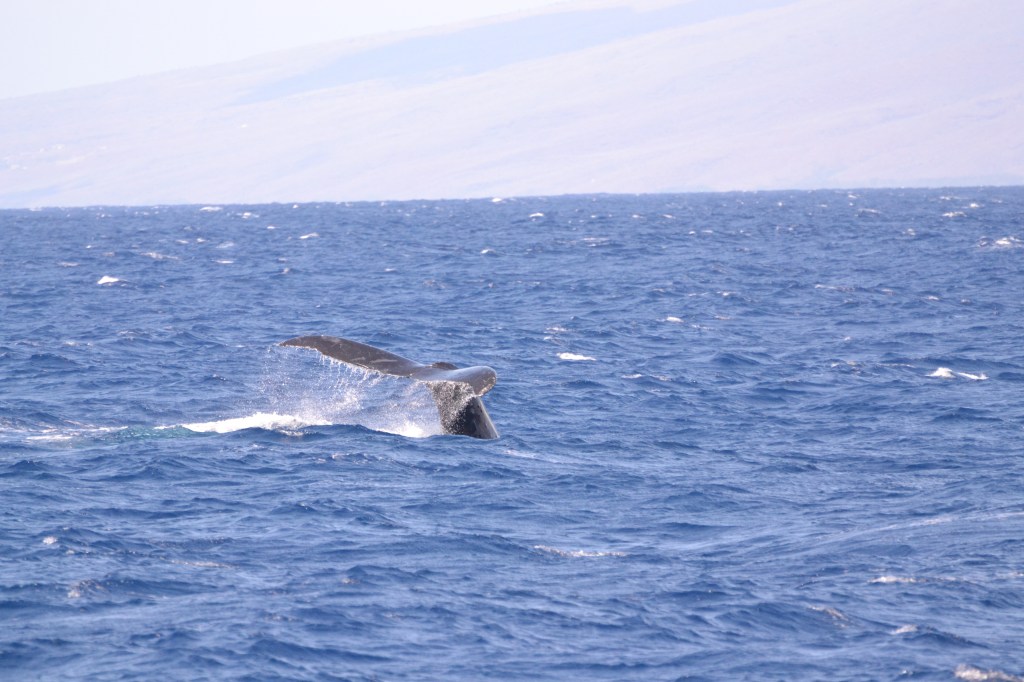
If you see a humpback do a prominent arch with its back, it’s time to say goodbye. That’s a sure sign that the tail is coming up, and the whale is diving down. However, get your camera ready for a shot of that tail! (This one got a little half-hearted at the last second and didn’t dive deep).
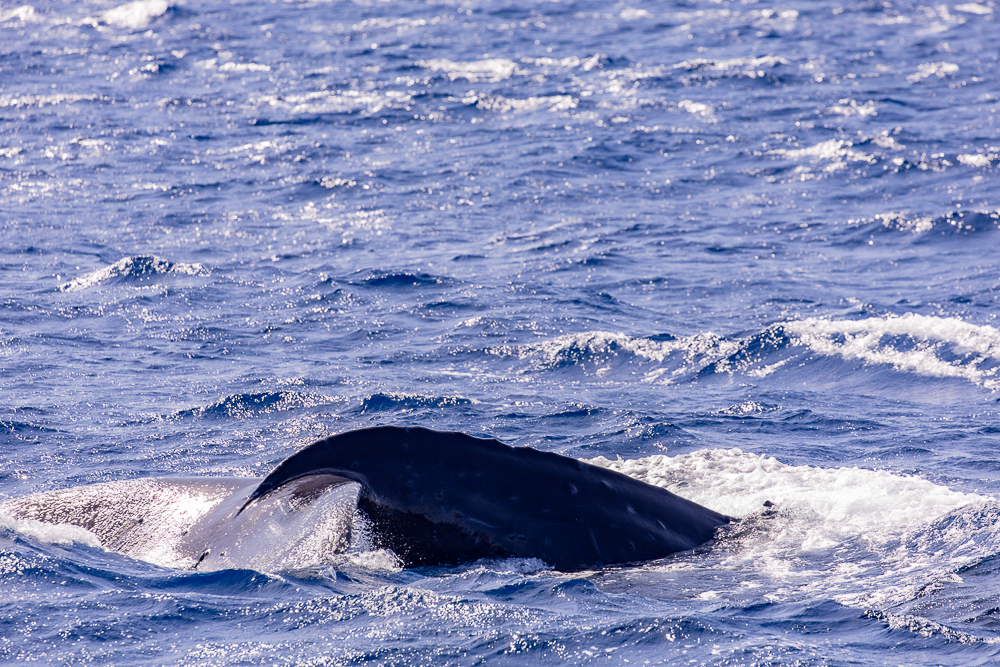
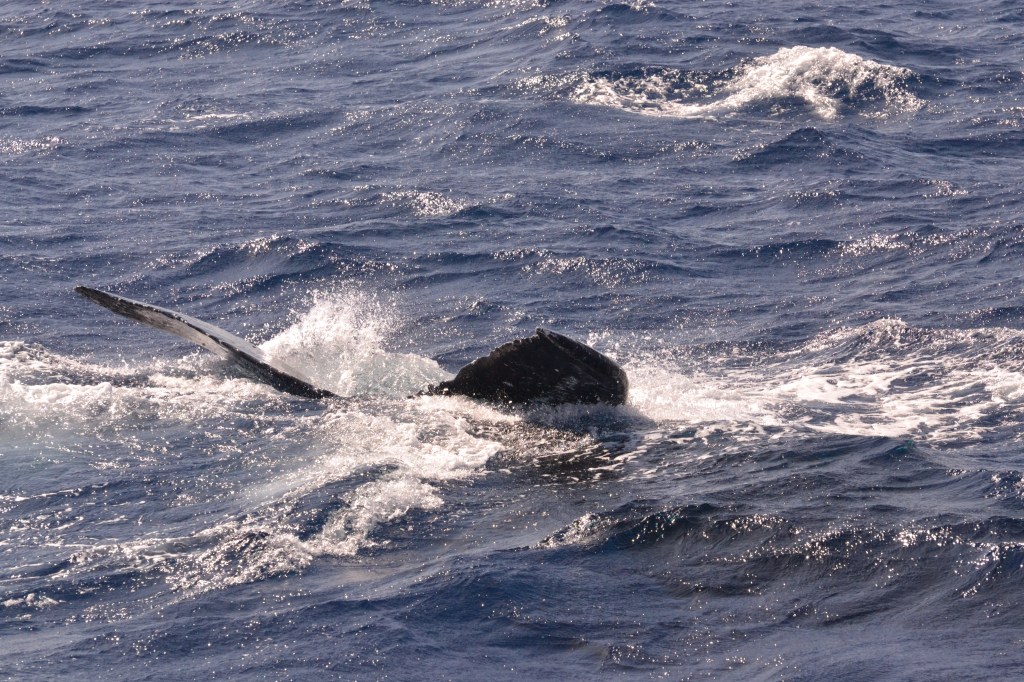
This one achieved a more prominent dive, and disappeared just as its companion surfaced. That second whale soon followed its buddy.

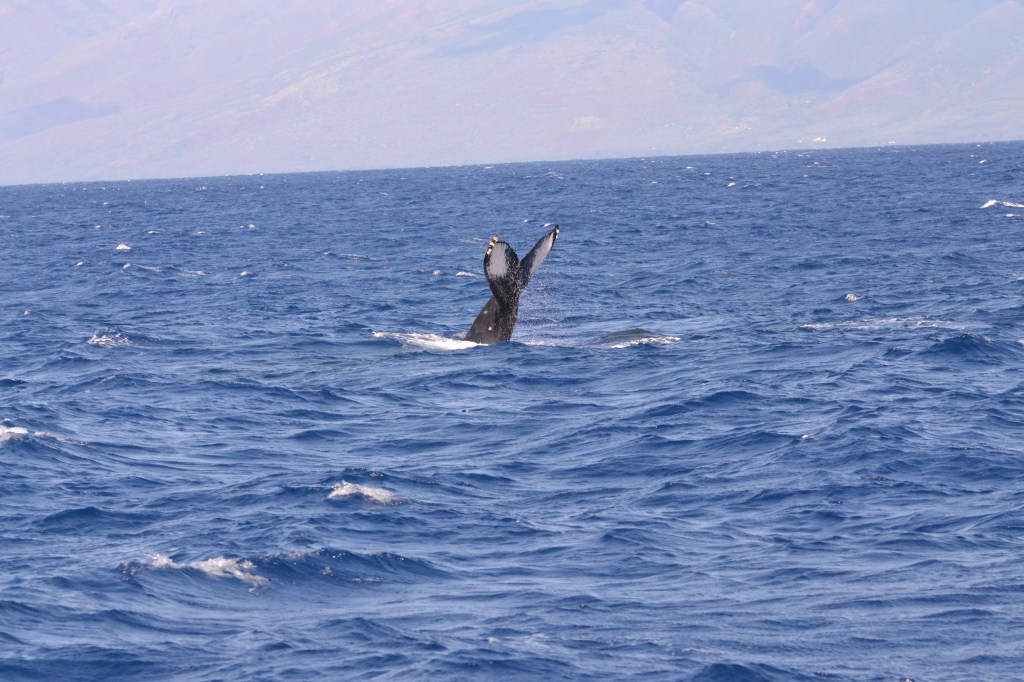
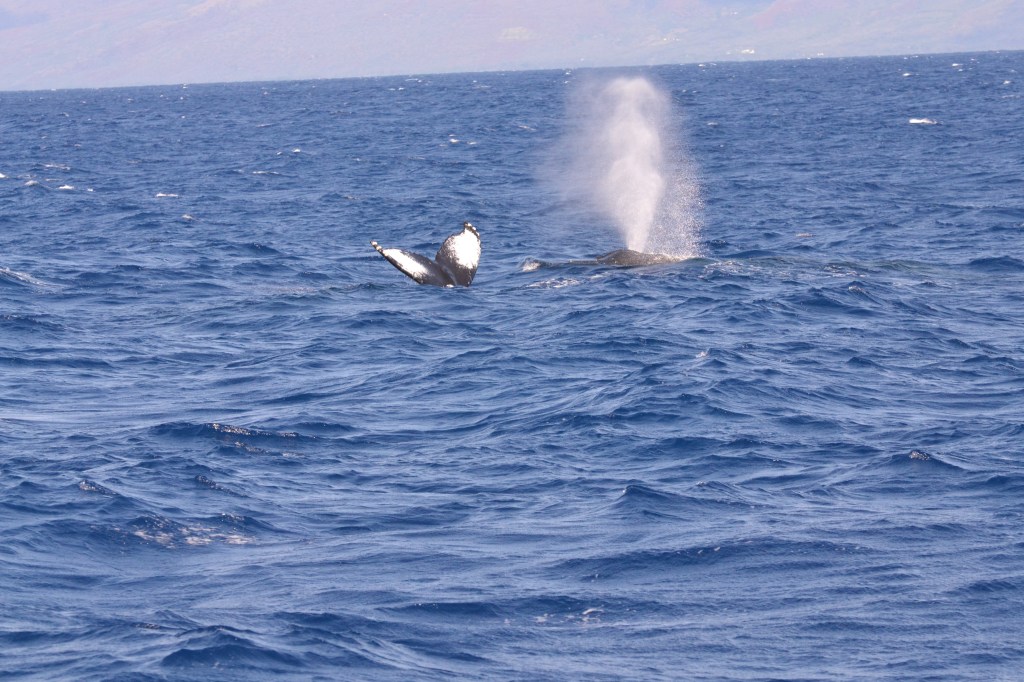
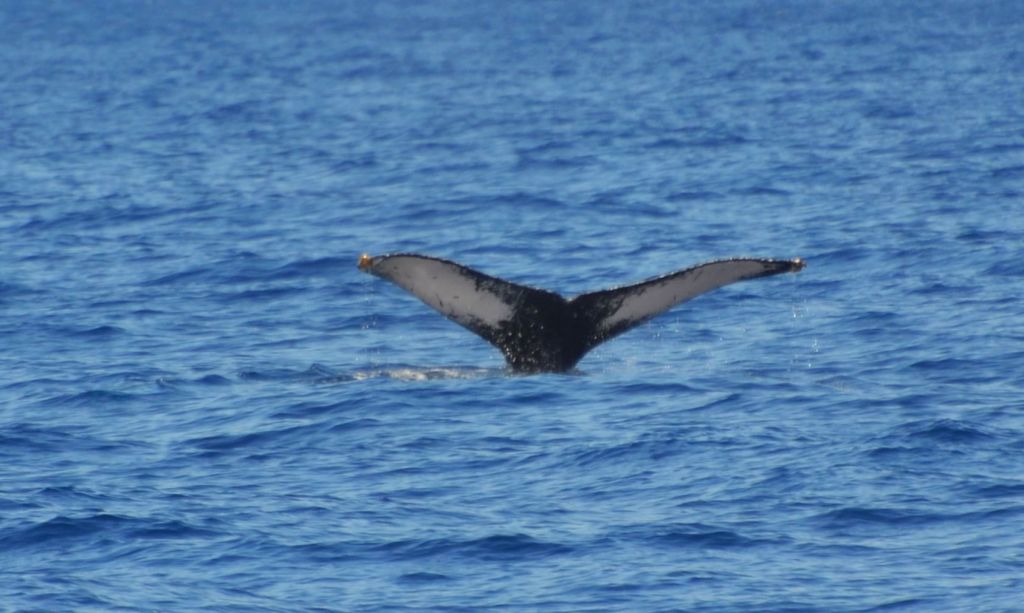
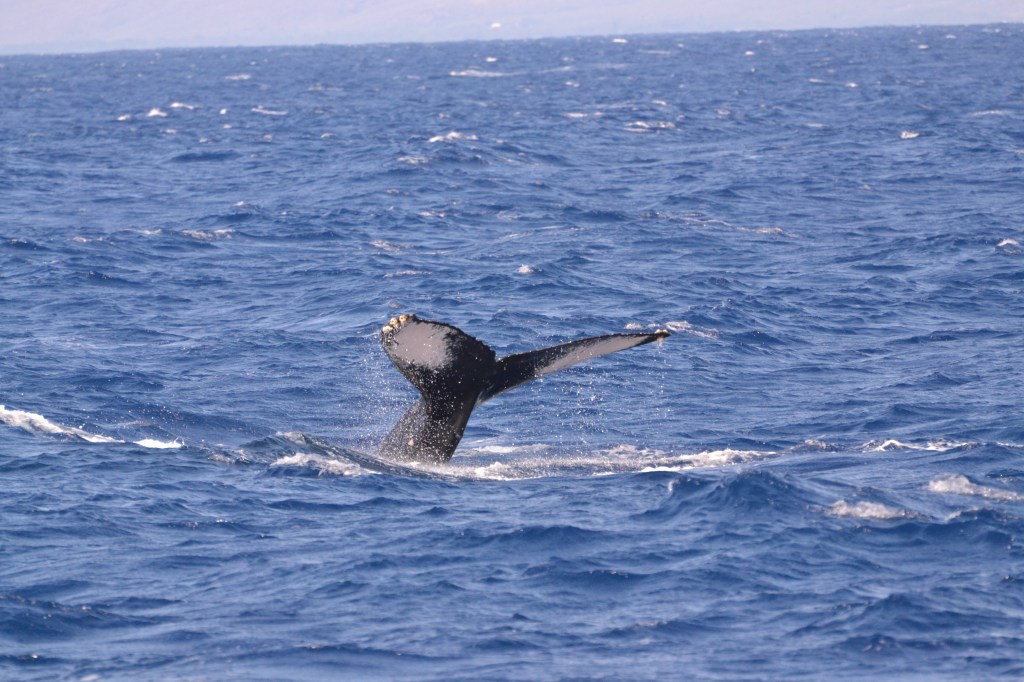
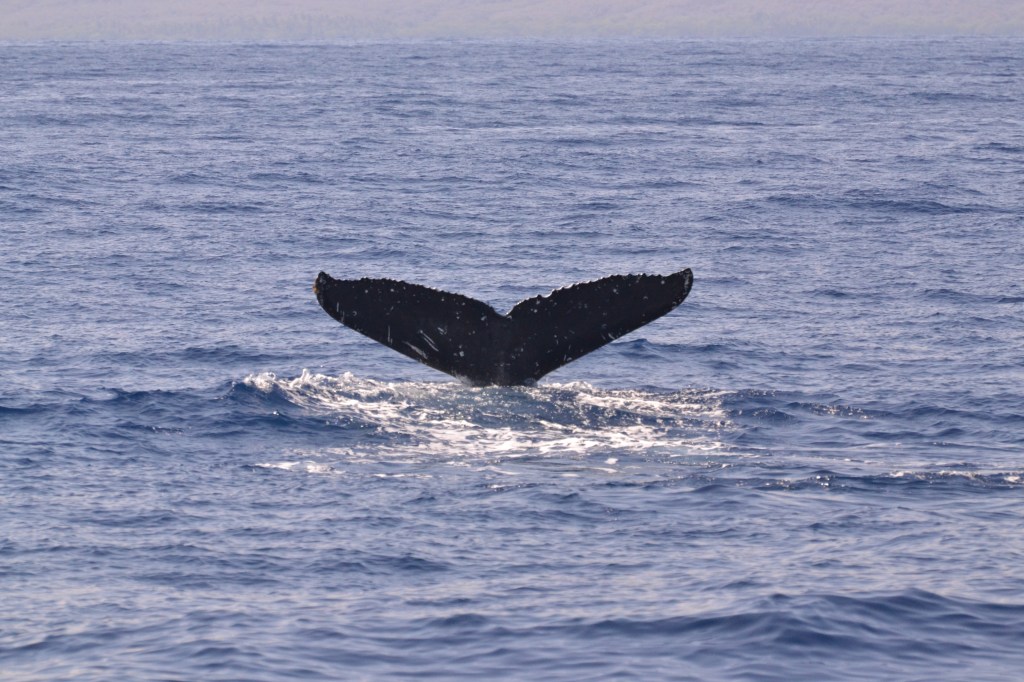
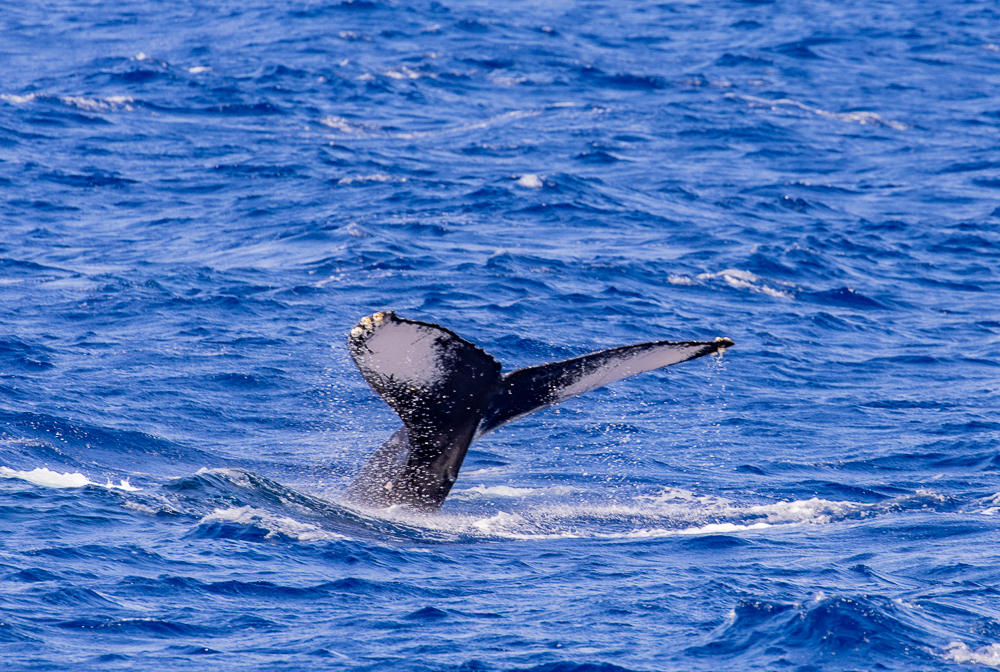
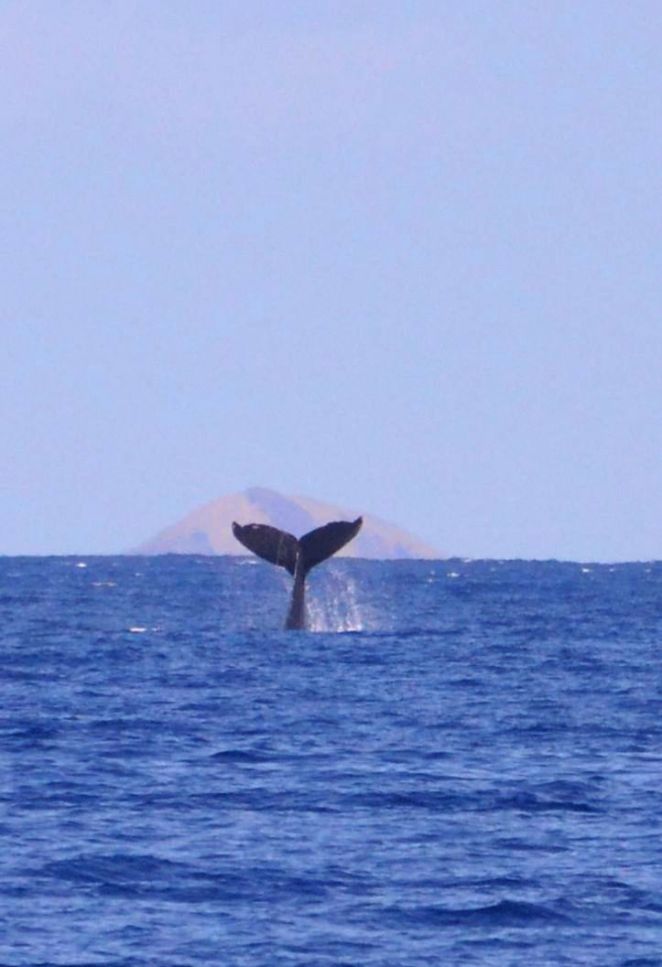
Eventually, whales just want to get underwater. While many kept cruising along the surface, many others would eventually take their leave like this. So many tails! They say that the white patterns on the underside of a humpback’s tail are like a fingerprint, and can be used to identify specific individuals.
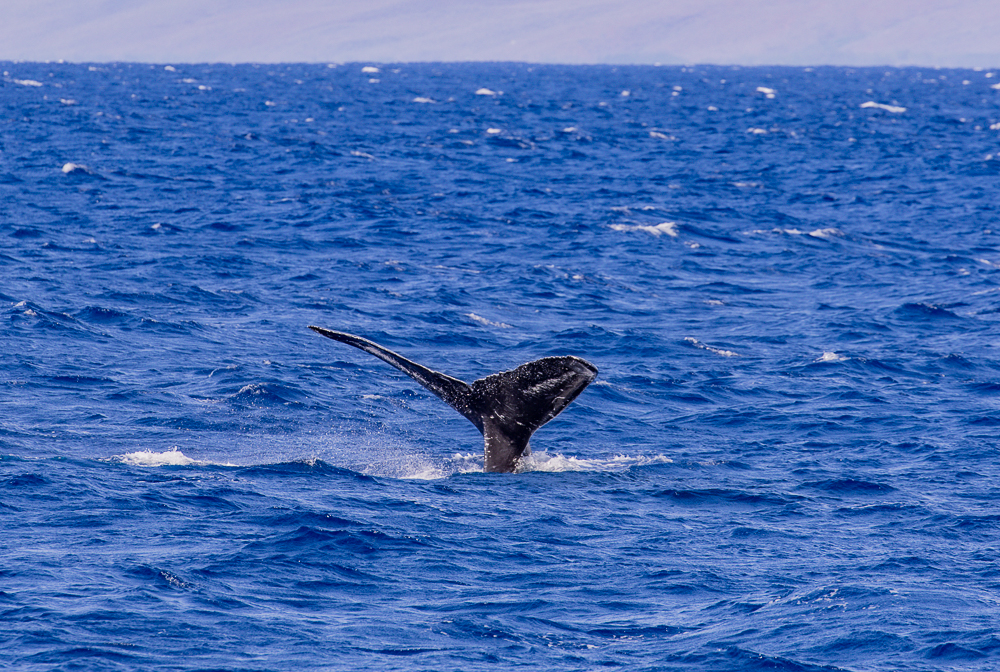
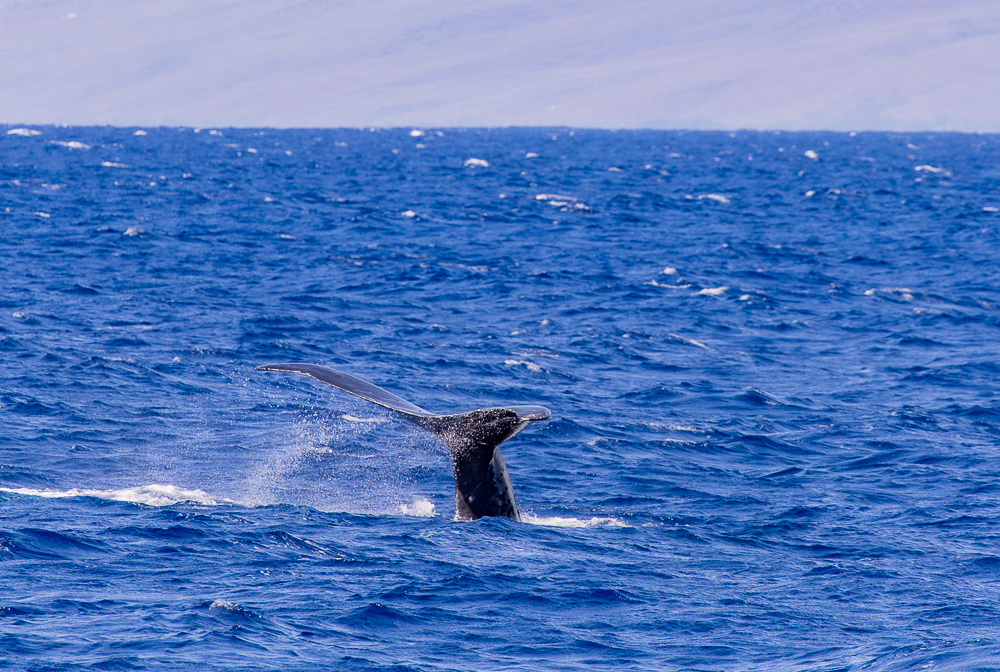

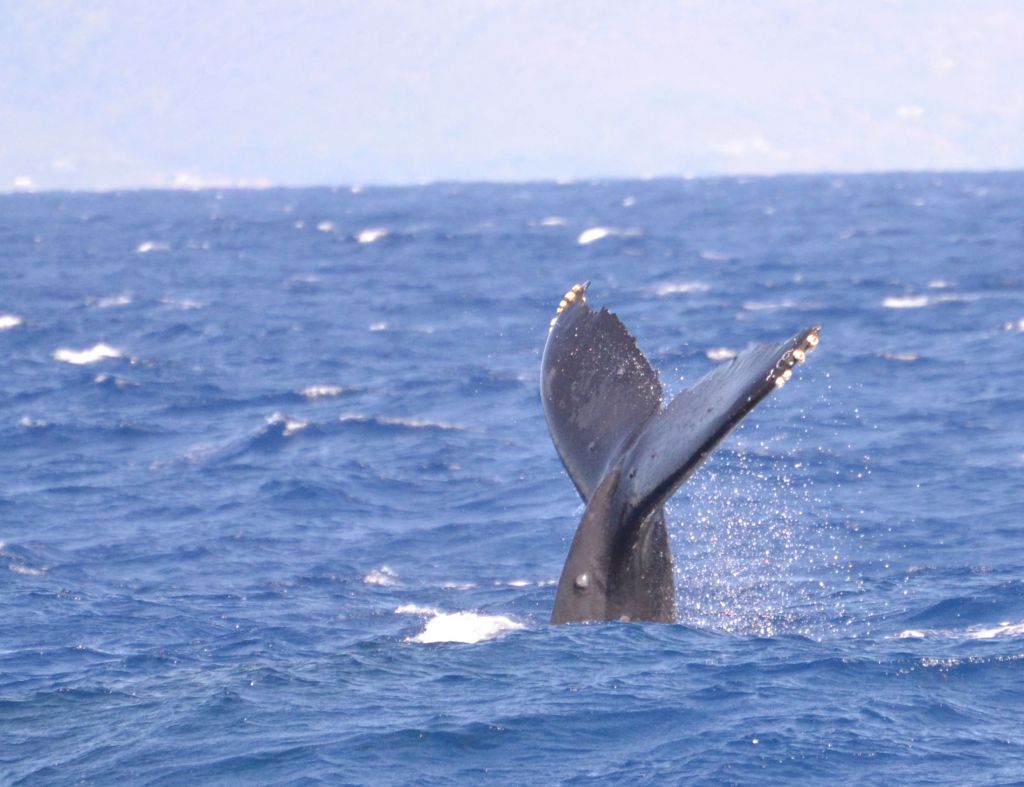


On our way back to the beach, we encountered a mother and new (about three weeks old) calf, hanging out near the surface. The mother seemed to be cruising along at a shallow depth, while the baby, swimming along just above her, repeatedly tail slapped and cartwheeled like an exuberant youngster. Not only does this appear to be fun, it helps build muscle strength for the long migratory trek back to Alaska the pair will undertake in a month or so.
Here’s baby repeatedly tail-slapping.

Mom surfaces to take a look at the boat. After all those tails, this is the best shot we got of the front of a whale — you can see her rostrum and the slit of her mouth, and most of the top of her head back to the blowhole. Just under the breaking bow-wave on the right, you can see a flash of turquoise – that’s the white of her left pectoral fin, visible through the water.

Here are the two together, swimming in formation. You can see mom’s pectoral fin under the water, while baby, above her, continues playing and tail-slapping. Mom’s the size of a bus, and baby an oversized pickup truck.
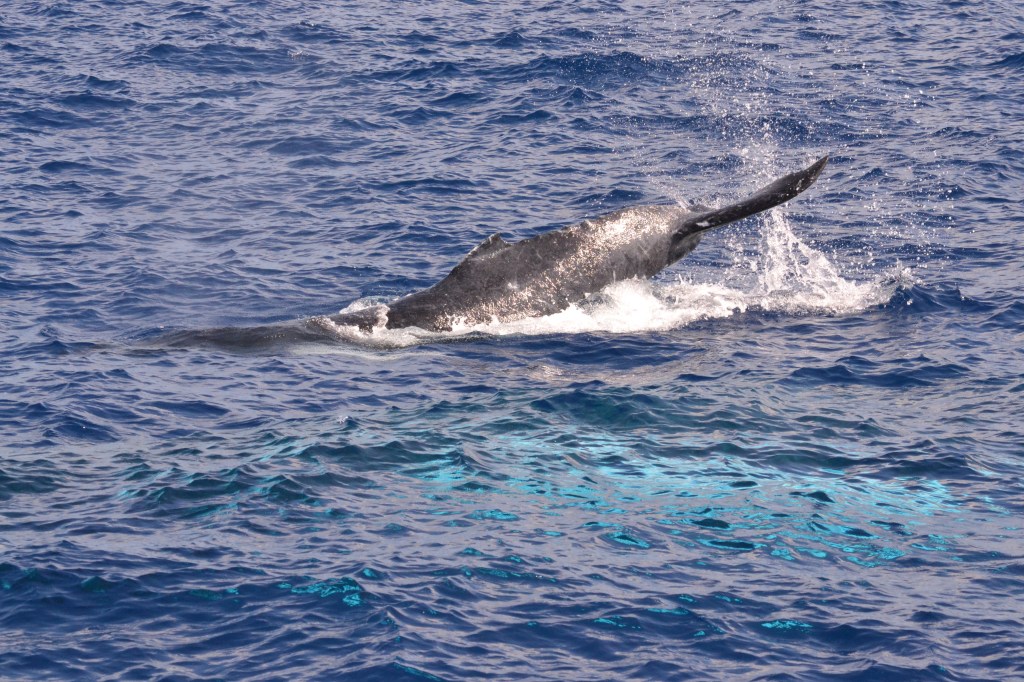
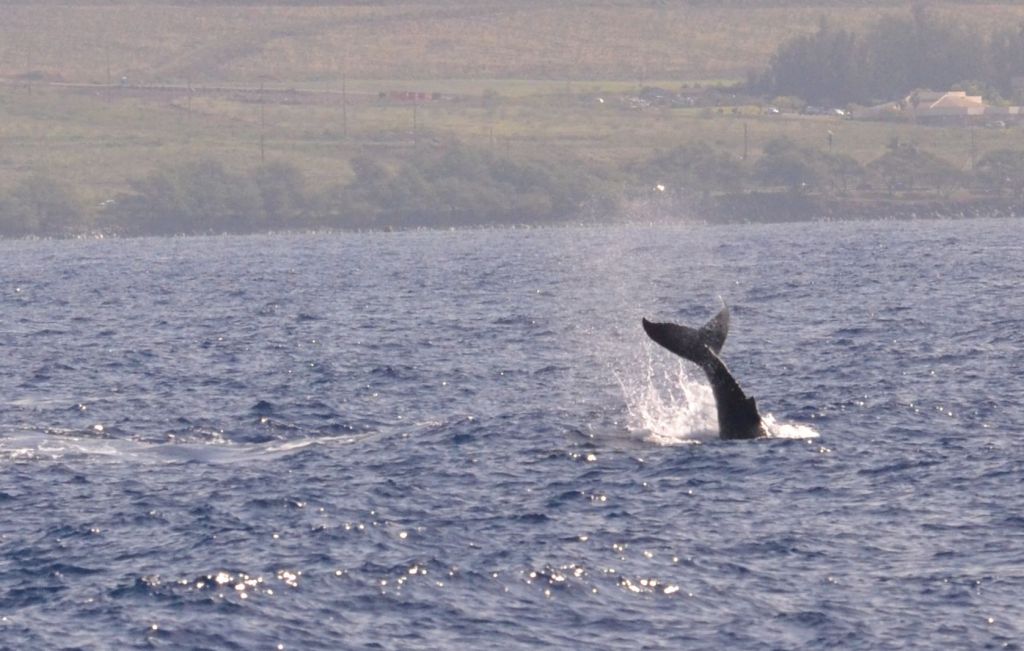
I’ll leave you with one last tail. This was an adult, tail slapping at some distance, really holding that tail up high to get a good splash with each hit. To me, it felt like the whale was waving at us.
I’ve done several whale-watching trips, but for sheer number of individual sightings I have to say that the winter months in Maui can’t be beat. You won’t see feeding behavior in Hawai’i (there’s not really anything for them to eat here), but you will see mothers and newborn calves, which is really the point of them being here in the first place.
Tour operators are plentiful. In our case they launched right off the beach in front of the popular resorts on Ka’anapali Beach. It’s convenient, and a fun, educational experience that is conducted while respecting the animals and giving them plenty of space to do what they want to do, without being pestered. It’s a great way to view them up close, and really get an appreciation for these magnificent creatures.
Get Out There!
 Flying Squirrel Outdoors
Huge creatures. It looks like great fun to see them.
LikeLike
Lucky you to have visited Maui during humpback whale season. Glad you managed to see the whales a couple of times. Great shots! We were a bit too early to see any whales when we were in Maui a few years ago, but we did hear them when we were diving in Molokini.
LikeLike