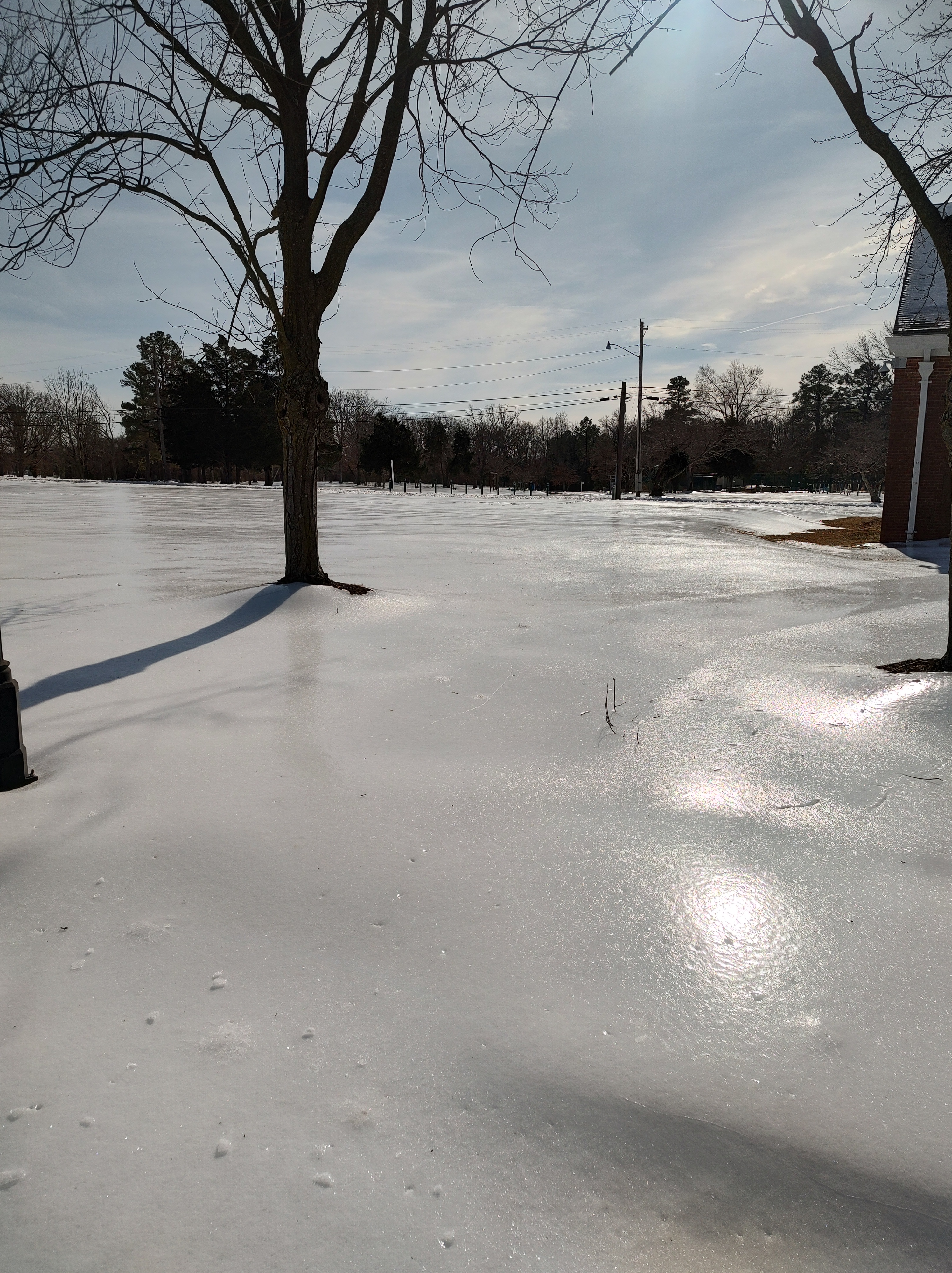
2026 has been challenging so far. Lots going on at work and elsewhere, constant news of things going on in the world far more important than anything I can write here. It’s honestly hard to stay motivated about simpler pleasures. Right now the ice is pretty bad.
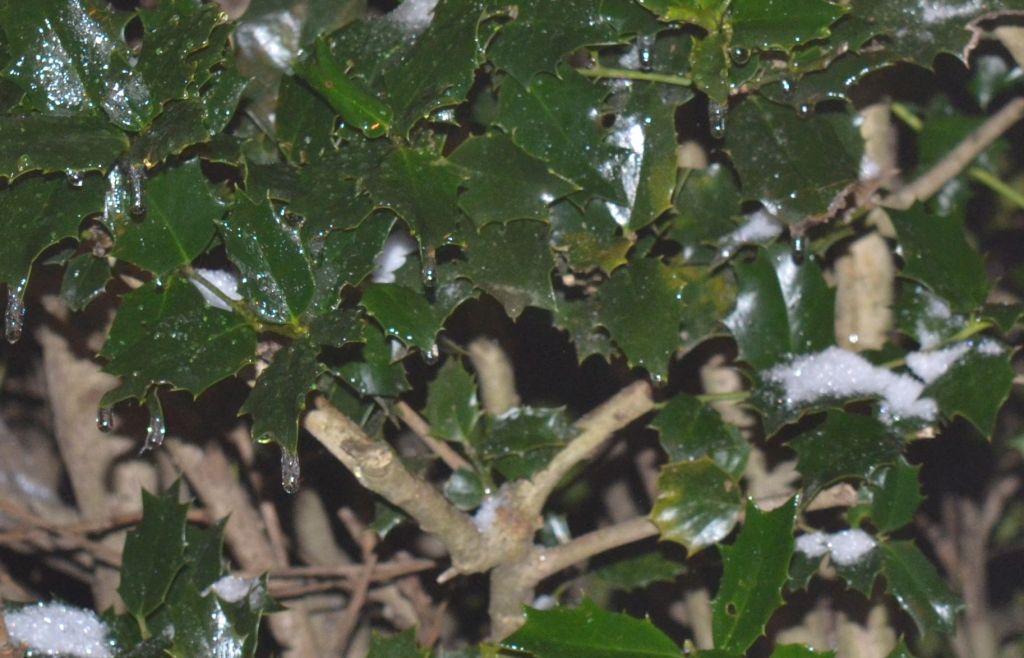
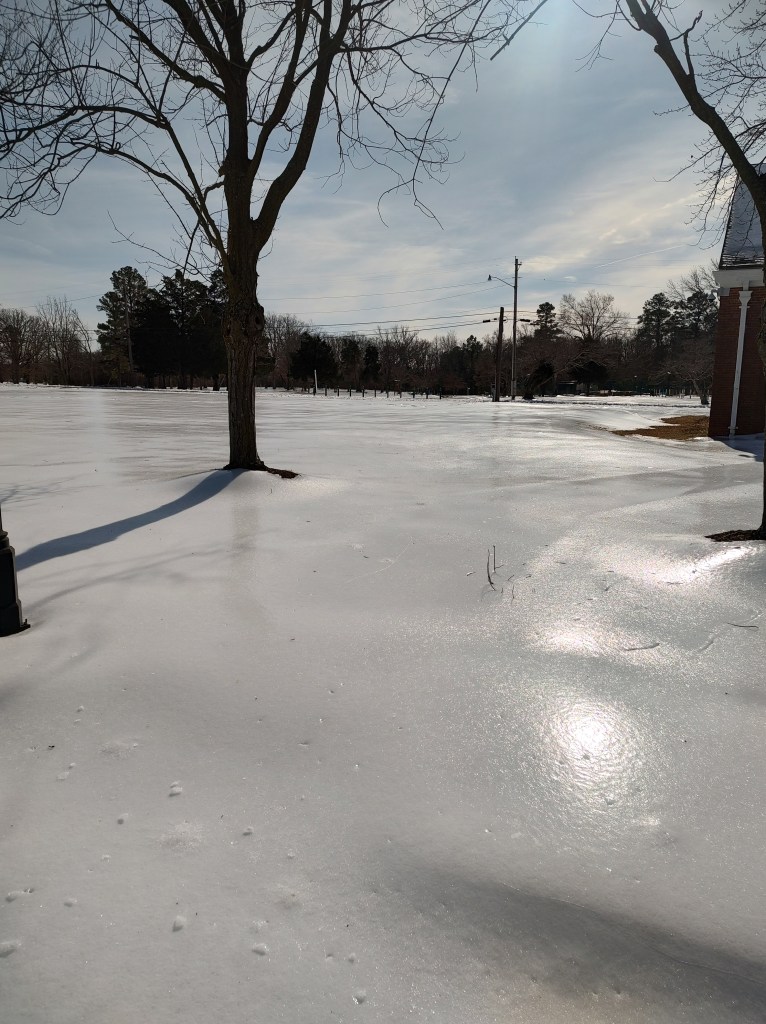
During last weekend’s snowstorm, we were in a band of weather that started with 5″ of light powdery, drifting snow, then 1/4″ sleet on top of that, and then hours of freezing rain that saturated the entire mix. Our high temperature for the entire week since has been about 22 deg F (-6C)… so basically EVERYTHING is under a 5″ thick slab of ice. For the most part, roads are clear, we’re out and about – but whatever didn’t get cleared before the shift to rain is rock solid. Immovable. The word “snowcrete” has entered the daily vernacular. Even though the person driving the plow created a three-foot ice wall at the end of my driveway, I’m grateful they were out there doing it. And I’m grateful to the linemen that kept power flowing through the whole ordeal.
The local birds have really appreciated our feeder. I wonder how the deer (there are a lot of whitetail in the area) are dealing with this. They can easily browse on vegetation above the ice, but their footing has to be awful. Not that they’re heavy enough anyway – but there’s nothing to punch through into softer snow below, it’s all ice. Walking is a challenge, running or jumping has to be terrifying. It’s gotta be like the scene where Bambi and Thumper find a frozen pond, but everywhere, all the time. This probably explains why I haven’t seen any deer in a week – normally I’ll see a dozen on any given day.
Related – I’ve been doing some research into genealogy lately. Some of my relatives have done quite a bit, and their data have intrigued me, so I’ve started doing some digging on my own. It seems like digitizing of national records has drastically improved the ability to link data to people, and I’ve been able to make new connections, which is exciting. Between all the dates and relationships revealed in births, marriages, deaths, and regular census data, stories emerge.
I see several sisters from one family marrying brothers from another. I find numerous cases where women, typically starting with their second marriages, suddenly lose 5 years or more from their age, and somehow manage to maintain that story right up until their death certificates confirm their actual birthdates. (This ruse is obviously easier in earlier generations where records are more sparse).
There’s a frequent tragedy of what is now (and will hopefully remain) preventable death, from croup, typhoid fever, pneumonia, malnutrition, and measles. I’ve also come across several victims of the 1918 flu epidemic. The standard census forms from 1860, 1880, 1900 record number of children delivered, and number of children still alive, and the disparity between those two values is often large. At the same time, you don’t have to go back many generations at all before women are either having very few children (or none), or having 12 or more, every year to year and a half well into their 40s, and sometimes starting as early as 15.
I also see a disturbing (to modern eyes) trend where, when the mother of the household dies young (not always, but frequently in childbirth), the father will move all his children out to live with grandparents, aunts and uncles, older siblings or cousins – anybody, really. Often the kids are being split up, in groups of two to three, and spread across the extended family. All so he can then remarry and start a whole new family with a woman much younger than his deceased wife. Single parenting doesn’t seem to happen for either sex. When the father dies, mom doesn’t just get to move on, but there always seems to be a family member right down the road who will take a widowed mother in and help raise the kids.
The generation that included my grandparents, and their ancestors, all lived in the same area, doing the same jobs, for what seems like forever. They were all farmers, or they all worked at the one industry in town. Given that nobody seems to move away, and everybody has as many children as possible, and then those children get married, I’ve found that almost all the prominent names in the county of my birth are somehow intertwined with my own family. I’ve actually found that I can click on “random” people living in the same region and find that many of them are indeed related. These folks that were paid lodgers in my great-great-aunt’s house? Yeah, that’s my 6th cousin.
It’s also not lost on me, growing up in the south, that my search for data is easier for me because I’m white. I certainly find dead-ends in the data as a result of a fire at the county courthouse destroying records, but seldom am I encountering a lack of information simply because cultural norms and the record-keeping authorities decided that recording my lineage or important life events just wasn’t worthwhile. It doesn’t take many generations before documentation for black families just don’t exist anymore in the public record. (And to be honest, I’m not so naive as to believe that there aren’t likely inter-racial relationships in my own family tree that have not been recorded, for much the same reason – and we’re poorer for the decision to hide that.)
It all drives home how quickly our lives have changed, and how the pace of advancement has accelerated in a very short period of time. It’s enough to scramble our brains. On the other hand, it reinforces how interconnected many of us are. The number of direct ancestors in anybody’s bloodline increases by a factor of 2 for every generation – 2 parents, 4 grandparents, 8 great-grandparents, 16 great-great… by 10 generations back (~300 years, or early 1700s), it took 1024 individuals to make me – and that is generally among a population that didn’t move around a whole lot. Given that there were lots of siblings and intermarriages in each of those generations… we’re all family, really.
It’s just incredible to me that we still live in a world where people want to define arbitrary divisions in those relationships. To demonize a particular population, to say any group of people is worthy of scorn and punishment, solely because of where they were born, or who their parents were.
There’s only one way we can survive our collective experience on this increasingly-stressed little planet of ours, and that’s not only together, but by reliance on each other, and the unique talents that each of us hold as a tiny little piece of humanity.
I’m hoping the ice melts soon, everywhere, and loses its grip on our daily lives. Maybe the groundhogs will have good news tomorrow, the winds will shift, and we can all get out and about again, and once again appreciate the value of our extended family.
Get Out There
 Flying Squirrel Outdoors
I totally understand.
LikeLike
Very interesting post. It looks like you could skate around your town. That’s happened here a few times and the kids were skating on the roads.
LikeLike