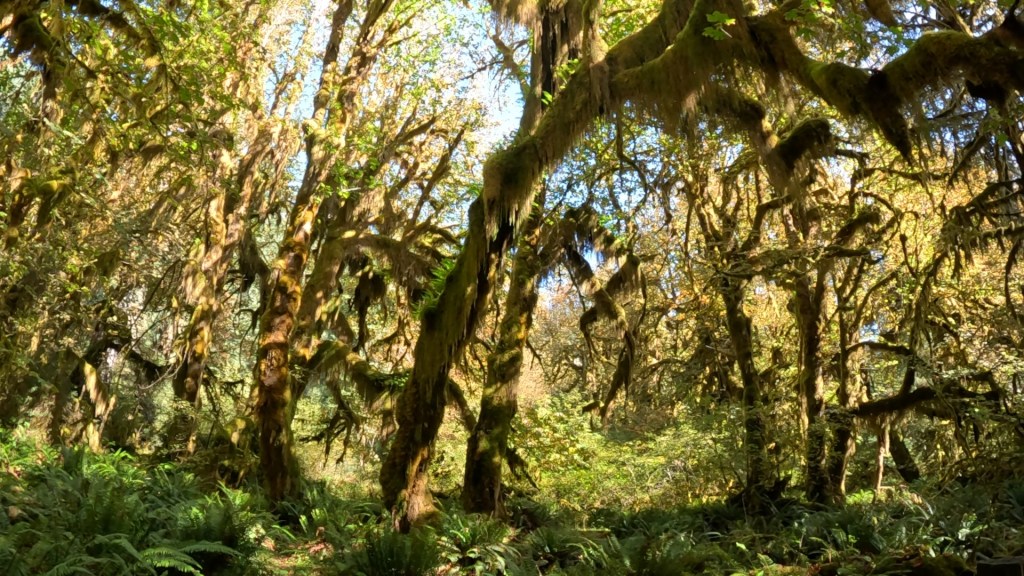
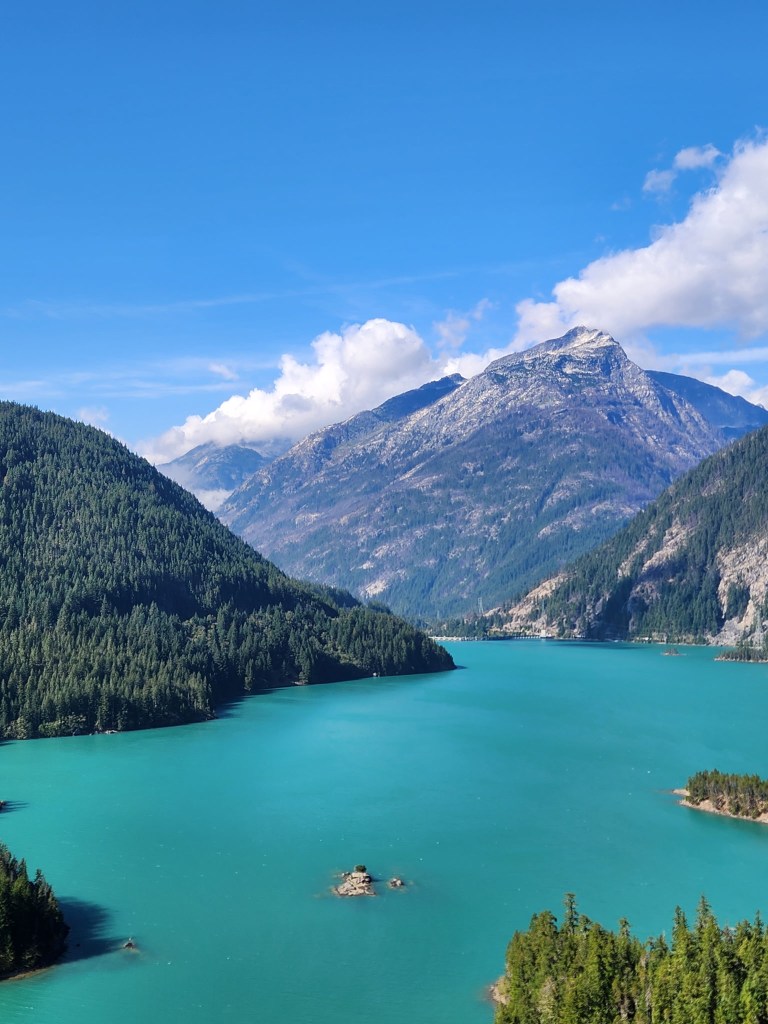
I had the blessed opportunity to take a week off from doom-scrolling and posting to the internet last week. We spent the time off grid, out of range of the mobile towers, exploring Olympic, Mt. Rainier, and North Cascades National Parks, and all the various State and National Forests that surround them (Olympic, Mt. Baker-Snoqualmie, Gifford-Pinchot, etc).
To pull this off – and I have my wife to thank for it – we rented a campervan from Escape Campervans* in Seattle, so that we could continue to be on the move and stay in proximity, or at least on the way, to all the sights we wanted to see. This is something we wouldn’t have even considered a year ago, but our recent experiences with our little T@G teardrop trailer gave us the confidence to commit to a life on the road, planning to intentionally spend every night in a van… down by the river… (or lake, or Pacific Ocean, or creek…).
I’ll get into the day-by-day details, what we saw and did, in upcoming posts – but for now, I’ll share some big picture planning considerations and an overview.

Bones, the Campervan
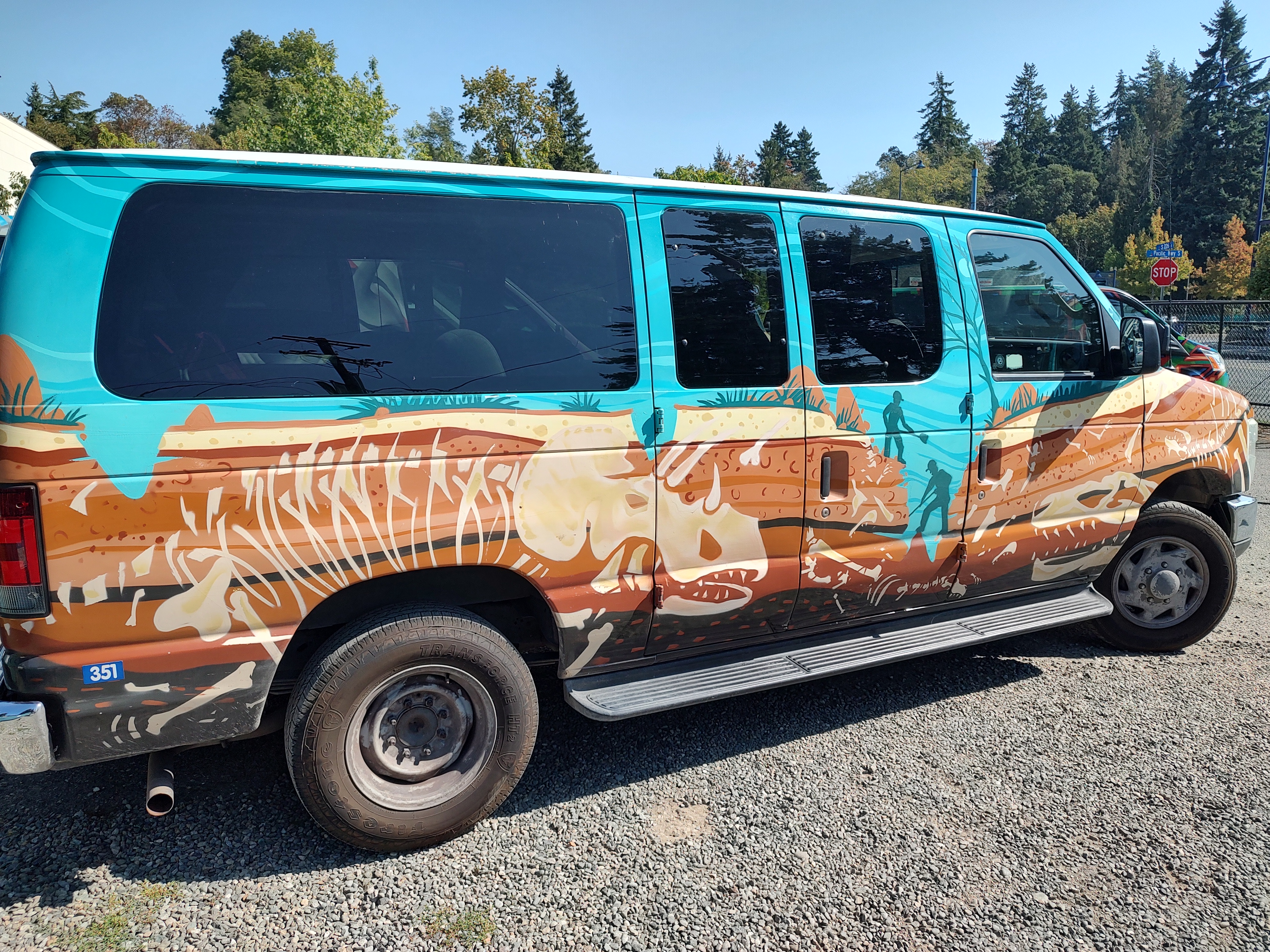
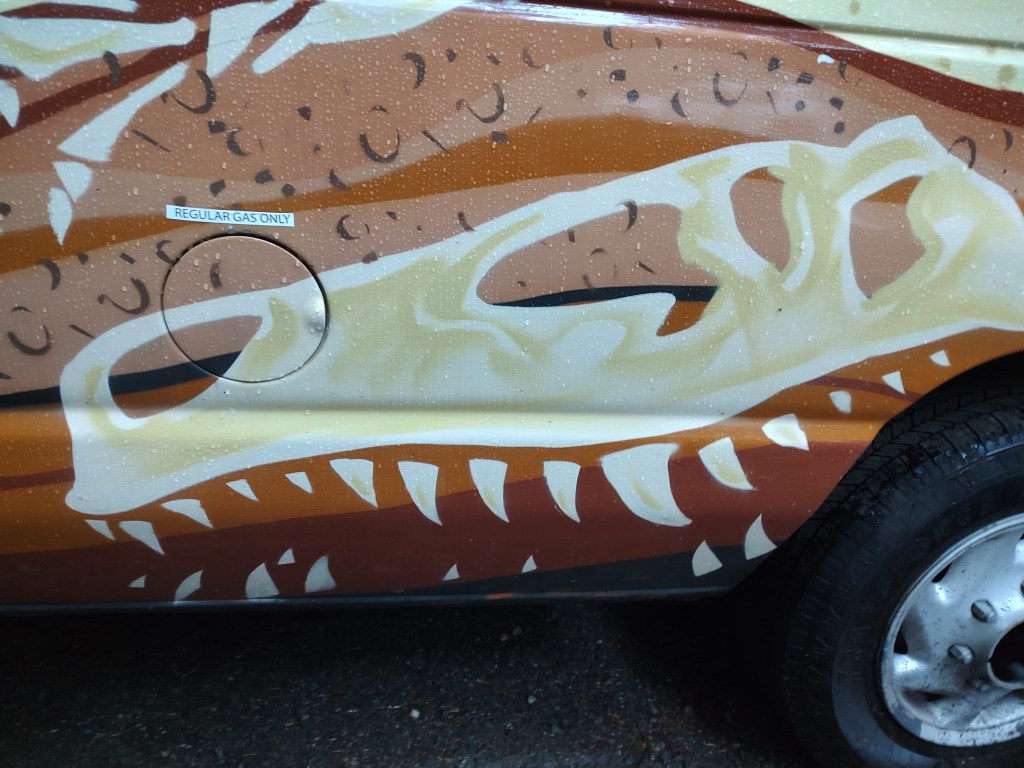
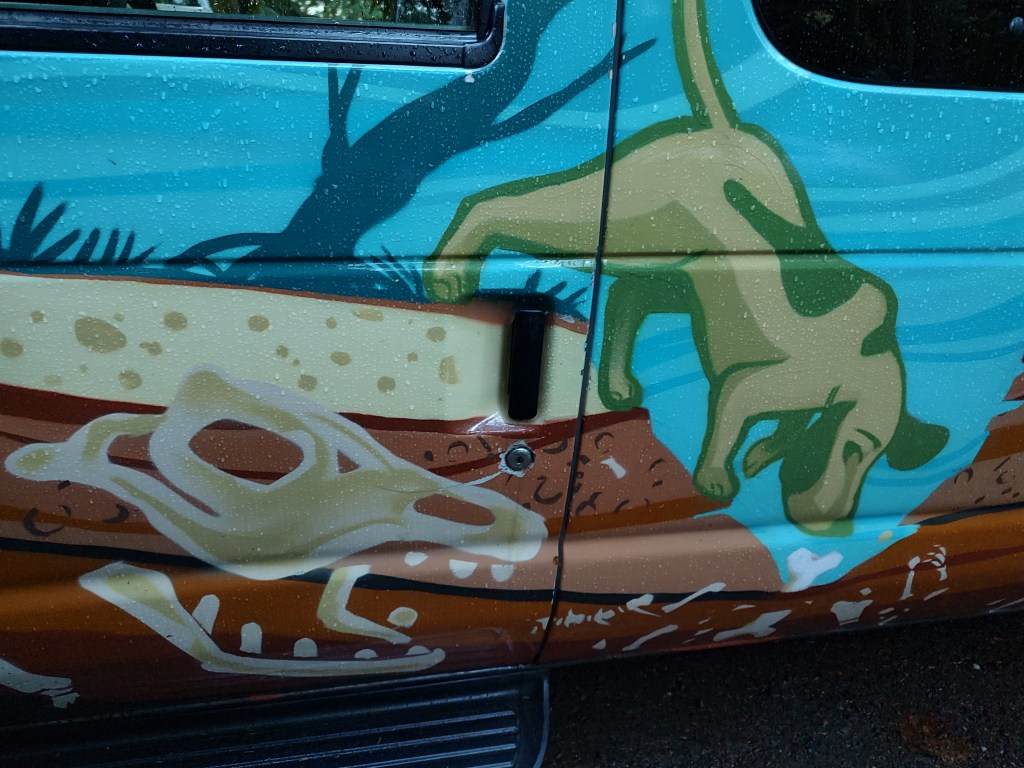
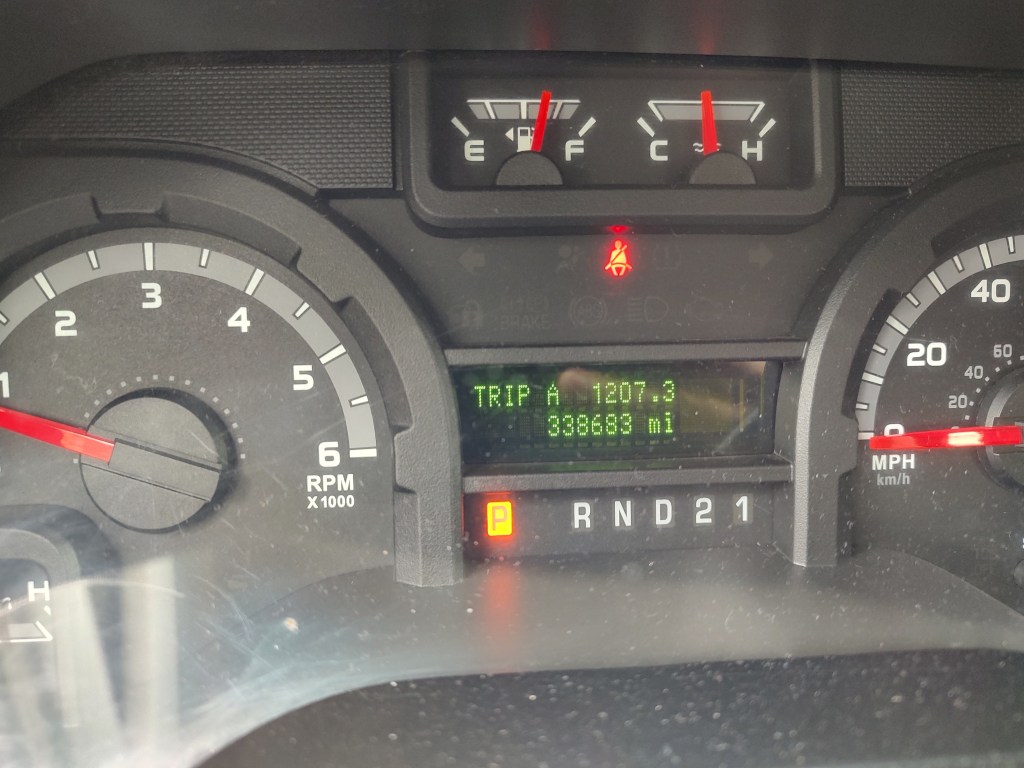
Our van was named “Bones”. It was an older Ford E-Series van with 387-thousand miles on it when we started. Its upper surfaces were sky blue, with maybe a turquoise slant, and the lower half showed a cutaway of the earth, chock full of dinosaur bones. Our van was covered with with the skeletons of several theropod dinosaurs (e.g. T-Rex, Velociraptor/Deinonychus) and an obvious triceratops. On one side, several paleontologists were digging cleanly between the fossils, finding nothing. On the other, a dog was happily burying new bones into the mix. Not only did we never have a problem finding our car in a parking lot, we always got happy smiles and thumbs-up from others wherever we went.
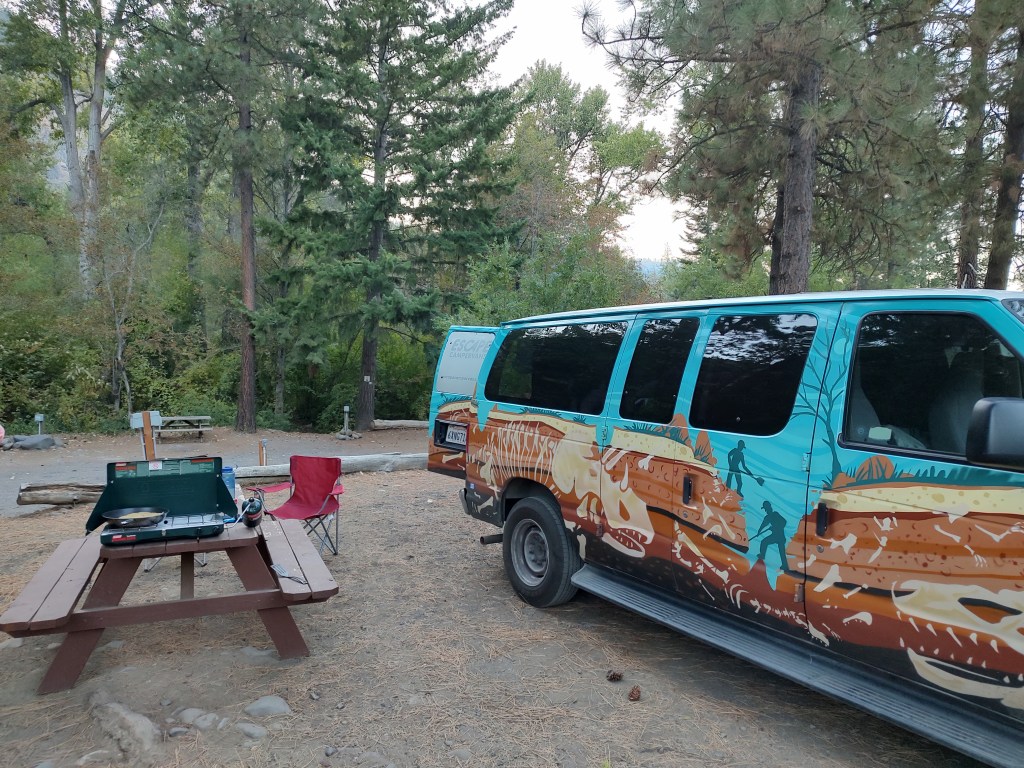
Bones had a galley set up in the rear – a mechanical hand-pump sink drawing water from a five-gallon tank, a solar refrigerator, and a two-burner Coleman stove on a slideout and fueled by 1-lb bottles of propane. We had good enough weather that we always pulled the stove out and cooked on a nearby picnic table rather than in the van itself. Otherwise, it was a setup very similar and familiar to the layout in our teardrop (though, for several reasons, we like the teardrop galley better). We also had plenty of pantry room, and space to bring along camp chairs and an electric adapter to give us the opportunity – though we only used it once – to connect to standard RV power sources and run an electric heater. (We saw two nights where our low temps got to 45 deg F, and the heater helped on one of those).
Between the driver’s seats and the galley, we could either have bench seating and a table, or we could fold everything down into a queen-sized bed. With the bed deployed, there was just enough room between the foot of the mattress and the galley to stow our bags and clothes. (Once we converted the space to a bed, we never put the table back in place – there was never a need to do it. Though, if we’d needed to hunker down somewhere in the rain we might have done that a little differently.) The entire cabin had wrap-around blackout curtains that could be tied out of the way for visibility while driving. We used a couple solar lanterns at night in the cabin for reading. All in all, very cozy! We just had to be careful to park in a place that was reasonably level, or with a slight nose-up tilt.

Itinerary Planning
Late September in the Pacific Northwest is beautiful – but in our trip planning we found that many state and national park campgrounds closed for the winter on Sept 22, or basically just as we were starting our trip. Had we been braver, or more familiar with the area, we might have been bold enough to plan on snagging spots in first-come-first-serve campgrounds, or use boondock dispersed camping spots in National Forests. However, we a) wanted bathrooms available, and b) anticipated rolling into campgrounds at sunset after a busy day hiking somewhere, and trying to grab first-come sites that late was risky.
As a result, we got one-night reservations and locked in a plan ahead of time. Our first two nights would be at National Park campgrounds in Olympic, and our remaining three would be at private campgrounds either near Mt. Rainier or North Cascades. We planned to arrive at a hotel in Seattle on night 6 so that we could return the van early the next morning and spend one more day playing tourist in the city before heading home.
Our food and supplies were fairly easy, and the transition between parks made for logical resupply days while enroute from one place to another. We brought some spices and drink mixes with us from home, and got everything else on the trip. One of our first stops was a large farmer’s market-style produce center where we stocked up on fruits and vegetables that lasted the whole trip. Stops at Safeway (the most common chain grocery store in the region) every two days or so filled out the ingredient lists for our meals, and allowed us to be fairly efficient on consumables and gave us the opportunity to control our diets pretty well (as opposed to having to eat out every night). Typically, we would have coffee and some oatmeal or fruit for breakfast, “brunch” of egg sandwiches on English muffins for lunch (Lynn liked egg white with feta and spinach, while I favored whole eggs and cheddar), and more elaborate dinners. We finished the trip with nothing more than a half-pound bag of ground coffee, a cup of chicken broth, and a half-bottle of balsamic vinegar. Like I say – pretty efficient!
Though some of our days involved a lot of driving, the longest single stretch was about 3 hours. The majority of our trips turned out to be an hour or so between trailheads, so even though we put 1200 miles on Bones over the course of the week, it didn’t feel like a “road trip”. We were able to gas up at or near grocery stops, and not make dedicated trips for gas.
In future posts, I’ll get into the day-by-day. Ultimately our itinerary looked like this:
- Day 1 – Arrival and Northern Olympic Peninsula, Lake Crescent. Fairholme Campground.
- Day 2 – Western Olympic Peninsula. Mora Campground.
- Day 3 – Hoh Rainforest, Transition to Rainier. Elkamp.
- Day 4 – Mt. Rainier. Elk Ridge Campground.
- Day 5 – Mt. Rainier, Pike Place Market, Seattle. River Meadows Park.
- Day 6 – North Cascades. Hotel at SEATAC.
- Day 7 – Seattle City Center. Hotel at SEATAC.
- Day 8 – Flight Home.
Stick with me over the next week or so, and I’ll get into some of the beautiful places Bones helped us explore!
Get Out There!

*When we checked in to pick up Bones, we learned that Escape Campervans will be out of business, at all locations, at the end of September. So our trip was one of the last for Bones and its brethren. Escape will be selling off their fleet of more than 300 campervans (Bones is one of the oldest – they have some pretty impressive vehicles!) and closing their doors for good. The reason? Well, it was explained to us that the majority of Escape’s business came from international travelers, predominately Europeans. Given the general attitude of the US toward foreigners in the year 2025, 60% of Escape’s business has evaporated this year, as European (and Canadian) customers have elected to avoid travel to the United States. So, we have an American small business that both supports and relies on the outdoor tourism industry closing its doors because of the US attitude toward non-citizens. I was told, “Well, our country voted for this to happen. I’m sad, but not surprised.”
I’m sad too.
 Flying Squirrel Outdoors
We lived in the PNW for many years and enjoyed visiting many of the places you got to visit on your trip. Spectacular scenery everywhere! End of the season can be tricky but places are a little less crowded than in high summer. Too bad about Escape Campervans – I suspect they won’t be the last small, tourist & seasonally dependent visit done in by our bad attitude. And you got your trip in (as did we to the Channel Islands) before we might have a government shutdown that will impact the parks. Trying times…
LikeLike
Trying times indeed. Really getting frustrated with the idea that anything generally good for the public at large is either a waste, or somehow benefiting the wrong people…
LikeLike
It’s been a while since Peggy and I have been to Mt. Rainier, but we traveled to both Olympic National Park and North Cascades last year. Both are quite beautiful. We were on an extended trip from the Monterey/Carmel area working our way up the Pacific Cost visiting National and State Parks along the way.
LikeLike
This was our first time in the area, and I can certainly see why it’s popular. Gorgeous, and we had a wonderful time!
LikeLike
One gorgeous National Park after another!
LikeLike
I’m looking forward to the posts. We regularly visit our son in the Tacoma area and enjoy some of the sites you visited.
LikeLike
It was our first time in that area, but absolutely loved it. Hiking the Wonderland Trail has been on my bucket list for a while, and this trip has only intensified that desire!
LikeLike
It’s always nice to get away from everything and spend time off grid in nature. Sounds like a fun adventure. We’ve been talking about renting a campervan one of these days. Looking forward to hearing more about your trip.
LikeLiked by 1 person
Trying the campervan wouldn’t have been on it radar at all had we not become comfortable with our little teardrop after the boys left for college. Out has opened up new adventure possibilities!
LikeLiked by 1 person