There’s lots of folklore out there around how to use natural phenomena to predict the severity of the upcoming winter. For example, mast seasons for oak and other nut-bearing trees are often described as indicators of harsh winters to come – this is good news for squirrels who have a bumper crop of acorns to put away for the long, cold winter ahead. Some of these tales may actually be rooted in observable patterns, like maybe a lot of rain in August might support a healthy crop of autumn nuts, but also an indicator of a La Nina winter that will bring harsher weather? Maybe?
An aside here: Mast years are generally understood to be a periodic overwhelming of “predators” – if all the trees in the forest can produce WAY more seeds than the birds and rodents can possibly harvest, the ability of the trees to reproduce is improved. Mast years still require good weather conditions – early warming and a fairly dry spring allowing good pollination seem to be the primary drivers. Science has not (yet) established a statistical correlation between mast years and harsh winters, however.
One of the old tales I’ve heard all my life on this topic is that the color of a woolly bully caterpillar (I’ve learned that most people call them “woolly bear”) is a predictor of the winter to come. Black caterpillars indicate a harsh winter, red or blond indicate mild weather. In fact, since woolly bullies are often striped, you can get a fairly clear forecast, as in the image below.

Well, this year I’ve already seen fully blond caterpillars, and fully black ones. They totally contradict each other… so without a clear majority, I need another method.
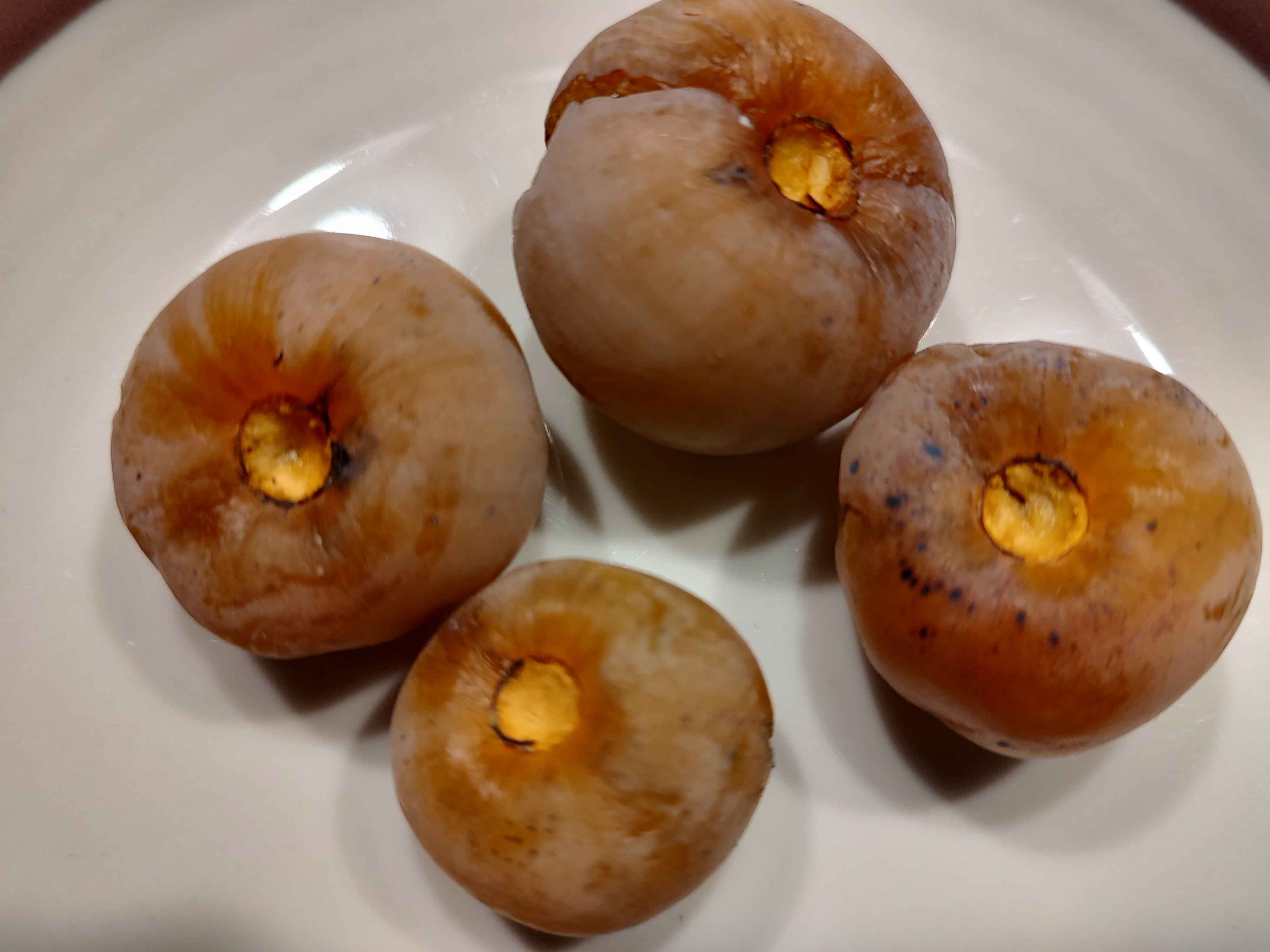
Luckily, my wife came across a new forecasting tool this week – persimmon seeds! Many of you may be familiar with this… folk tale? myth? legend?… but it was new to me. In our recent hikes, we’d noticed several persimmon trees in the area, and noted that the fruits were ripening and starting to fall. So… no time like the present to use these little meteorologist fruits to predict our winter!
The story goes like this – when you extract and split a persimmon seed, the embryo inside will be shaped like a fork, a knife, or a spoon, indicating the upcoming weather thusly:
Fork - Mild winter, light snow
Spoon - Heavy wet snow
Knife - Bitterly cold, harsh winds
We collected some persimmons that had already fallen to the ground, clearly ripe. At first I misunderstood the assignment and thought I was looking for the shape of the core of the fruit – stem to stern, so to speak. (Again, this is new to me!) But I cut the fruits in half through the core and saw no utensils, so I had to go look this up again.

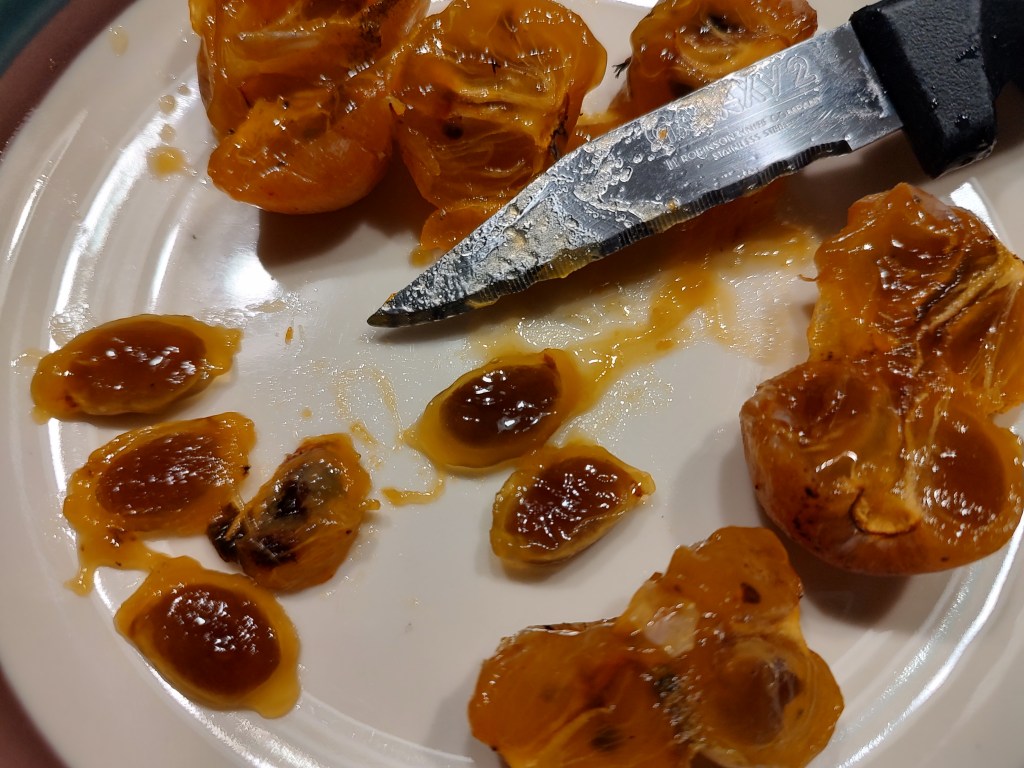
So, it’s the SEEDS that tell us about the winter (of course, I should have known). But the seeds are coated in goopy persimmon-flesh, and a thin skin that tends to hold onto that goop with an impressive tenacity.
I took a seed sample from several fruits (gotta be scientific here), cleaned them up as best I could, removed the last “skin” that covered the seeds, and then contemplated them. Apparently the revealing shapes are only visible by SPLITTING these seeds, lengthwise.

If you are unfamiliar with persimmon seeds, let me describe them, beyond what can be seen in the picture here. They are about the size of the nail of your index finger, and only slightly thicker. A pumpkin seed is a fairly close approximation. The edges are very narrow, can almost be called “sharp” as they quickly round off into flat faces on either side. This is NOT a thick seed, and splitting one seemed about as likely as splitting a round toothpick from the point down.
So, here I am, tightly gripping a persimmon seed between the thumb and forefinger of my left hand, while slowly pressing (and rocking, and “sawing”) the blade of my sharpest paring knife into the long edge, hoping desperately that the knife doesn’t slip and slide off into my fingers, driven by all the force I’m applying to get the blade to penetrate.
Thankfully, I was able to (patiently) get the blade in far enough to stick. I then placed the seed so that it was balanced on its opposing long edge, with the knife on top, and then I hammered the knife with the handle of another knife, effectively baton-ing through the seed and splitting it in two. It got easier with practice – but this whole process is not easy!! Why are people doing this? Much less using it as a weather-guessing device?
The first seed — a fork! Ok, mild winter, I’ll buy that. Most of our winters are fairly mild. The sample pictures I’d found indicated that any sort of “split” in the rounded part of the white embryo counted as a fork, but what I found was a pretty distinct pitchfork. Maybe a trident.
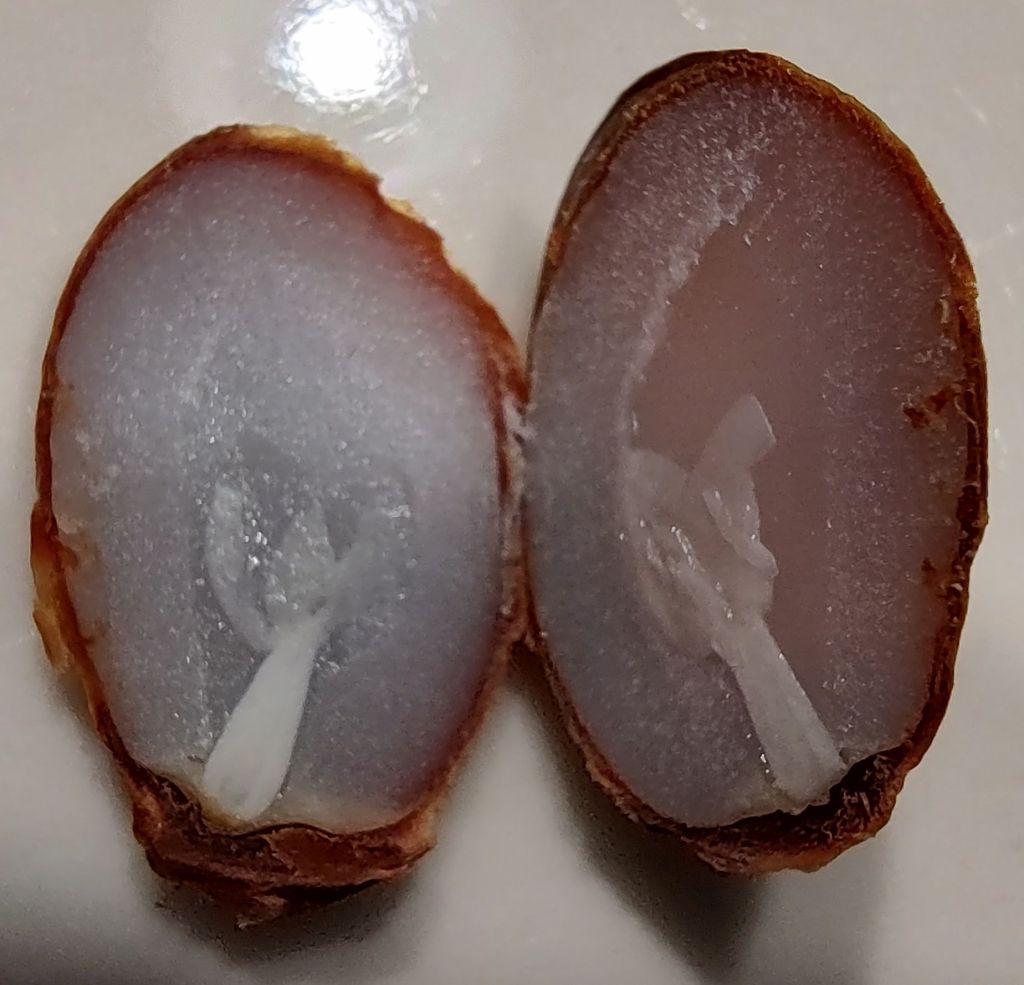
The second seed I split was… uh… nothing? My split wasn’t great, it appears I chopped the embryo in two between the stem and the distinguishing part of the utensil. Results were very unclear.
The third… a SPOON! This was the moment when my mind was invaded by the very first sliver of doubt that this was an entirely reliable exercise. A spoon means heavy, wet snow. Also possible here in my local area. Maybe I can interpret these like the stripes on a woolly bully, and conclude that the actual winter will be halfway between fork and spoon. A SPORK WINTER!!
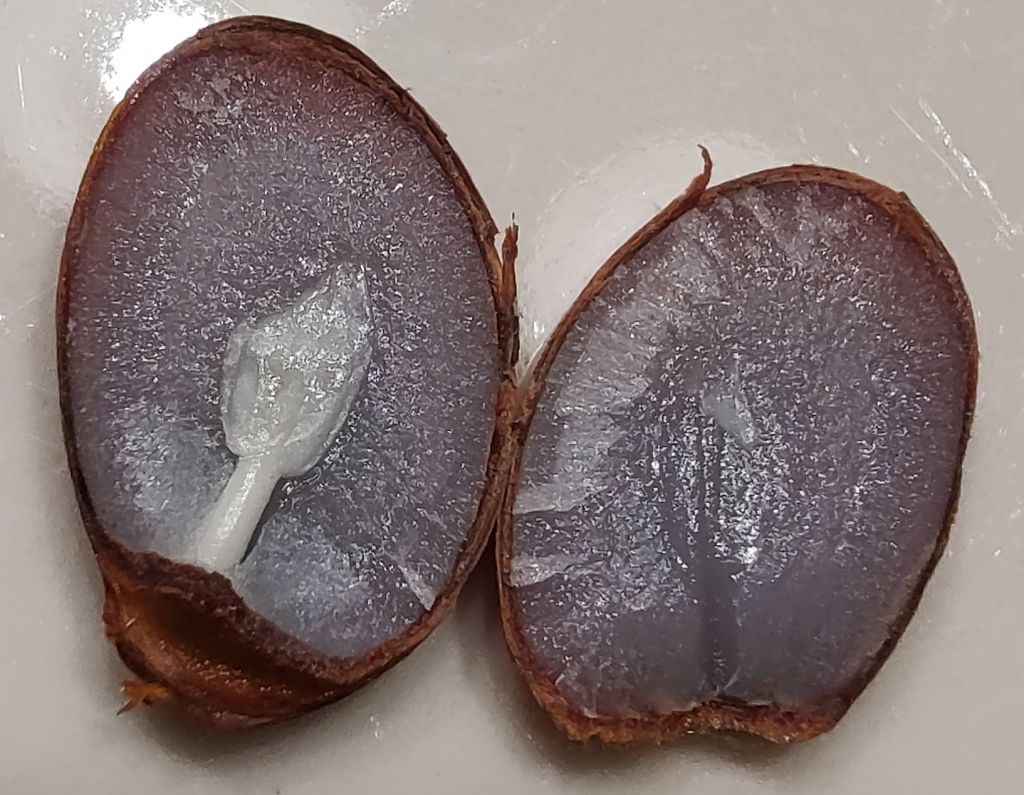
My fourth seed – again nothing. This may be technique, but I’m not convinced. I think it’s possible that there’s more than three distinct shapes (and maybe those aren’t particularly distinct). Finally, my fifth seed was… another spoon!
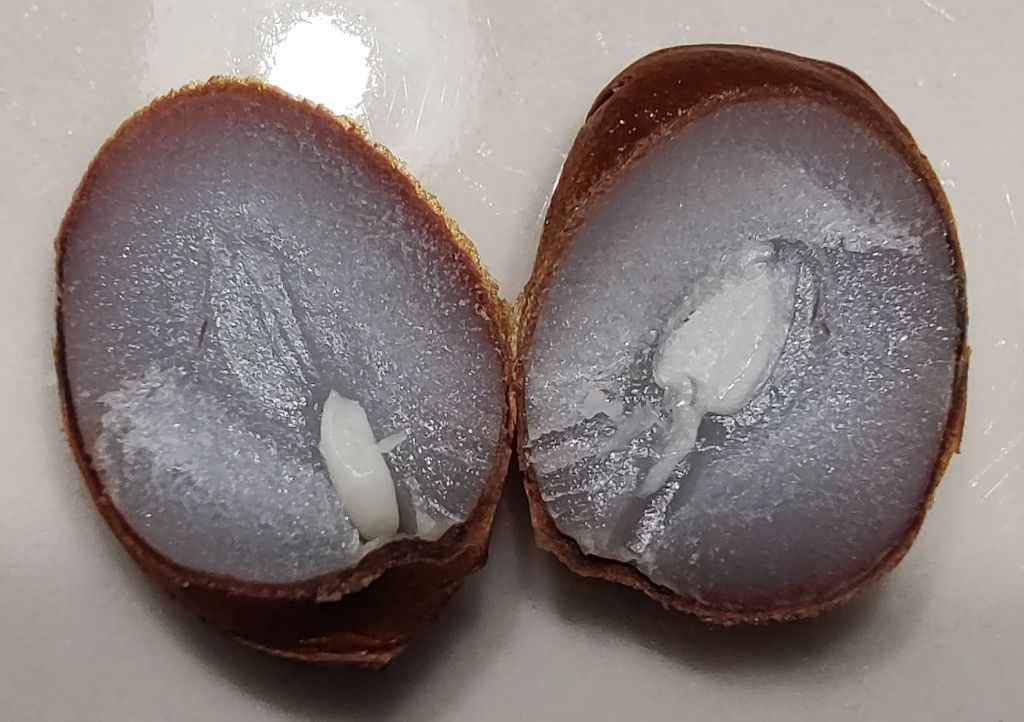
We have a deciding vote. My winter is going to have heavy wet snow. I know my sample size is small (it’s hard work!), but it’s clear, and I will suffer no doubt or contrary arguments. Again, though, while it’s gratifying to now know absolutely what my winter’s going to be like, and it’s a point of some curiosity that the innards of these seeds have different shapes – I DON’T UNDERSTAND WHY ANYONE TOOK THE TIME TO DO THIS IN THE FIRST PLACE!
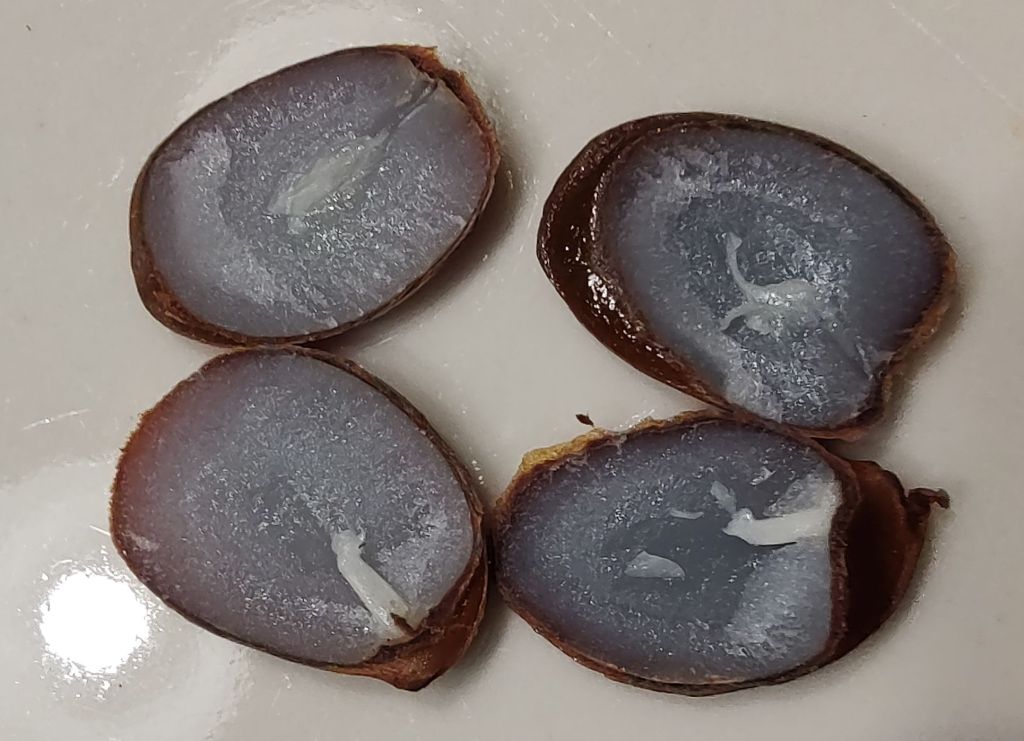
I’m glad to have had the timely opportunity to perform this investigation. I’ve learned something, primarily how difficult it is to split a persimmon seed, but also that this folktale even exists. It appears that this methodology has its roots in southern Appalachia and the Ozarks. I’ve seen specific reference to it being a “Missouri” thing as well. It’s certainly something I’ve never encountered.
But, I know I’ve got a heavy-snow winter ahead! Hooray! I like those! What other strange weather predicting methods are you familiar with? What was the favorite indicator of your childhood? Who else is a big woolly bully believer? (And who calls them woolly bullies rather than woolly bears?) Let me know, and…
Get Out There
 Flying Squirrel Outdoors
Farmer’s almanac? Let someone else do the work. Grin. Upper right, I see a camel. Definitely a dry winter. Lower right. Woman holding something. Not sure what.
LikeLike
I should have guessed, having seen all your “abstract” photography, you’d see something in these shapes! I like your camel = dry winter theory. I see what you see in the woman… Problem is the camel and woman are the same seed, so there’s supposed to be some single shape in there (that my knife has split)!
LikeLike
It’s actually pretty remarkable how the inside of the persimmon seed does look like there’s a utensil inside. Neat to hear that this method is used to predict the winter.
LikeLiked by 1 person
Well, SOMEBODY appears to do this, or have done this – but after trying it I think I know why I’d never heard of it! 🙂
LikeLiked by 1 person