
Earlier in the week I wrote about one aspect of a Labor Day weekend camping trip near Hershey, PA, focusing on the butterflies at Hershey Gardens. Today I wanted to touch on the rest of the trip.
We were camped at Gifford Pinchot State Park, a lovely park with lots of amenities situated around Pinchot lake. Most campground visitors seemed to be here for water-focused activities, either paddling or fishing the lake. We had considered bringing our boats, but for a variety of reasons, elected not to – we were instead day-tripping and using the campground as a base camp. The day-use area of the park did have boats for rent, but ultimately we wound up hiking the lakeshore rather than paddling. Next time.
(As an aside, the north side of Gifford Pinchot, across the lake from the campground, has 6-person cabins available for rent year round. These cabins are only about 4 miles from Ski Roundtop, and back when we were active with the Scout Troop this was an excellent way to do a ski weekend while also “roughing” it and having the Scouts cook and live in patrol groups. It would be great for families too!)
After our butterfly encounters (separate post) and a walk through the outdoor gardens at Hershey Gardens, we made a stop by the Troegs Brewery for lunch. Why not?

Following a relatively long afternoon at the brewery and a self-guided tour, we made the quick trip over to Indian Echo Caverns. We didn’t know quite what to expect here, but it was a fairly impressive space. Before we could get there though, we had to descend 71 steps down to the shore of Swatara Creek, where the cavern entrance loomed large in a cliff face. Unlike most caverns I’ve visited, the natural opening was HUGE, like walking into a subway. As part of preparing the cavern for tourist visitation, the entrance was walled up and a door installed. The original door, from the late 1920s, still guards the cave opening.
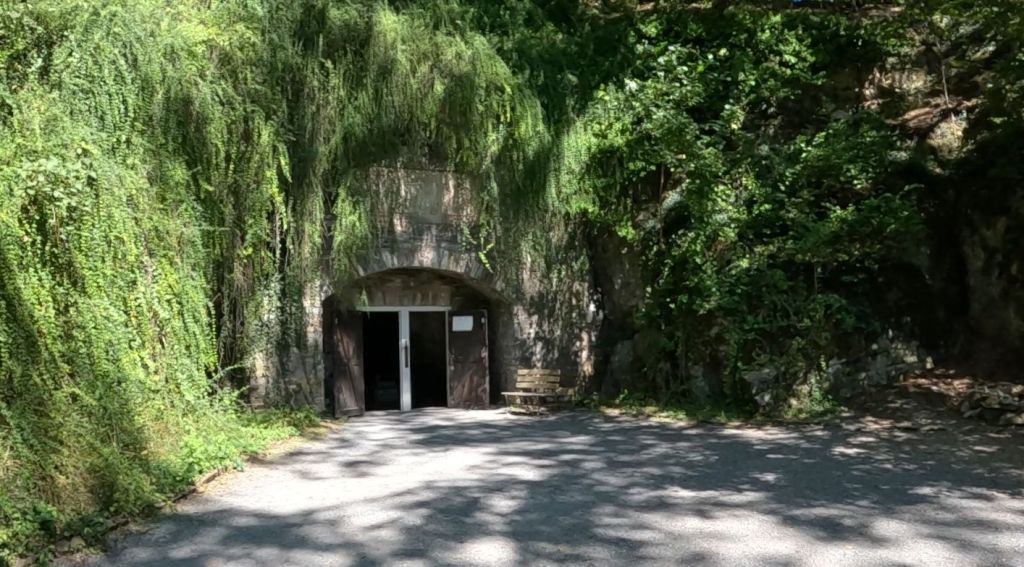
Inside, a subway tunnel leads to a very large central gallery with a ceiling 40 feet overhead. The arrangement of the cavern is interesting – two canyons extend out from this central gallery. Both at one time were filled with water, and the gallery was carved by millions of years of swirling water (evidenced by erosion patterns still visible in the ceiling). After the water receded, the classical cave formations began to grow: stalactites, stalagmites, columns and flowstone. Indian Echo has LOTS, layers upon layers, of interesting flowstone formations.
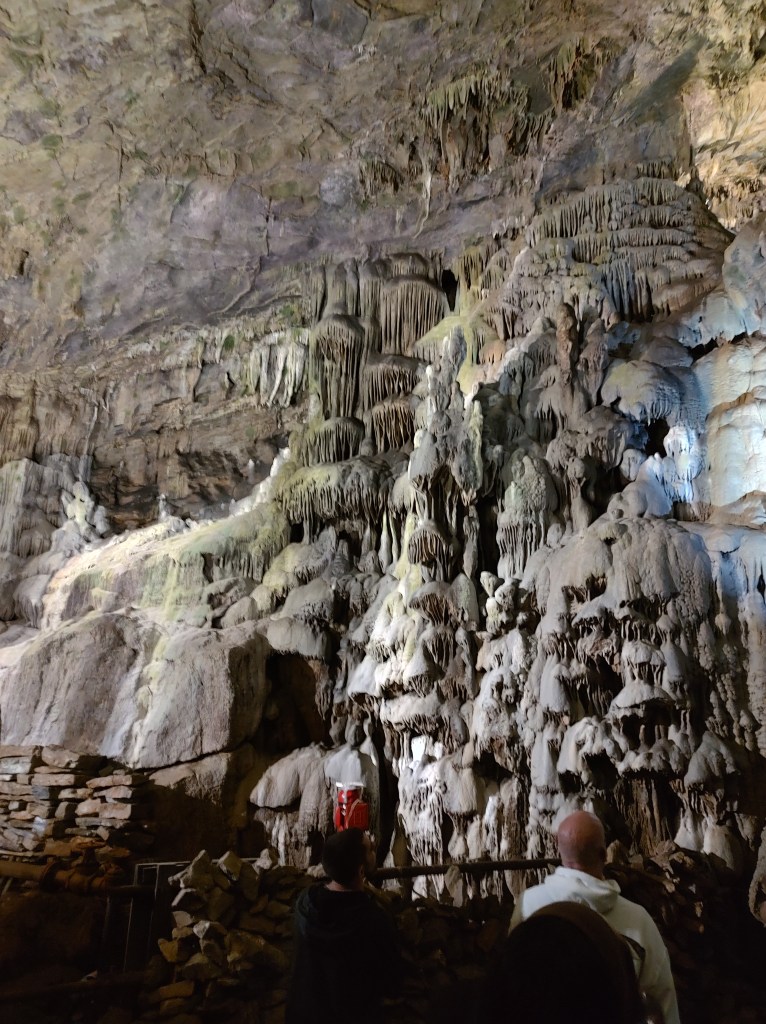
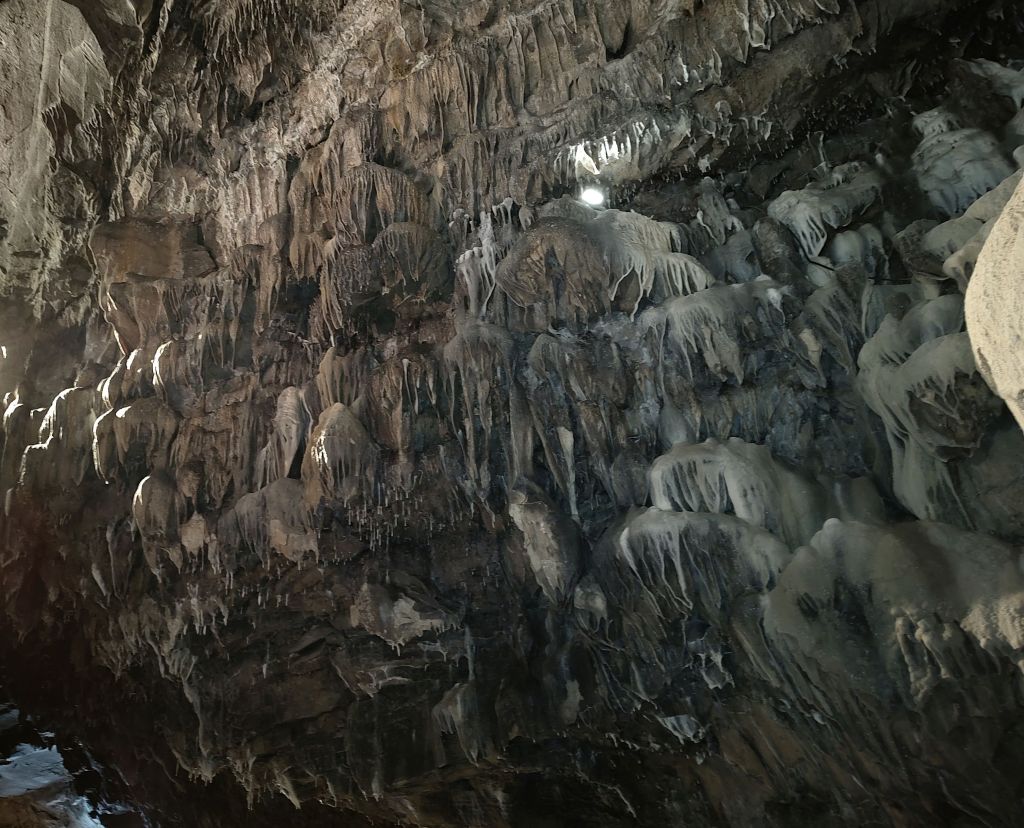
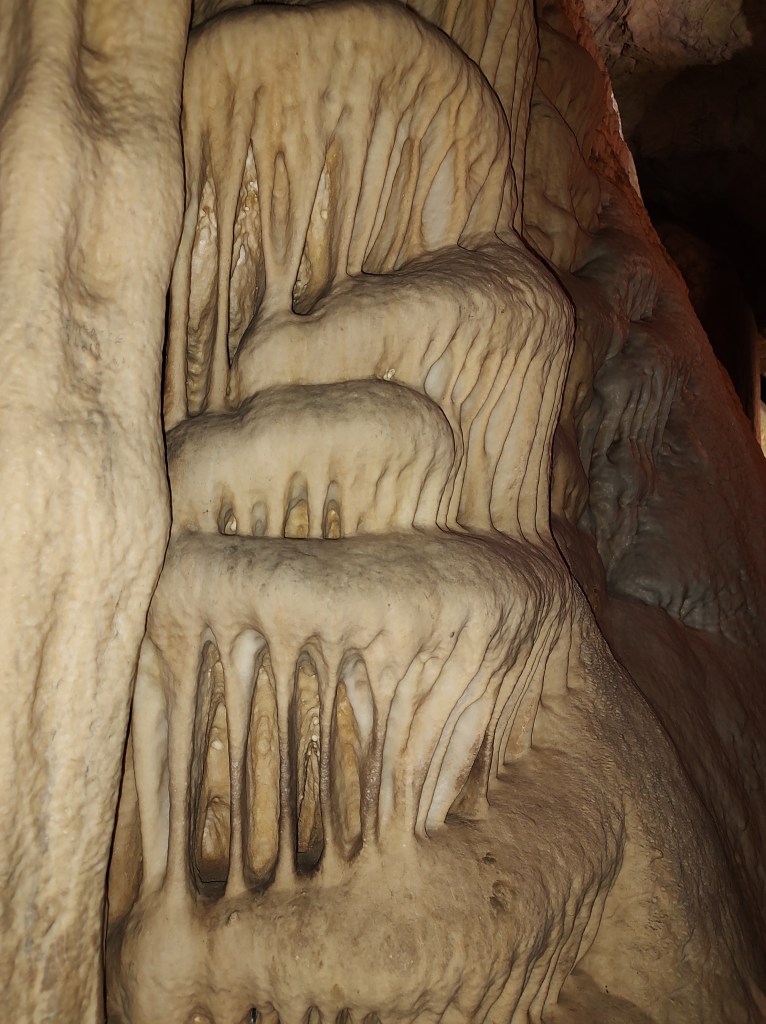
The two canyons that lead from the central gallery are interesting, narrow hallways with several duck-unders, interesting formations and high ceilings. The arrangement forces some awkward timing between tour groups that have to stagger their arrivals in and out of the canyons so as to not all show up in the central gallery at the same time. We were lucky in that we had a fairly small group, so we didn’t have to struggle much to avoid crowding others.

At the end of one canyon sits Crystal Lake, a perfectly clear, 6-foot deep subterranean pond that reflects the delicate formations all around. It’s one of the postcard spots in the cavern.
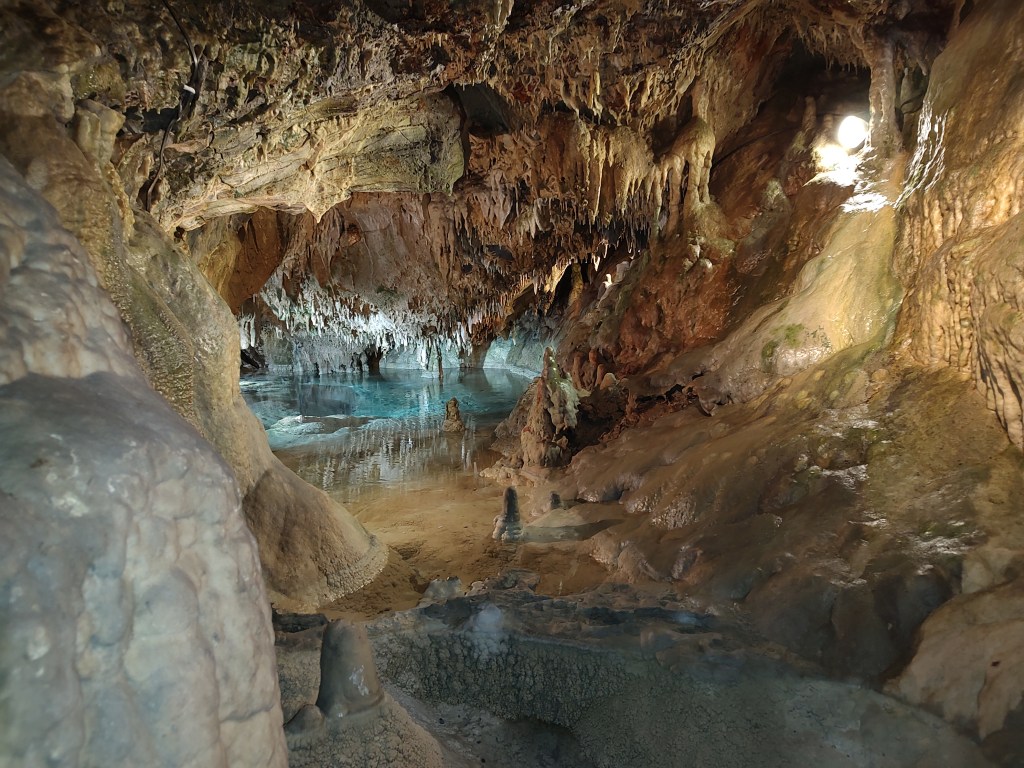
Back toward the entrance, Mirror Lake is only a few inches deep, but just as pretty.

Among the stories our guide told us of the history of the cavern was the tale of the “Mystery Box”. Apparently, in 1919, back before the cavern had been graded and lit for tourists, a group of Boy Scouts was exploring the cave when they found a black 4-inch cube sitting on a rock shelf. It turned out to be a wooden box containing a collection of coins from all over the world (including Roman coins and a Moroccan coin from the 1300s), a vial of silvery liquid (since evaporated – Mercury?), and a handwritten “recipe” for making diamonds from carbon using lightning. The box is on display in the cavern gift shop, and there’s no evidence that the diamond recipe ever worked. The owner of the box has never been determined.


Another of the stories included the tale of a local man, William “Amos” Wilson, who lived in the cavern for nineteen years after his sister was sentenced to hang, falsely accused of murder. This happened around 1800, and Amos decided to reject society and live out his days as a hermit. He apparently still worked odd jobs at local farms while taking up residence in the cavern. Apologies, but no pictures really capture what his solitary existence must have been like. The location of his “bedroom” and campfire setup is marked, right where his body was found by a local farmer after he failed to show up for work one day. He apparently died peacefully in his sleep.
Leaving the caverns, after climbing back UP the 71 stairs, we made it back to our campground in time to cook dinner, watch the sun set over Pinchot lake, and enjoy some time by the campfire before turning in.


The next morning, we took a hike around a portion of the lakeshore before packing up and heading home. The early morning mist coming off the lake was gorgeous.
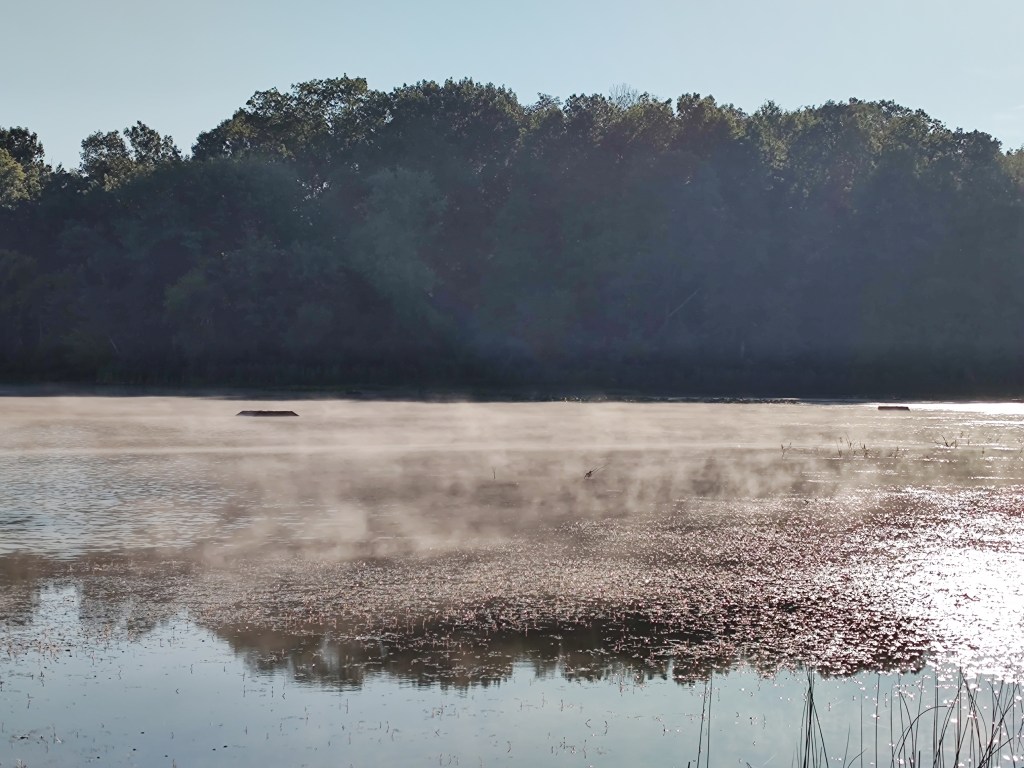
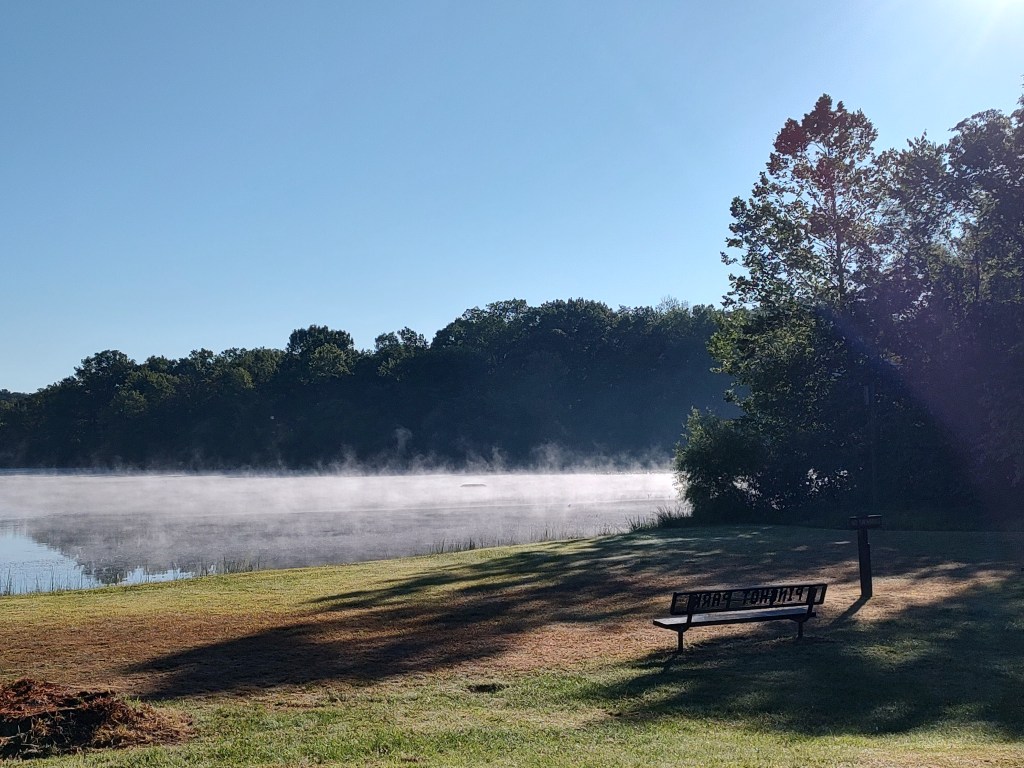
I don’t remember it being much of an issue at the time, but clearly this photo captured some sort of lake monster?

All in all, we had a wonderful weekend. Two cool, crisp early autumn nights with some good day-tripping and enjoying the local sights. A great getaway.
Get Out There!
 Flying Squirrel Outdoors
Such beautiful cave formations. Your picture of Crystal Lake is stunning. Glad to hear you lucked out with a small group.
LikeLiked by 1 person
Thanks – we were pleasantly surprised by this cavern. Much bigger than we expected!
LikeLiked by 1 person