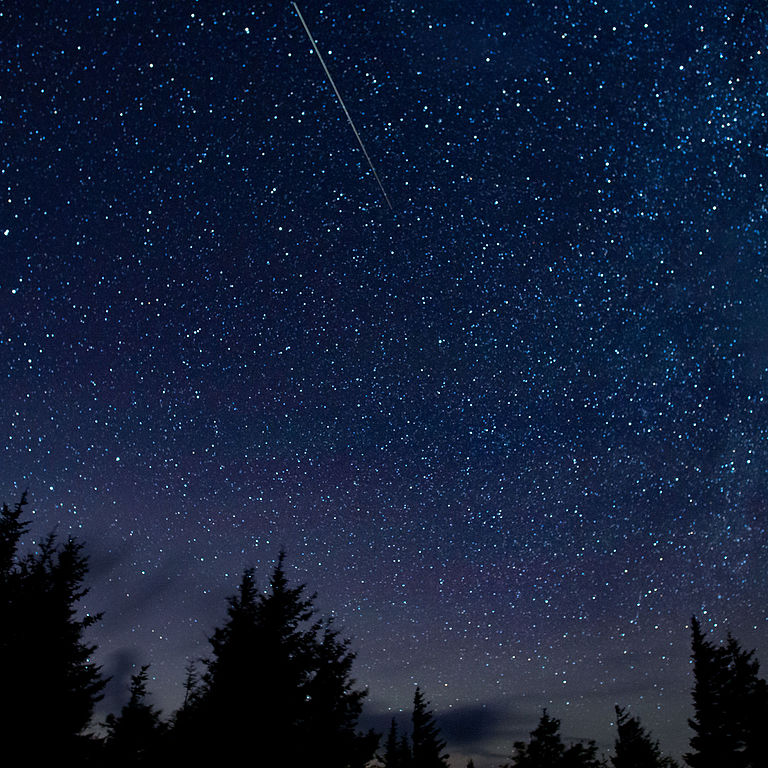
The Perseid meteor shower is typically a really good one, with up to 100 meteors per hour at its peak. But this year, we’ll likely not see many of them.
The apparent origin of the Perseids is the constellation Perseus (hence the name), which rises in the northeast around 10pm in early August. And while it’s true that meteor showers are typically visible for a period of time before and after the predicted peak, the Perseids peak over a fairly narrow period of time, typically no more than about a day.
So yes, you’ll see a Perseid (maybe) on a clear night even now, but that’s less “shower” and more “stray meteor”.
The peak this year is early in the morning on August 12. HOWEVER, this year, there’s a problem, which I think is clearly visible in the image here. This screenshot from Stellarium shows the northeastern sky at 10:22pm on the 11th – and notice what’s rising at the exact same time as Perseus? A big, fat, waning gibbous Moon is sitting right there lighting up the sky and washing out all but the very brightest meteors just as their origin is getting above the horizon, and (of course) tracking across the sky all night. (Oh, and look, there’s Saturn!)

So, my suggestion is to NOT bother getting up early on the 12th (well, not for the Perseids – but this pre-dawn Jupiter-Venus Conjunction will be beautiful!). INSTEAD, go out in the hour or so after sunset, but before the Moon (and Perseus) rises, and look northeast. If you’re lucky, you’ll see a meteor or two rising up from the horizon.
It’s probably the best chance you’re going to get this year.
Get Out There
 Flying Squirrel Outdoors