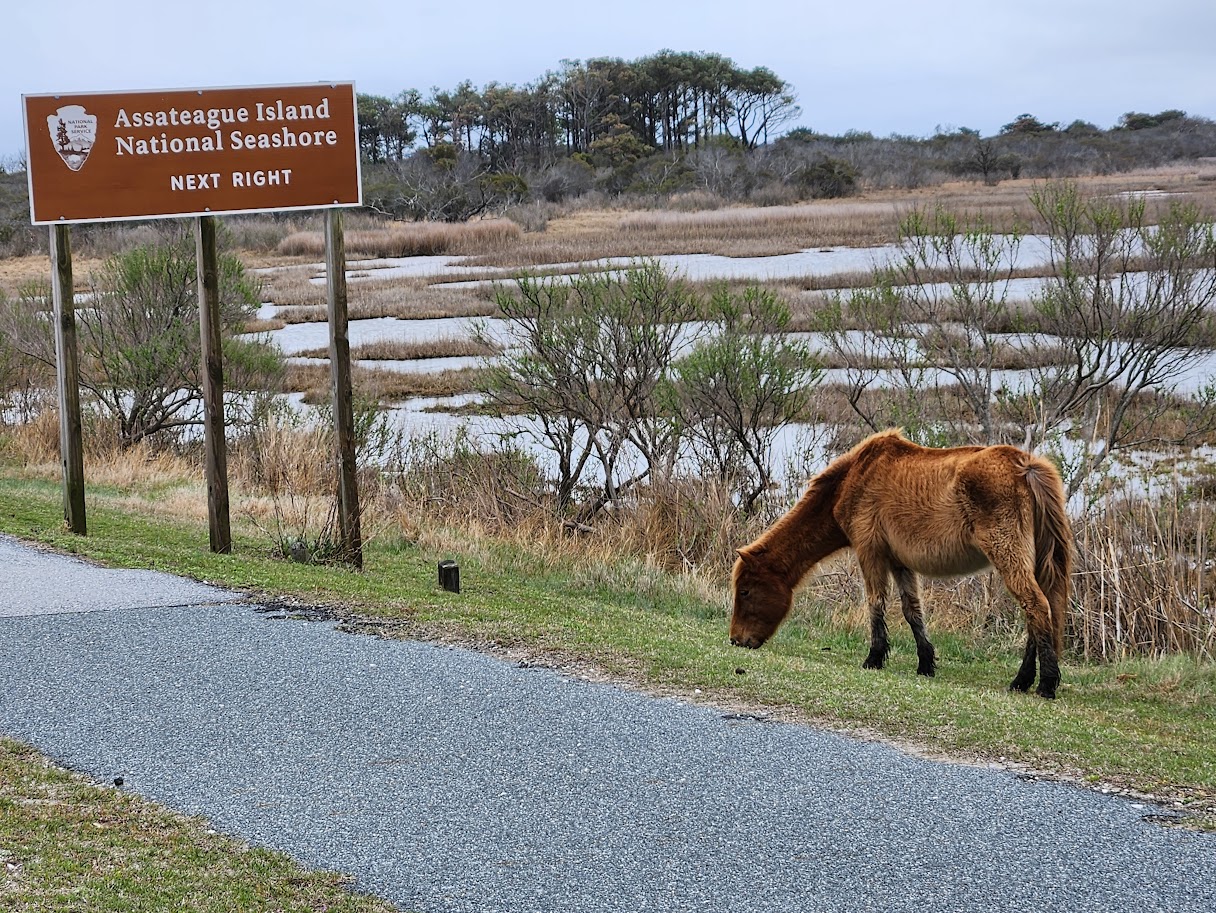
Running for 37 miles along Maryland’s eastern shore, Assateague Island is wild Atlantic coast. It’s a barrier island, long and slender with the Atlantic Ocean on on the east side and a shallow saltwater bay on the west. In between, several different ecosystems and habitats shift with the seasonal ebb and flow of tides, coastal currents, and relentless wind-driven salt spray.
Assateague came very close to being a privately owned resort-style island like the areas around Ocean City, Bethany and Rehoboth Beaches to the north, or like North Carolina’s Outer Banks to the south, but nature had other plans. A 1962 storm destroyed the nascent construction efforts and many of the existent buildings, and by 1965 it had been designated a wild place, a National Seashore. Now its most famous year-round residents are the feral horses, descended from Spanish stock brought to North America in the 1500s, who roam the marshes and beaches as wild animals.
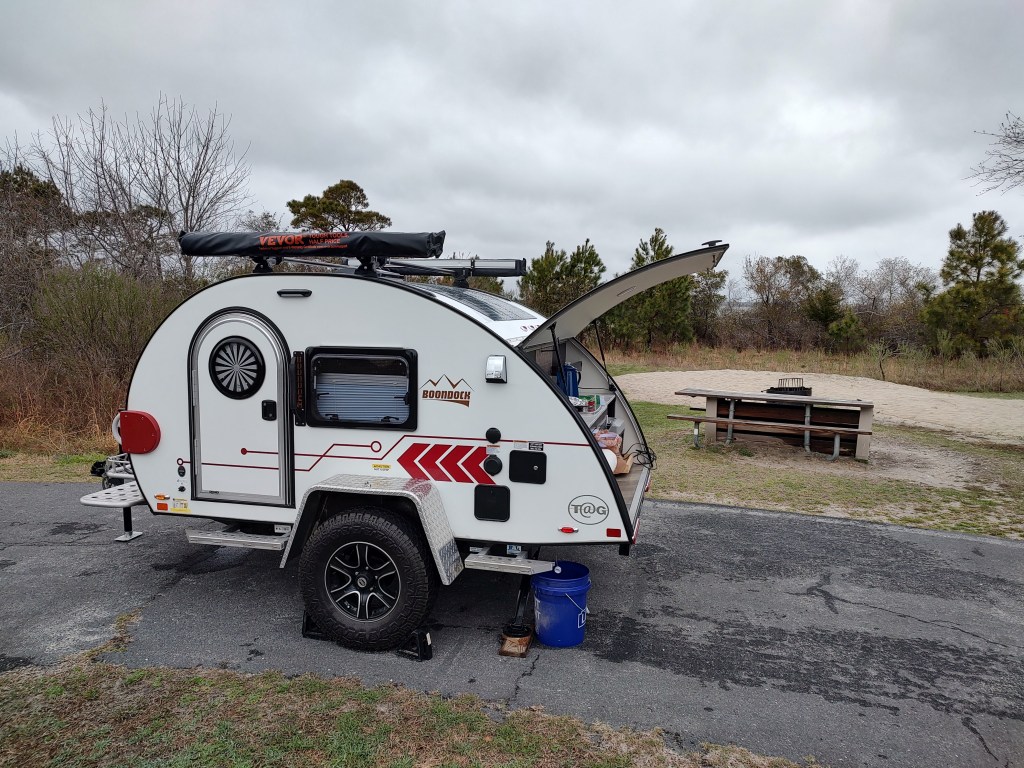
Getting a weekend car-campsite here is notoriously difficult, but my wife and I lucked out and picked up a reservation just as a cancelation freed it up, and we got to spend two chilly April nights in our teardrop trailer exploring the northern part of the island.
We arrived after a long afternoon and evening of driving in torrential rain. The weather conditions had slowed traffic in many places to a crawl, and it took an hour and a half longer to get to Assateague than it should have. We pulled into the National Seashore through the empty park service entrance gate well after dark and made our way toward our site in the Bayside Campground. By all appearances, we were among the very few campers who’d actually made it out in this weather – despite sites all being booked, it looked like we’d have a campground almost entirely to ourselves.
We had planned to cook dinner in our campsite, but given the weather and the traffic delays we had elected to stop in southern Delaware for a quick bite and now wanted nothing more than to get our teardrop unhitched and to get settled someplace warm and dry.
We sat in the car a while as the rain came down in sheets, and then I jumped out during a quick lull to make sure we could set up in the lee of some small trees and shrubs and got the trailer parked. Our setup is minimalist – the trailer is basically a mobile bedroom with an outdoor kitchen attached, and for this trip we’d have no luxuries – we’d be “boondocking” with no power and no water other than what we had onboard. We waited another twenty minutes in the car until there was another lull in the rain, and we sprinted for more permanent shelter.
Weather was awful for April. Mid 40s, heavy rain that continued to fall until around midnight, and strong winds that were gusting to 30 knots. BUT, inside we had lots of blankets, and we were exhausted after a long day. There’s something to be said about shelter in a storm.
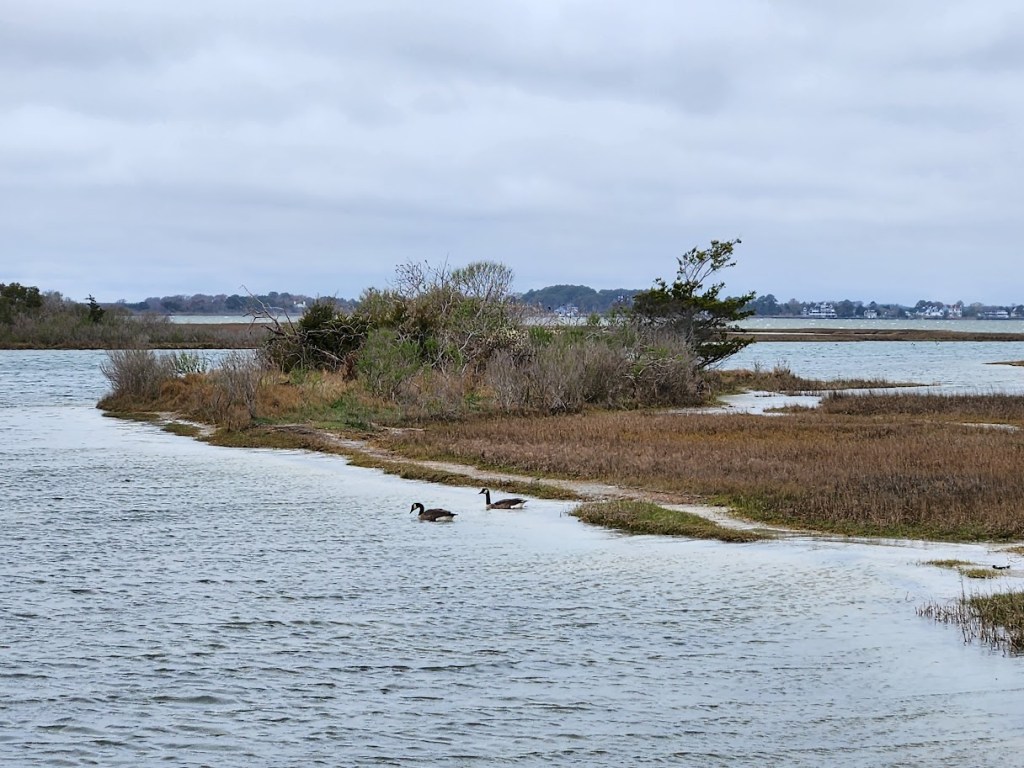
We slept late. Saturday was threatening to be nearly as dreary, but the wind had dropped to about 15 knots and the skies were darkly overcast at about 1000 feet. The steady rain had stopped, but there were still patches of light rain and mist in the area. Our site, we could now see, wasn’t right up against the Sinepuxent Bay, but we could see it through the small trees. We were close enough to the water to hear the waves lapping at the shore whenever the wind lightened enough to not be the dominating sound.
Having missed them the night before, I made a solo run over to camp headquarters to check us in and get the lay of the land, then returned to get coffee started. Motivation was hard. It was still cold and gray, but we were determined to make the best of it. We jumped in the car and made a quick drive around the area to understand what was where before deciding to check out the Old Ferry Landing.
The Old Ferry was our first indication of what almost was for Assateague. The area is the landing site for a small car ferry that moved traffic to Assateague before the current bridge was built. Prior to 1933, Assateague was still connected to Fenwick Island at Ocean City, and there were several hunting lodges and settlements here. A storm in that year cut a new inlet between Assateague and Fenwick, and the decision was made to keep it open as a navigational channel. Despite being isolated, developers had big plans for Assateague. Beginning in the late 1950s, landowners started to draw up plans for the new town of Ocean Beach, and started to build infrastructure for hundreds of homes and businesses. The ferry simply wouldn’t be good enough, and so plans included the construction of the Verrazano Bridge, ultimately completed in 1964, to connect Assateague to the mainland.
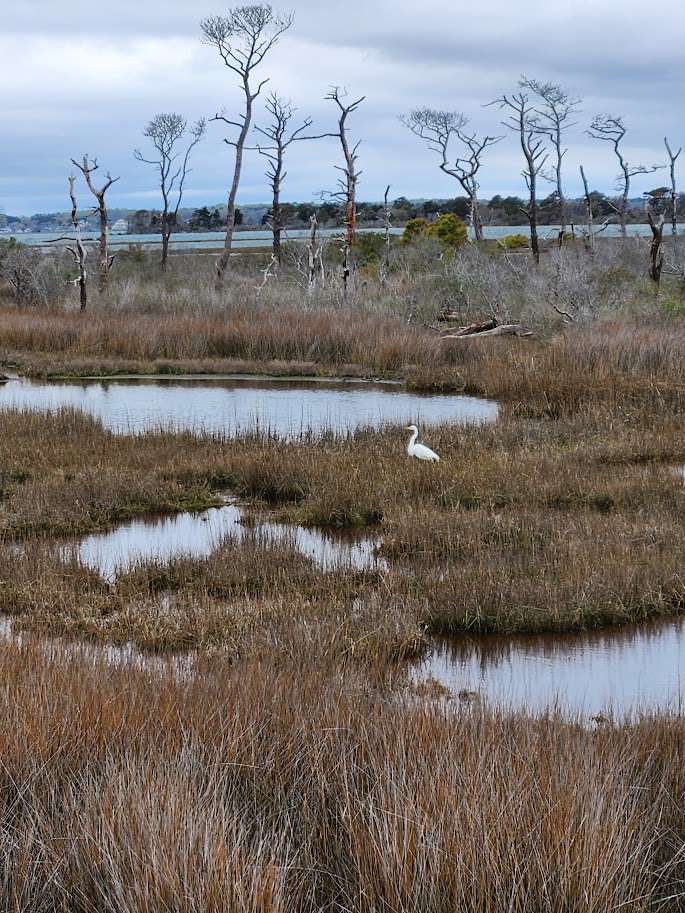
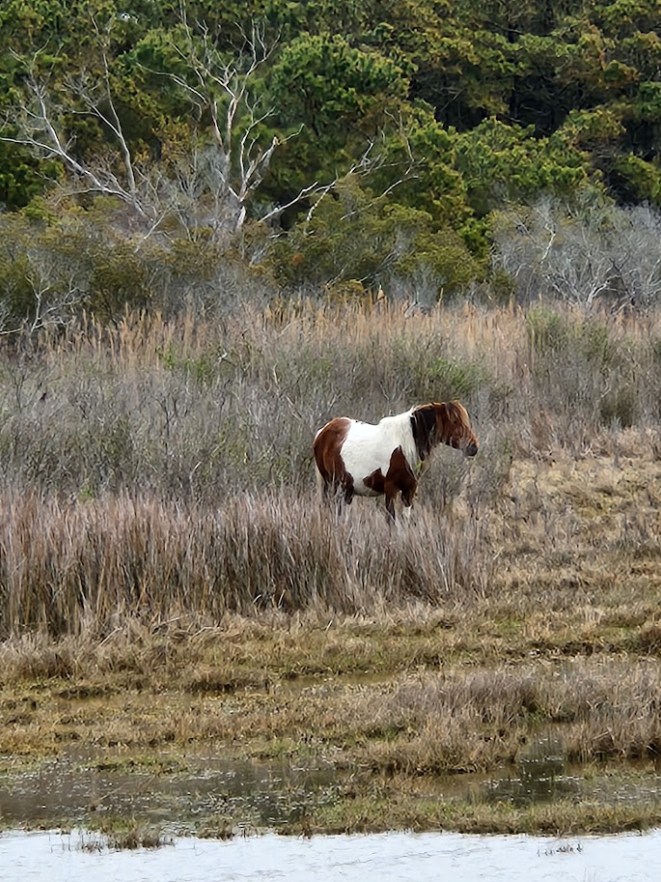
Now, the Old Ferry is one of many excellent places to view local wildlife, and is also an excellent place to launch kayaks – somethings we’ll be sure to do if we can get back here when it’s warmer! In addition to waterfowl – mallards, buffleheads, several snowy egrets and some Canada geese – I saw a brown and white patch moving against the landscape in the marshes to the north. That HAD to be one of Assateague’s famous wild horses.
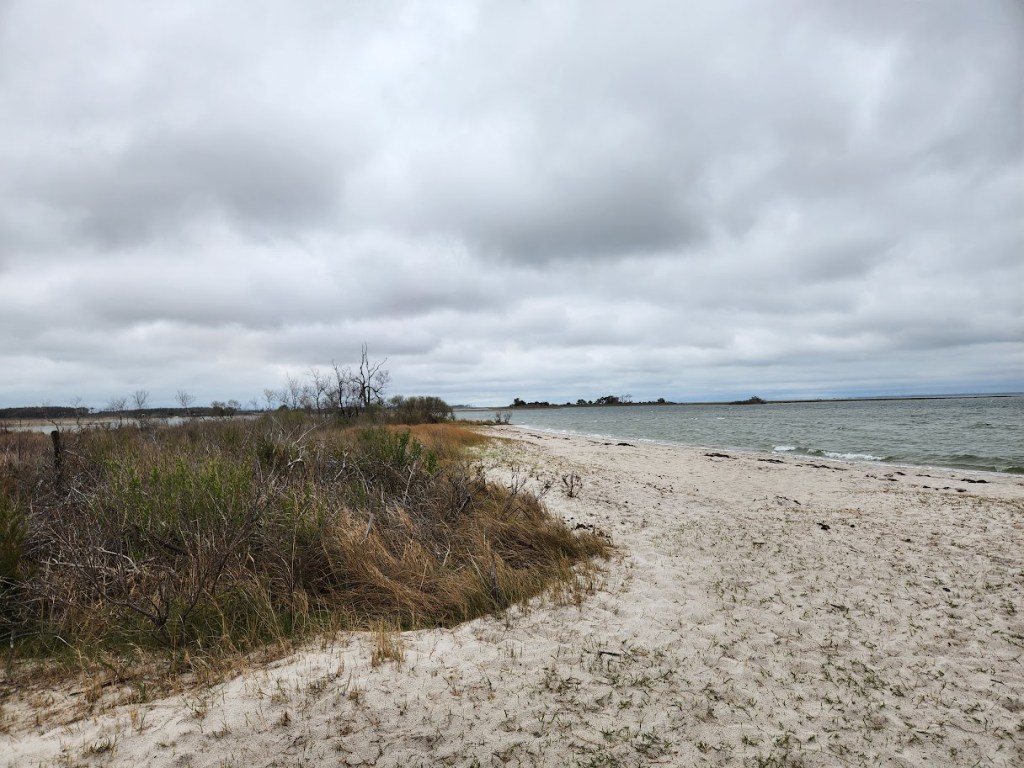
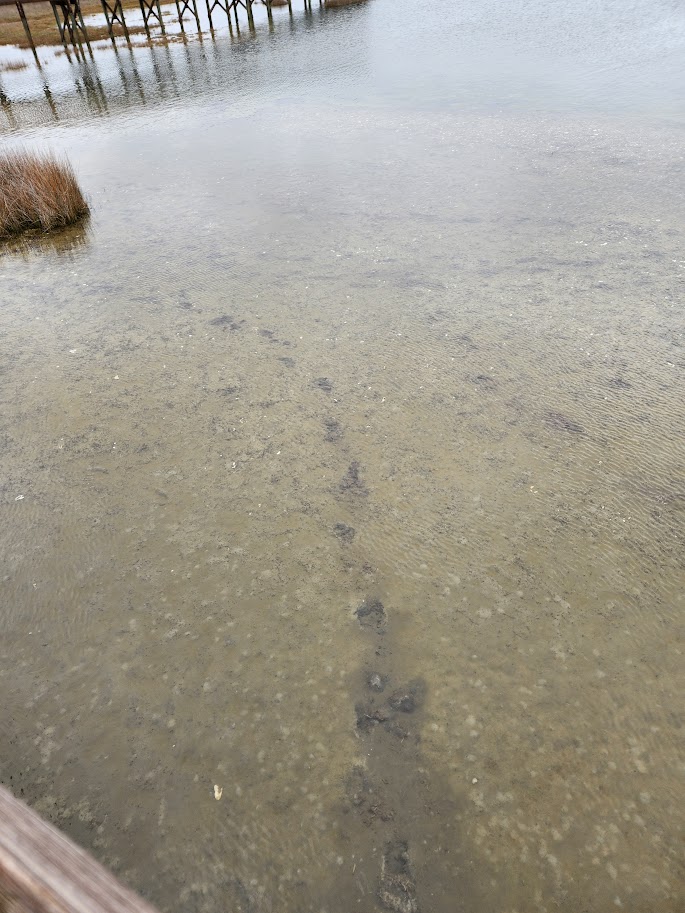


These horses are a big draw at Assateague. They’re allowed to roam wild, and have lived here since being introduced by Spanish explorers in the early 16th century (and possibly associated with shipwrecks around 1502). The horses on the Maryland part of the island are smallish, feral, and beautiful in their element. Evidence of horses is everywhere – lots of horse poop, “game” trails, and footprints both across the land and the soft muddy bottom of the marsh – but given the wind and cold we were still worried that we’d spend the weekend here and not find any.
So, in pursuit of a horse sighting, we headed toward the Life Of The Marsh Trail very close to the Bayside Campgrounds, and very close to the brown and white patch I’d seen across the marsh.
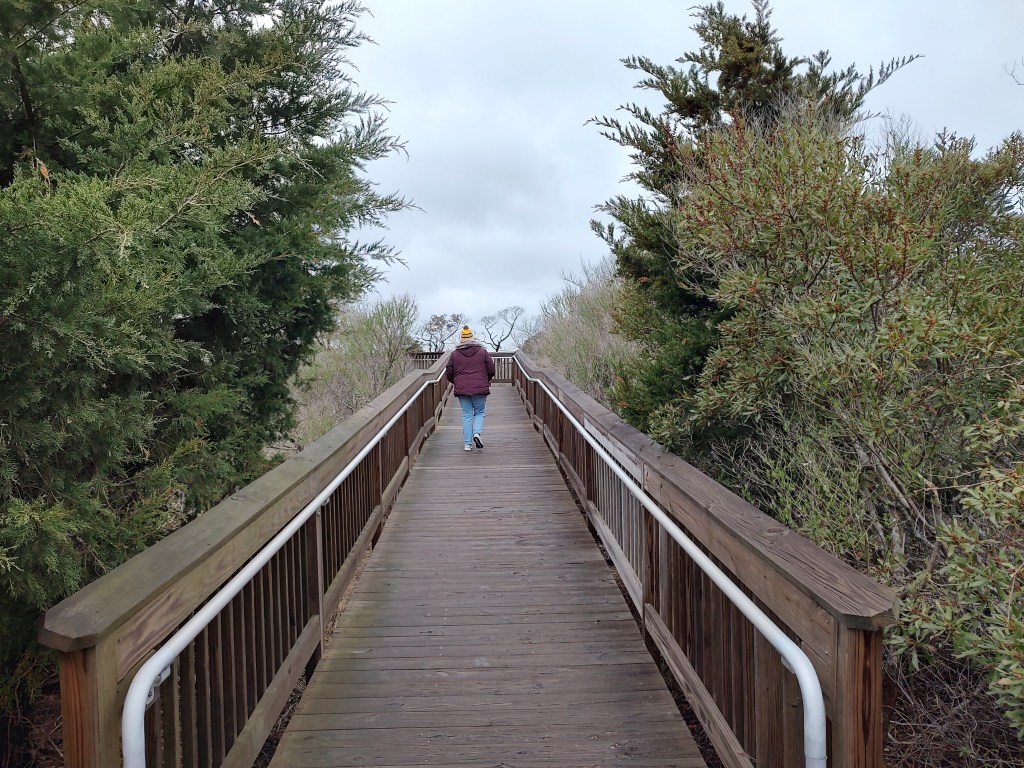
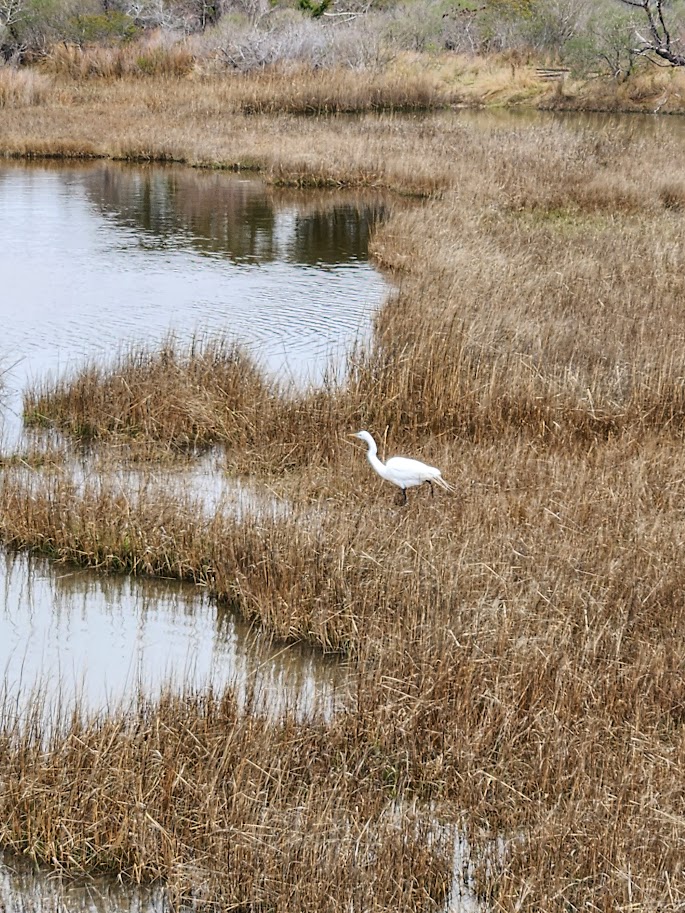
The Life Of The Marsh trail is a very nice, well constructed boardwalk loop that extends about a half mile through the wetlands, and includes a spur to a sandy beach on the shores of Sinepuxent Bay. It’s a great place to view wildlife, and even on a dreary day like this one we encountered a professional photographer with a long lens looking for birds. They were plentiful – greater yellowlegs wading in the shallows, two little blue herons in the grass, two snowy egrets, a gaggle of gulls on a nearby sandbar, red-winged blackbirds, mockingbirds, cardinals and other songbirds were all enjoying the marsh and surrounding low trees.

And, traversing the marsh near the dry ground where loblolly pines transitioned marsh to forest, there were horses. One grazing by itself, and two others alternately grazing and walking towards the first. We see horses all the time, but somehow, in this setting, these animals were special. We watched them for about a half hour until they reunited and walked together into the high grass.
As the horses walked out of sight, we started discussing warmer options. The marsh was beautiful, the wildlife was exciting – but it was COLD, and windy, which made it feel colder. We agreed a break was warranted, so went to go check out the NPS Assateague Visitor’s Center, just across the bridge on the mainland.
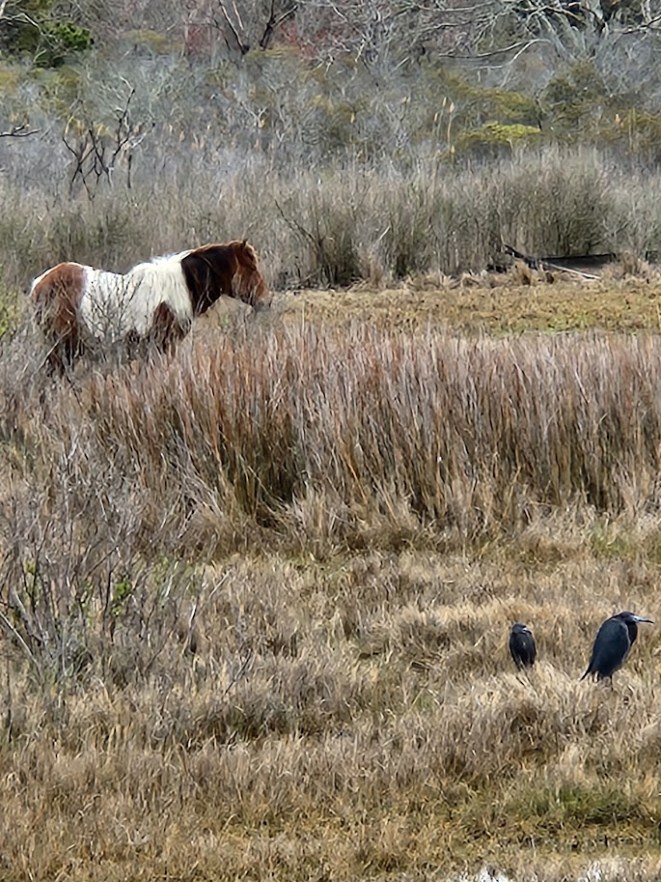
On the way, we ran into what in Yosemite would be called a “bear jam”, but here it was for wild horses. Five of them very near the main road were causing cars to stop in the middle of the road or pull over for pictures. And to think we were worried we might not see any! Just before we crossed the bridge, there was another horse in the marsh looking wistfully toward the mainland.

The Visitor’s Center is nice. It includes a small gift shop, a museum of historical and natural artifacts, a large map overview of the area, and helpful rangers to answer questions about the horses (and for me, planning ahead to using some of the backpack- or kayak-only backcountry sites down the island beyond where the road ends).
Enjoying the warmth, we decided to extend it with a quick lunch up the road near Ocean City – I would recommend Surfside Rooster! Breakfast food, but so good!

We couldn’t hide from the weather forever though. Next stop was a return to the island and a trip down south to where the road ends, and the Life Of The Dunes Trail. I don’t know whether we were getting used to the wind and cold, or whether the dunes themselves were offering enough shelter to make the temps feel more tolerable, but the Dunes trail was nice. The first stretch of it was extremely soft sand that made for difficult walking, but it got easier once the trail split into a lollipop loop.
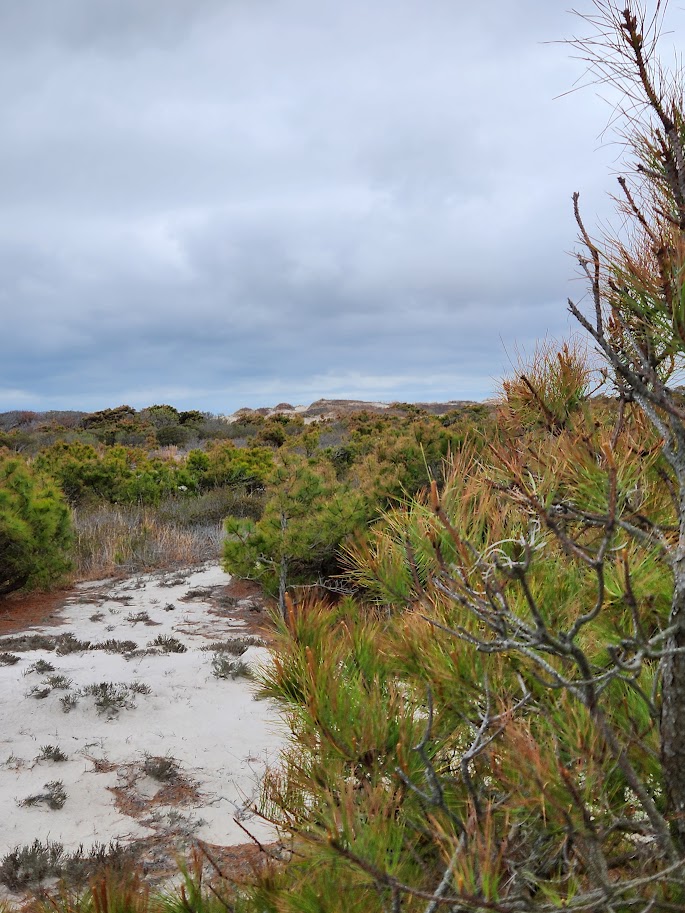
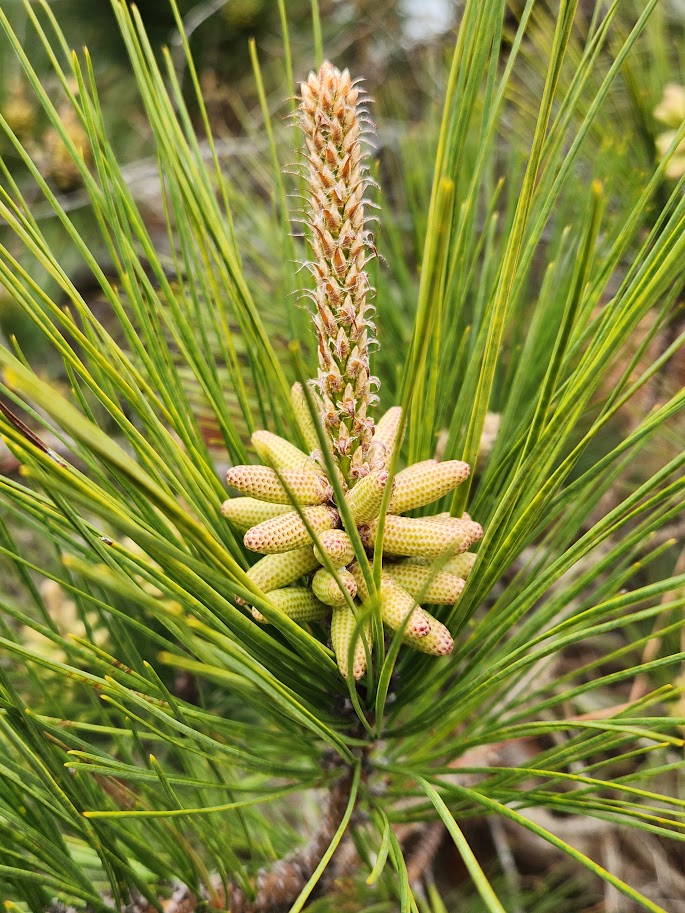
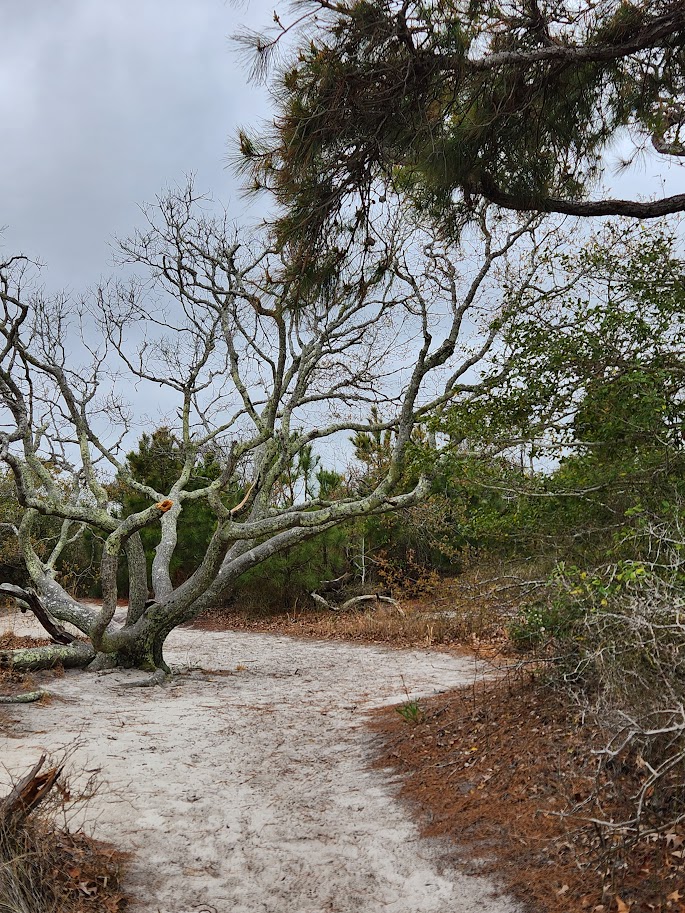
The change in landscape here, from east to west, follows distinct bands of changing environment. Ocean on the east, then beach, high dunes, low dunes, forest, upland marsh, lowland marsh, bay. The Dunes trail traverses along the boundary between forest and low dunes, and then occasionally wanders up to the back of the high dunes. Here, in the second line of dunes, small trees were starting to bud, and live oaks and loblolly pines competed for terrain in which to sink their roots.
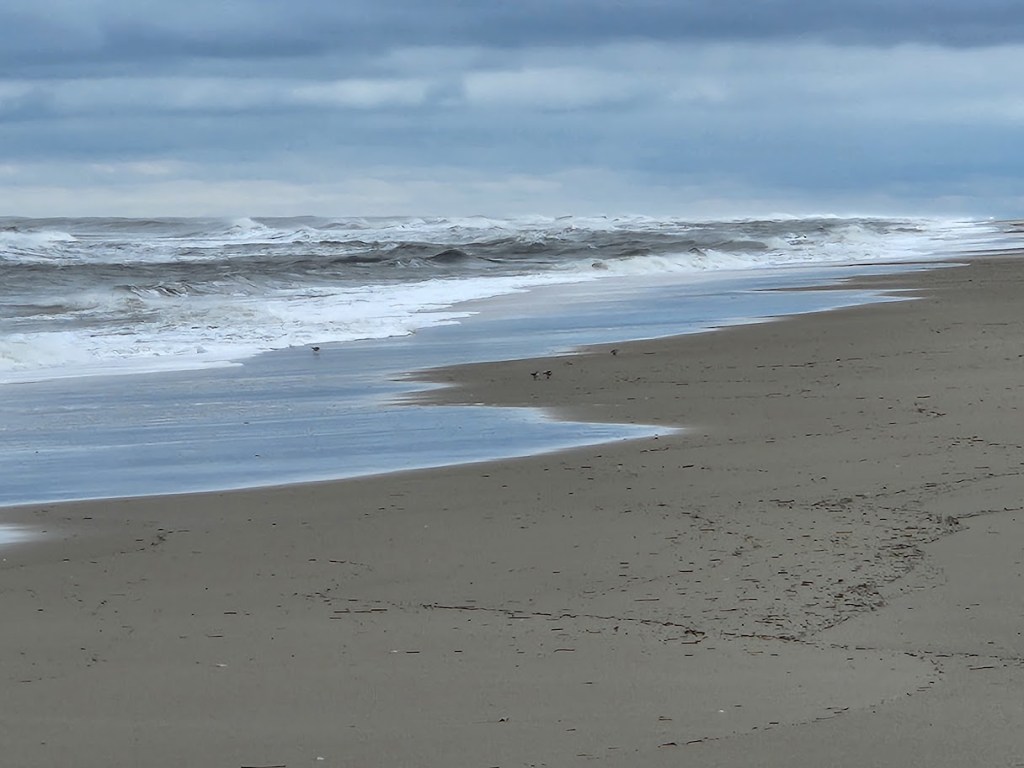
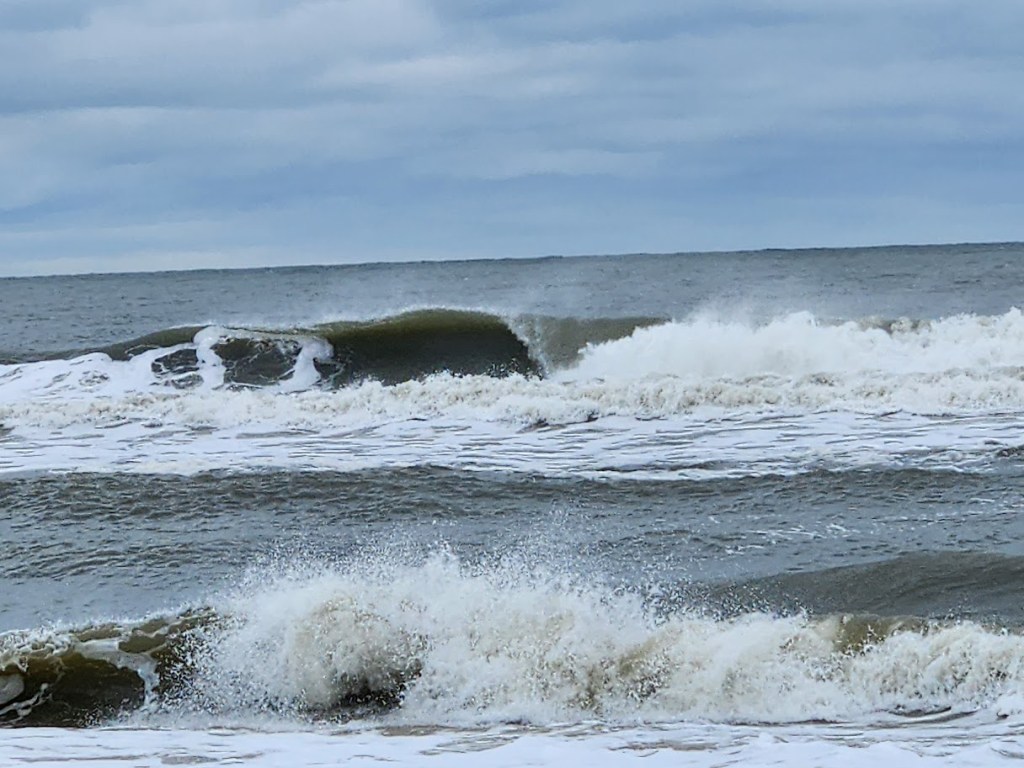
Eventually, we made it to a significant gap in the tall, first line of dunes that stood between us and the ocean, so we had to go take a look. The Atlantic was lively, with waves still rolling in angrily, driven by the strong winds. But the beach – other than a few off-road vehicles and fishermen to the south, and the distant skyline of Ocean City high-rises to the north, it was sand as far as the eye could see in any direction. It’s a landscape that has looked much the same for hundreds, maybe thousands of years.
Rejoining the Dunes trail, we were confronted by human activity once again. Baltimore Boulevard, once 15 miles of pavement laid down here to support the development of Ocean Beach, is still here, sort of. The decaying, cracked pavement is an eerie reminder of what could have been, had the Ash Wednesday Storm of 1962 not obliterated or buried it and destroyed many of the buildings on the island. This was the beginning of the end of Ocean Beach. By 1965, with the blessing of the state, Congress designated the area part of the new Assateague Island National Seashore.


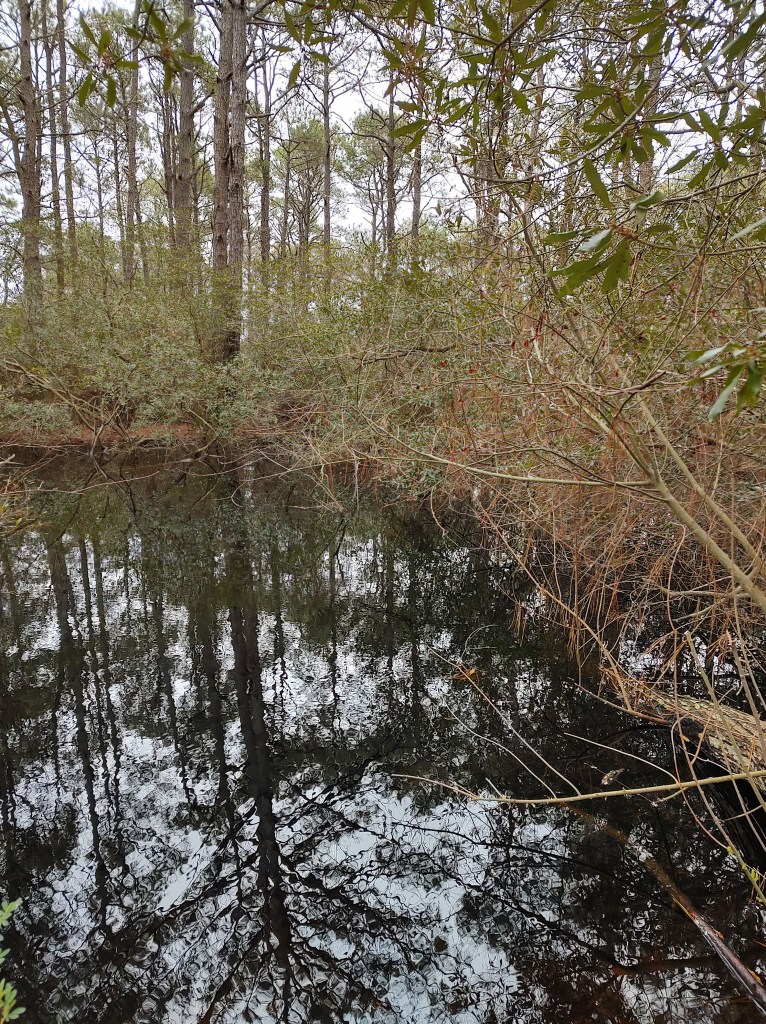
Next was the Life of the Forest Trail. Like the Marsh trail, the Forest Trail is an elevated boardwalk. It winds through the pine forest between freshwater pools colored black by the tannins of the leaf litter before emerging in the upland marsh where egrets prowl. Despite the shallow, brackish water table, the freshwater in these pools floats on top of the salt, providing the horses and other wildlife an essential source of drinking water.
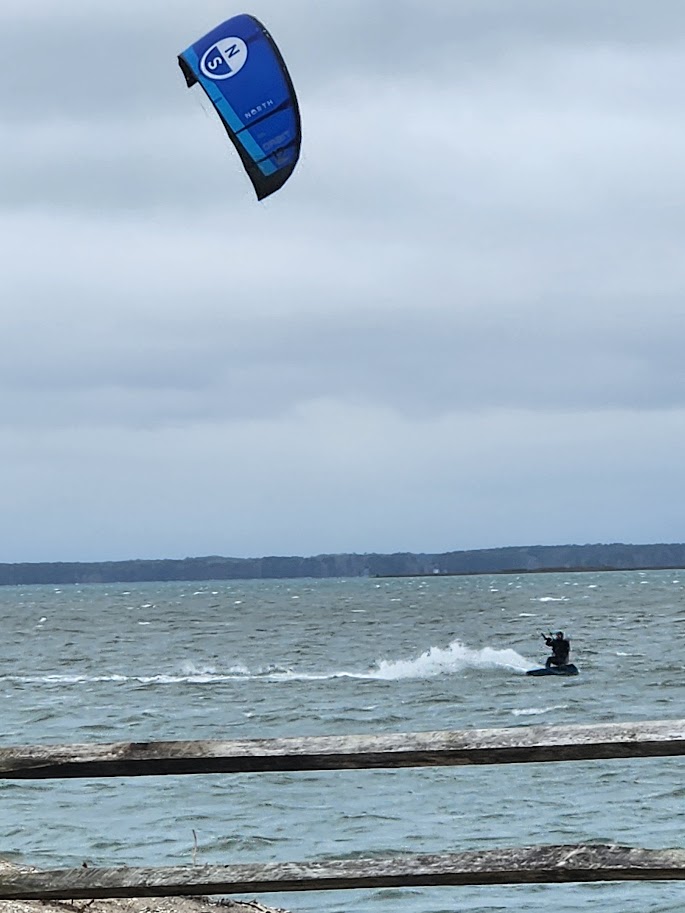
From here, we returned to camp briefly to charge some electronics before heading out to the point adjoining the Bayside Campground. There’s a picnic area here, and another kayak launch, as well as a concession that rents boats and snacks during the summer months (they were closed up tight during our visit). Instead, several kitesurfers were cruising Sinepuxent Bay here taking advantage of the steady breeze and shallow (about 2 feet) water. If you want to take an overnight paddle trip to one of the backcountry sites further south, and don’t bring your own boat, overnight rentals are available here as well.
Finally, we headed back to the Marsh Trail to do one more circuit of the boardwalk there and check in on the horses. We had mused earlier in the day, wondering if the horses had a daily circuit around the area, or if they tended to stay in one place. We can attest that, at least on this day, the three horses we’d seen earlier were content to stay in the same general area.

This time, they were also joined by a sika deer. Sika are a small Asian species, 5 of which were brought to Cambridge, MD in 1916, and which now number close to 20,000 all over the Delmarva peninsula.
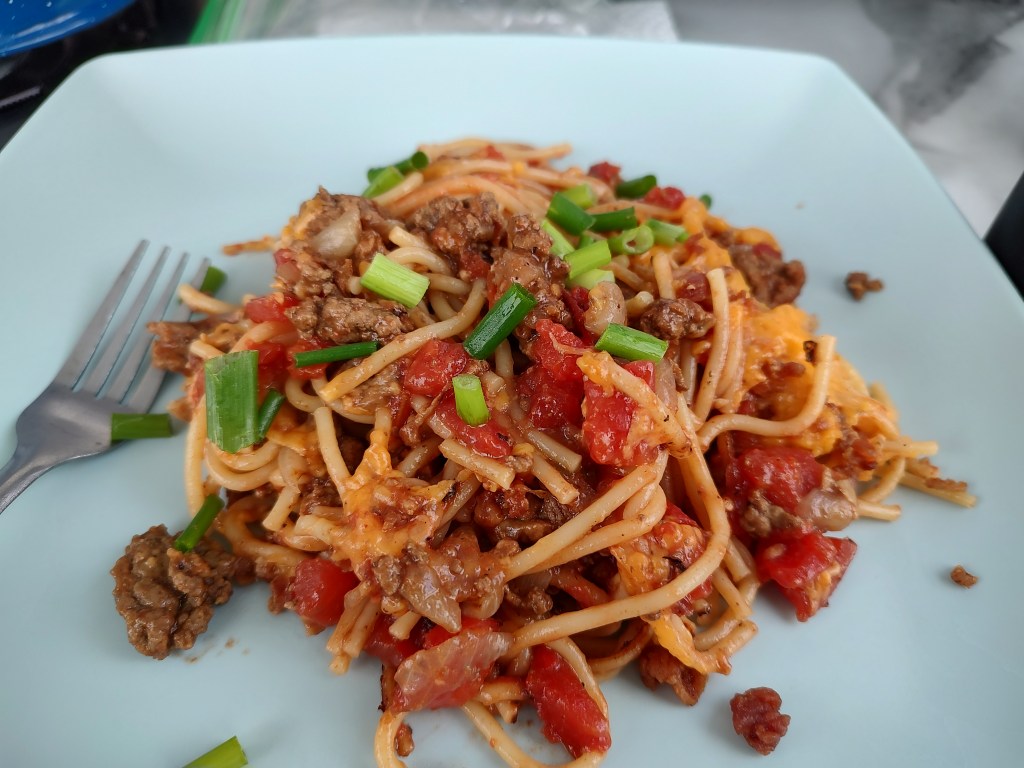
By this time, our stomachs were grumbling again, so we headed back to camp and fired up the stove to make a one pot spaghetti dish with beef, onions, tomatoes, green chiles and lots of flavor. It really hit the spot after a cold day!
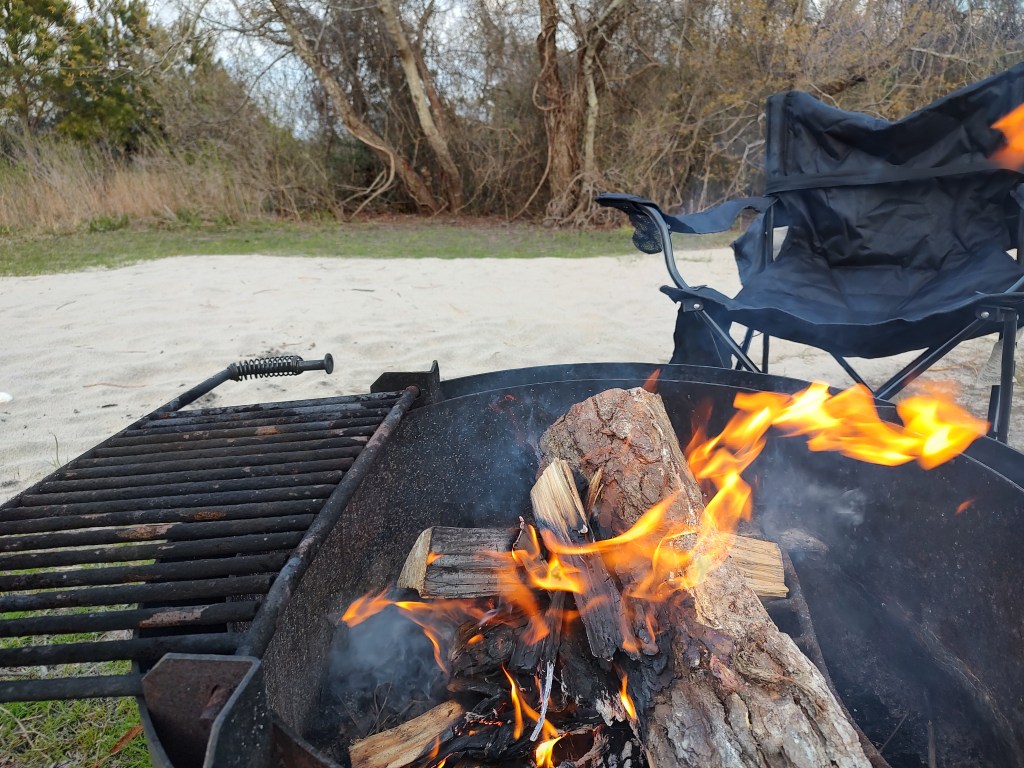
As sunlight started to fade behind the still dense cloud, we got a campfire going and just enjoyed the evening as the temperatures began to fall. It was colder tonight. By bedtime it was just a hair above 40 deg, with wind chills near freezing. We bundled up early and chatted in the trailer for a while, listening to the waves lapping against the sand in the bay nearby until sleep took us. When I woke up just after 1am, the clouds had gone, and it was at least 5 degrees warmer. The full Pink Moon lit up the April night.
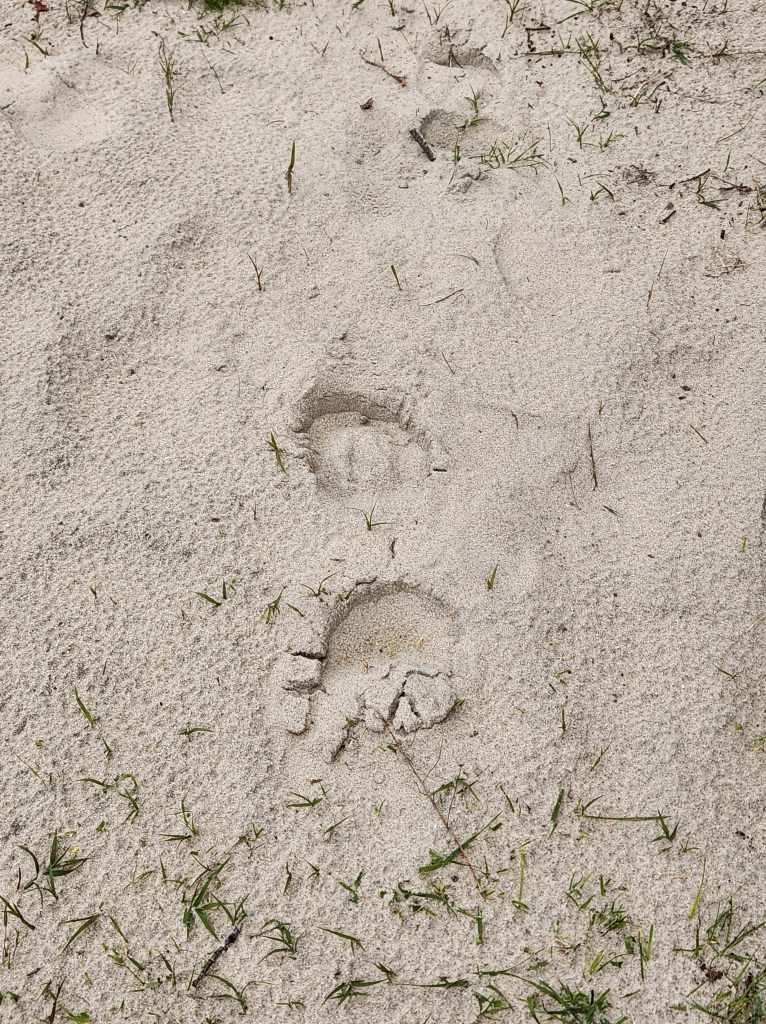
Sometime during the night, I heard a horse walk through our campsite. Fresh hoofprints and a new “deposit” confirmed it when I went out the next morning. It was overcast again, but the temperature had come up, and was close to 50.
Chatting over morning coffee and a bagel, we decided that despite the weather, we really enjoyed Assateague. We were happy we’d braved the weather and taken a chance. Of the five other campsites we could easily see from our own, only one other ever got occupied – a couple from New York were staying in a rooftop tent strung across the bed of their pickup.
We definitely want to try and find another opportunity to come out here. Assateague has a horrible reputation for mosquitos and biting flies during the summer, but the appeal of some beach time and the opportunity to get kayaks in the water is strong. I’m particularly interested in being able to take a boat down the Sinepuxent from Bayside and camp at one of the wild sites between here and the Virginia line.
Assateague is a beautiful place! Visit it if you have the chance, and may the weather gods smile upon you if you do!
Get Out There

 Flying Squirrel Outdoors
Boy did this bring back memories of a camping trip there with my two children and two of their friends in 2 tents near the beach. We too had a thunderstorm and the visiting horses through the campsite ( and I was warned and was READY for the dusk time emergence of the mosquitoes and horse flies with insect repellent and mosquito sticks planted in the sand like torches around our campsite )
The free roaming deer and small horses were a treat for the kids (as was the Saturday night drive into nearby Ocean city for a visit to the Boardwalk and Arcade). I sent this blog to my kids, now spread out all over!
I can’t image this nature Preserve having been lost to real estate development! I never knew the history of the preserve.
Thanks for sharing your experience of this true natural treasure!
LikeLiked by 1 person
Thanks, Joe! Glad it brought back memories. This was our first trip out there, but it won’t be our last. As much as we were worried about cold and rain, we were very happy not to have to deal with the mosquitoes. I hear they are relentless!
LikeLiked by 1 person