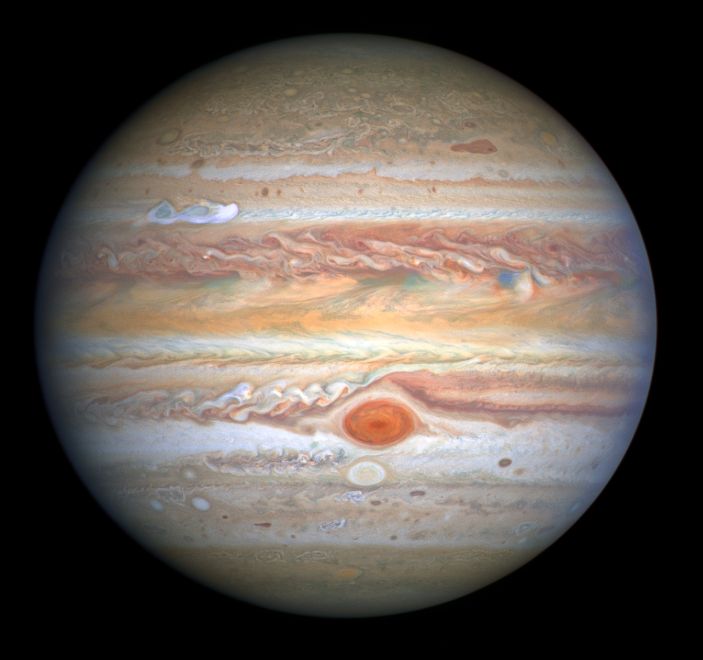
What is the most visually striking feature of the planet Jupiter? In my estimation, there are two likely answers to this question.
One – the four Galilean moons (Europa, Callisto, Ganymede and Io) are easily visible, dynamic, and were mankind’s first direct evidence that bodies in our solar system orbited something other than Earth, shattering prevailing theory at the time. (These observations famously got Galileo in a bit of trouble when he published his findings in 1610).
Two – The beautiful, persistent Great Red Spot.
A little more than 50 years after Galileo saw moons, Giovanni Cassini observed the spot in 1665. He called it the “Permanent Spot”, but not only are we finding that the spot is not permanent, it is possible that the spot has already disappeared for over 100 years since its discovery!
The spot was continually observed by Cassini and his peers until 1713. But between 1713 and 1831, there were no recorded observations of the spot, and we’re not sure why.
Starting in 1831, the spot was recorded again, and by this time, it was huge. The spot, identified as a powerful anti-cyclonic (high pressure) system, was estimated to be 41,000 km (25,500 mi) across, or big enough to hold three Earths. The spot has been continuously observed since its re-emergence, but it has been noticeably shrinking.
By the time Voyager 1 photographed Jupiter in 1979, the spot had diminished to 23,300 km (14,500 mi). In the years since, the spot has continued to contract and become more circular. By November 2023, its diameter was approximately 12,500 km (7,770 miles), smaller than Earth. Its rate of contraction has accelerated since 2012, and now appears to be shrinking approximately 580 miles per year.
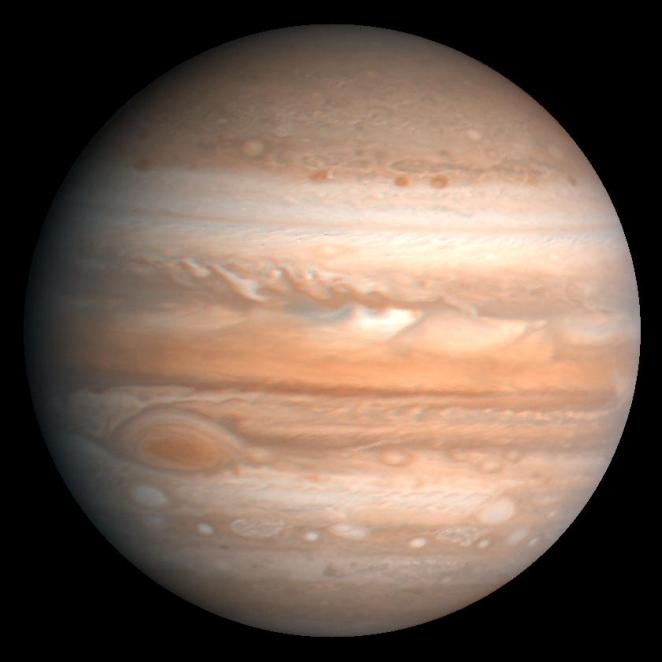
The red spot has also changed color several times, shifting between a bright red, a dull pink and a pale orange. The exact mechanism of this is unclear, but the color is hypothesized to be the result of ultraviolet radiation breaking down atmospheric ammonia in the presence of acetylene into red-hued compounds. Thus, the change in color suggests changes in chemical composition of the clouds, perhaps a recycling of material from deeper in the atmosphere.
So, what’s causing this cosmic contraction? The truth is, scientists aren’t entirely sure. Several theories are being explored, and the answer is likely complex.
Possible Causes of Shrinkage
Eddies in the wind shear zone around the perimeter of the spot are frequently absorbed by the primary storm. Though in many cases these storms may contribute to the overall rotational energy of the Great Red Spot, the disturbances may be causing reductions in the long-term strength of the storm.

The storm has also been observed to increase its rate of western drift across the planet. It is possible that as it moves, the energy in the underlying layers of the atmosphere are less favorable to persistent activity in the spot. This may be impacting the intensity of the energy source that’s feeding the storm. Data from the Gemini and Juno probes indicates that warmer air is feeding the red spot from underneath, and that the storm itself is fairly shallow, extending only about 500 km (300 mi) into the atmosphere.
What Happens Next?
The shrinking of the Great Red Spot raises some fascinating questions. Will it continue to shrink until it disappears entirely? Or will it stabilize at a smaller size? What impact will this change have on Jupiter’s overall atmospheric dynamics? Do the variations observed today lend credence to the idea that the spot actually disappeared between 1713 and 1831, and that the storm we see today is actually a distinctly different storm than the one Cassini observed? Or did the spot persist but stabilize at a size too small to be observed using the technology of that time period? Do the dynamics of spot adhere to a repeating cycle?
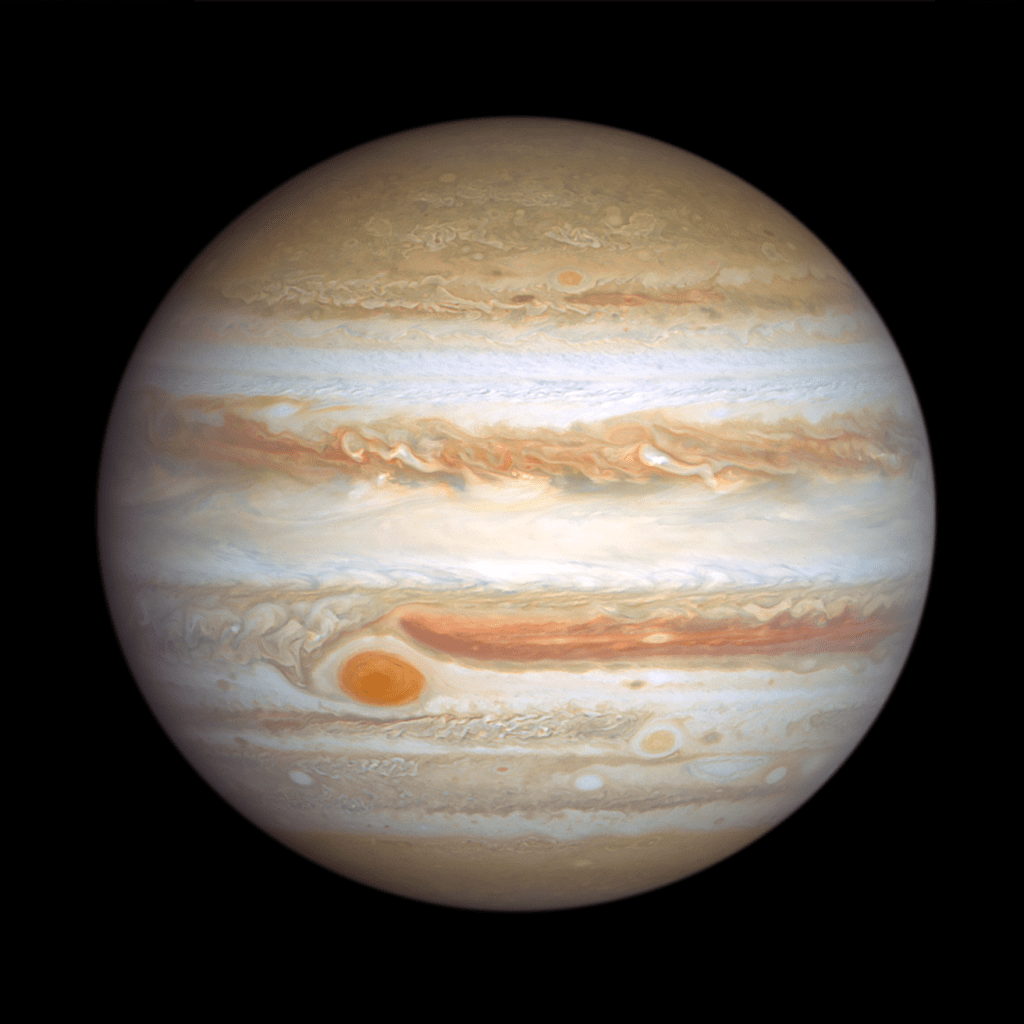
Ongoing observations from telescopes like Hubble and the Juno spacecraft, which is currently orbiting Jupiter, are crucial for gathering more data and unraveling the secrets of the Great Red Spot. By studying this iconic storm, we can gain valuable insights into the workings of gas giants and the complex processes that shape their atmospheres.
The Great Red Spot’s shrinking serves as a reminder that even the most enduring cosmic phenomena are subject to change. It underscores the dynamic nature of our universe and the constant need for scientific exploration to understand the forces that govern it. As we continue to observe this remarkable storm, we can only wait and see what the future holds for Jupiter’s most famous feature.
Get Out There!
Additional Reading --
- NASA Science - "Jupiter's Great Red Spot Is Shrinking", May, 2014
- NASA Science - "NASA's Hubble Shows Jupiter's Great Red Spot Is Smaller Than Ever Measured", May, 2014
- Sky & Telescope - "Jupiter's Great Red Spot Just Keeps Getting Smaller", King, Nov, 2023
- Wikipedia - Great Red Spot (addl. references cited)
 Flying Squirrel Outdoors
It’s intriguing that there is no record of the GRS for over a century, at a time when astronomy was blossoming as a science.
LikeLiked by 2 people
That surprised me too. I’d always seen that the GRS was something that had been around for 350 years, etc, so this wasn’t something I anticipated seeing as I looked into it. Also surprising that when re-recorded in 1831, it was huge again – no “growth” period? There’s a pretty good 2024 paper (Geophysical Research Letters, Sanchez-Lavega et al) that makes a case that what Cassini saw was a completely different storm than what we see today.
LikeLiked by 2 people
NASA Goddard posted this video a few months ago. Perhaps you’ve seen it. https://youtu.be/sRTmWm6GWME?si=iPTfGkjiZuOS8IP4
LikeLiked by 1 person
I had not! Thanks for sharing!
LikeLiked by 1 person